Our Projects | GCT Consulting & Training

Explore GCT's portfolio of 900+ consulting projects across Palestine and the Arab region, spanning governance, M&E, agriculture, justice, social development, economic development, water, and education.

900+

Delivered Projects

27+

Years of Experience

400+

Key Clients & Donors

8

Specialized Sectors

Our Project Portfolio

Explore our portfolio of projects delivered across multiple sectors with local and international partners.

Our Project Portfolio

Final Evaluation of “Fostering Cooperation on Water Management among the Palestinian, Israeli, and Jordanian Water Authorities” Project
2017
Project

Final Evaluation of “Fostering Cooperation on Water Management among the Palestinian, Israeli, and Jordanian Water Authorities” Project

Bilateral and multilateral peace talks between Israel, Jordan and the Palestinian Authority led to the creation of the multilateral Working Group on Water Resources (WGWR) in 1992. In 1994, the group established the executive Action Team (EXACT) to assist in its coordination and endorsed the Water data Bank Program that received EU support since 1995. In 2013, a contribution agreement was signed between UNDP and the European Union for the implementation of the project entitled: Fostering Co-operation on Water Management among the Palestinian, Israeli, and Jordanian Water Authorities. This project is the fifth project funded by the EU in the framework of the WGWR/EXACT initiative. It focuses on the identification and quantification of climate effects on water resources in the Core Parties territories.With approaching the project end after 4 years of operation, UNDP/PAPP planned to conduct external final evaluation for the project’s achievements and outcomes.The purposes of this final evaluation were as follows:Assessing the performance of the project and measure to what extent the objective/outputs/activities have been achieved against the results and resources framework;Identifying factors that have hindered or facilitated the success of the project;Reviewing the stages of the project and its products, with special focus on the strategic regional aspects of the project, the sustainability of dynamics generated among partners and commitments for the future.To this end, UNDP/PAPP has contracted GCT to undertake this assignment in line with its requirements and expectations.
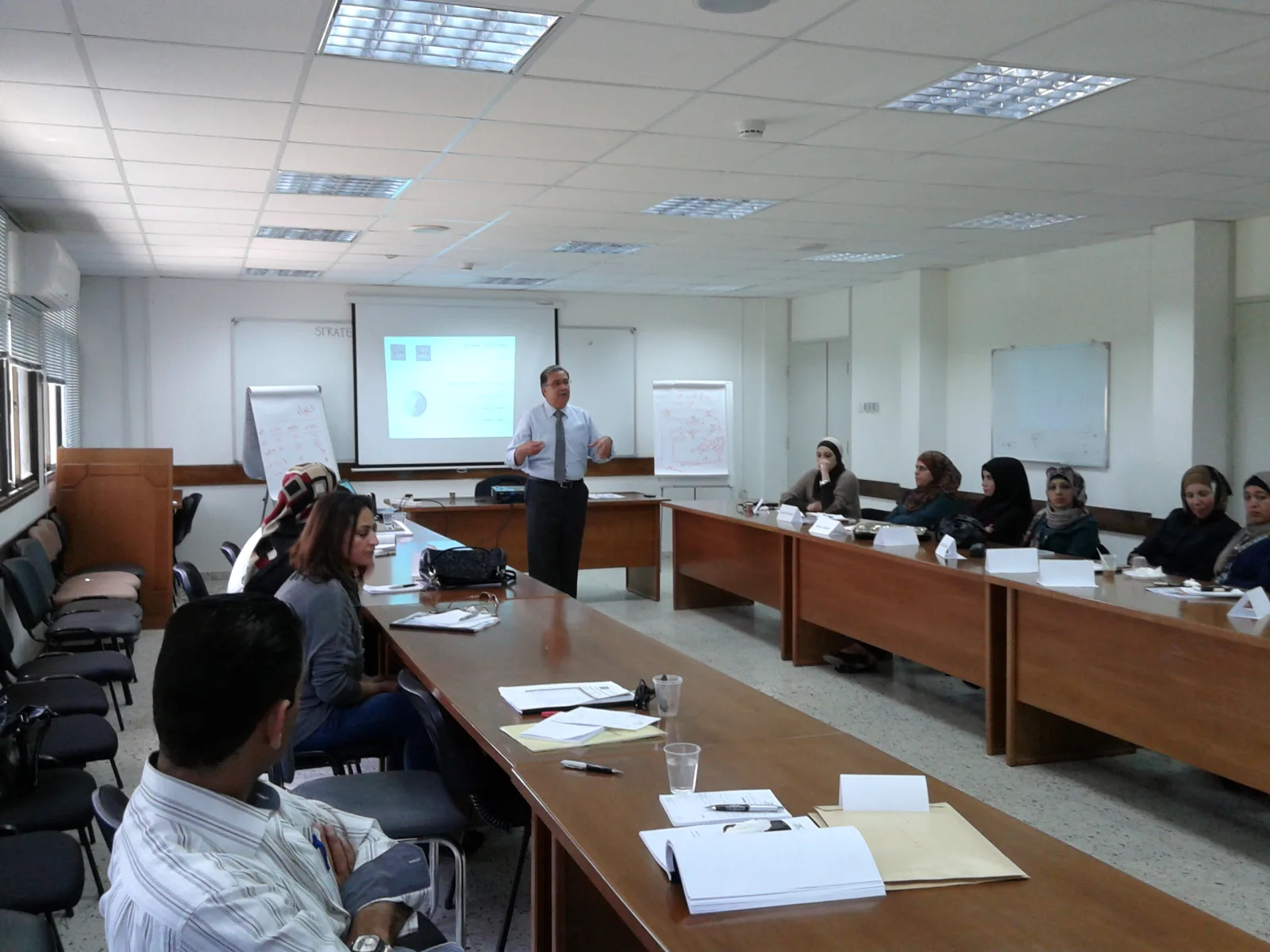
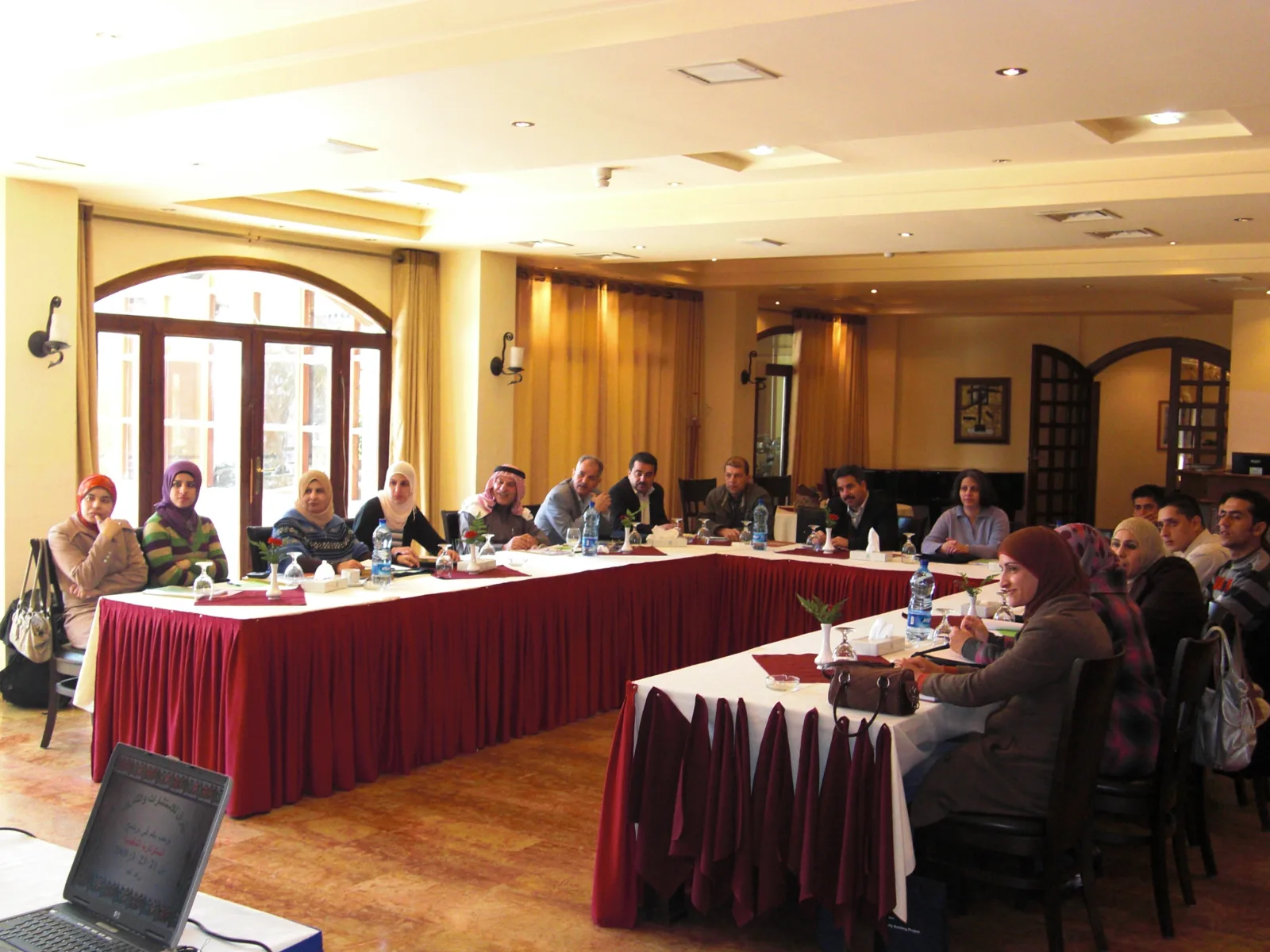
Funded by European Union (EU); for the benefit of United Nations Development Programme (UNDP/PAPP),
West Bank – Jenin, Al- Maleh Shobash Catchment area and the south-eastern parts of Gilboa hills at the Israeli side.
Final Evaluation of “Enhancing the Capacities of the Palestinian Authority in Mainstreaming Environment and Climate Change” Project.
2017
Project

Final Evaluation of “Enhancing the Capacities of the Palestinian Authority in Mainstreaming Environment and Climate Change” Project.

The project aimed at enhancing capacities of the Palestinian Authority (PA) to mainstream and address the challenges of climate change into the government policy framework and plans. It also intended to support the implementation of pilot projects on climate change adaptation and mitigation. more specifically the project aimed at :To support PA, especially EQA and the Ministry of Foreign Affairs (MoFA) to engage in the International Environmental Conventions, including Rio Conventions, especially UNFCCC, in preparation for the state building;To mainstream climate change into national plans and strategies as integral component for sustainable development and green economy;To assess and strengthen the capacities of the related PA ministries and authorities in climate change mainstreaming, adaptation and mitigation according to the priorities identified;To implement selected Pilot projects from the Palestinian Adaptation Program of Action (PAPA) in the most affected areas in Palestine including water resources and food security, efficient and sustainable use of energy and sea level rise;To enable the PA to access environmental financing with focus on the GEF/SGP.With approaching the end of project, a final evaluation was necessary to provide a comprehensive and sufficient analysis of the project during the 4 years of operation by conducting an independent external assessment of the level of achievement, performance and impacts of set objectives and expected results, outputs and outcome listed in the project documents, determine the successes and/or shortcomings, as well as the factors that have hindered or facilitated the success of the project, identify lessons learned and best practices, in addition to provide recommendations to be considered in the development of future similar interventions.Specifically, the final evaluation focused on the following relevant activities: Assessing the relevance of the project in the context of the State of Palestine and the actual needs of Palestinian institutions;Determining the extent to which the project has achieved its overall goal, specific objectives and expected outputs since its inception;Addressing the gaps and highlighting challenges in achieving the desired results and outcomes;Analyzing the processes, efficacy of used model/practices/strategies, the effectiveness of project monitoring and learning processes, relations with relevant main stakeholders, and other aspects of UNDP/PAPP’s performance as implementing agency;Assessing the overall impacts of project and appraising the potential sustainability;Identifying and highlighting lessons learned, best practices, challenges faced, and providing recommendations as needed for development similar future interventions.Within this context, UNDP/PAPP has contracted GCT to undertake this final evaluation assignment in line with its requirements and expectations.
Funded by Government of Belgium; for the benefit of United Nations Development Program / Program of Assistance to the Palestinian People (UNDP/PAPP).
West Bank
Final Evaluation of SAWASYA Program “Strengthening the Rule of Law: Justice and Security for the Palestinian People”.
2017
Project

Final Evaluation of SAWASYA Program “Strengthening the Rule of Law: Justice and Security for the Palestinian People”.

SAWASYA Joint Program (UNDP/UN Women) was launched on 1st of May 2014, with contributions secured from the Government of the Netherlands, SIDA/Sweden, the UK/DFID, and the European Union, as well as corporate investments by UNDP. It is overall objective was to strengthen the rule of law by developing efficient, accountable and harmonized justice and security institutions, which are gender-sensitive and rights-based while improving access to justice and security services for disadvantaged social groups, particularly women and girls. With approching the end of the program in (April 30th.2017), UNDP/PAPP and UN Women intended to conduct an independent-extrnal final evaluation to assess the level of progress achieved by the Sawasya Program against the planned output and outcome results as set out in the program documents. The main objective of this final evaluation is to provide insight into program achievements, challenges and lessons learnt, as well as providing recommendations for UNDP/UN Women and other stakeholders to consider in the development of the follow-up phase of the program.Specifically, the final evaluation focused on the following relevant items : Assessing the relevance of the program in the context of the State of Palestine and the actual needs of targeted groups;Determining the extent to which the program has achieved its overall goal, specific objectives and expected outputs since its inception;Addressing the gaps and highlighting challenges in achieving the desired results and outcomes;Analyzing the processes, efficacy of used model/practices/strategies, the effectiveness of program monitoring and learning processes, relations with relevant justice sector actors and stakeholders,Assessing the overall impacts of program on the targeted groups both at the ‘supply’ and the ‘demand’ side Identifying and highlighting lessons learned best practices, challenges faced, and providing recommendations.Within this context, UNDP/PAPP has contracted GCT to undertake this final evaluation assignment in line with their requirements and expectations.

United Nations Development Program/ Program of Assistance to the Palestinian People (UNDP/PAPP) and UN Women (Joint Program).
West Bank \& Gaza Strip
Local Venue Support Services and Event Management of TAIEX Workshop on the Set-Up of a Police and Customs Cooperation Centre in Jericho.
2017
Project

Local Venue Support Services and Event Management of TAIEX Workshop on the Set-Up of a Police and Customs Cooperation Centre in Jericho.

IBF International Consulting provides logistical support for seminars, workshops and other training events in East and Southeast Europe as well as in the European Neighborhood countries benefiting from the EU-financed TAIEX project. TAIEX stands for (Technical Assistance and Information Exchange), which is an instrument providing short-term technical assistance to the EU pre-accession process in the field of approximation, application and enforcement of the community acquits and related issues. TAIEX is demand driven and draws heavily on EU Member States’ administrations and institutions to make experts available for its activities. These include workshops, expert missions and study visits. Under the TAIEX activities in the state of Palestine, IBF was planned for conducting a workshop for two days on The Set-Up of a Police and Customs Cooperation Centre in Jericho for The General Administration for Borders Crossing (GABC).The main objective of the workshop was to improve cooperation between Customs and Police acting under the Palestinian General Administration for Borders Crossing by sharing EU standards and best practice so as to reinforce its capacities to prevent and fight against border crimes and fraud.Based on the foregoing, IBF has contracted GCT to provide LVS services and manage the workshop during its duration in Jericho.

IBF International Consulting- Belgium, in Cooperation with The General Administration for Borders Crossing (GABC)
West Bank
Feasibility Study for Establishment of Food Processing/Manufacturing Factory in Village of Kufr Ra’ee.
2016
Project

Feasibility Study for Establishment of Food Processing/Manufacturing Factory in Village of Kufr Ra’ee.

The MDP is a multi-phase national program which is implemented by the Municipal Development and Lending Fund (MDLF). Its first phase was spanned over a three years period from 2010 to 2013 targeting all 134 municipalities in the West Bank and Gaza Strip, and has provided municipalities with a combination of technical assistance and annual performance-based grants for priority sub-projects to improve municipal finance and municipal planning. The second phase of MDP (Phase II) is planned to support municipalities - over the short-term- in improving their municipal management practices for better municipal transparency and service delivery. It is designed to address the core issues in municipal service delivery, including: poor management practices that compound an already severe budgetary crisis, lack of local budgets for capital investments, and low revenue generation. Accordingly, it will emphasize on mechanisms to improve service delivery, citizen engagement, revenue generation and municipal responsiveness.Within the frame work of windows 4 of MDP and as a delegated implementation agency, MDLF was intended to use part of the Grant to hire a consulting firm to perform establishment of Food Processing/Manufacturing Factory in Village of Kufr Ra’ee)”.The overall objective of this assignment was to collect and analyze information to provide insight into market demand and available opportunities on food processing/manufacturing Sector in Palestinian Territories, in addition to inform the respective municipality with a better understanding of this sector, as well as identify the viability of the Factory by studying and documenting the available opportunities, and the lessons learned from similar projects at the national and international level.

Funded by VNG International; Municipal Development and Lending Fund (MDLF), for the benefit of Kufr Ra'ee Municipality.
West Bank- Jenin
Feasibility Study for Establishment of Multi-Story Shopping Mall in City of Ramallah.
2016
Project

Feasibility Study for Establishment of Multi-Story Shopping Mall in City of Ramallah.

The MDP is a multi-phase national program which is implemented by the Municipal Development and Lending Fund (MDLF). Its first phase was spanned over a three years period from 2010 to 2013 targeting all 134 municipalities in the West Bank and Gaza Strip, and has provided municipalities with a combination of technical assistance and annual performance-based grants for priority sub-projects to improve municipal finance and municipal planning. The second phase of MDP (Phase II) is planned to support municipalities - over the short-term- in improving their municipal management practices for better municipal transparency and service delivery. It is designed to address the core issues in municipal service delivery, including: poor management practices that compound an already severe budgetary crisis, lack of local budgets for capital investments, and low revenue generation. Accordingly, it will emphasize on mechanisms to improve service delivery, citizen engagement, revenue generation and municipal responsiveness.Within the frame work of windows 4 of MDP and as a delegated implementation agency, MDLF was intended to use part of the Grant to hire a consulting firm to perform Feasibility Study for Establishment of Multi-Story Shopping Mall in City of Ramallah.The overall objective of this assignments was to collect and analyze information to provide insight into market demand and available opportunities on Shopping Malls Sector in Palestinian Territories, in addition to inform the respective municipality with a better understanding of this sector, as well as identify the viability of the Mall by studying and documenting the available opportunities, and the lessons learned from similar projects at the national and international level.

Funded by VNG International; for the benefit of Municipal Development and Lending Fund (MDLF), for the benefit of Ramallah Municipality
West Bank- Ramallah
Survey on Governance and Popular Committees in the Palestinian Refugee Camps in the West Bank.
2016
Project

Survey on Governance and Popular Committees in the Palestinian Refugee Camps in the West Bank.

The Government of Japan is formulating a technical cooperation project on improvement of living conditions at the Palestinian refugee camps in the West Bank through strengthening capacities of the DoRA and popular committees concerning participatory and inclusive community activities.For preparation of the above technical cooperation, it is necessary to understand current conditions and needs for improvement of living conditions of the Palestinian refugee camps as well as decision making mechanism of the popular committees. Also, it is important to understand problem and challenges of the Department of Refugee Affairs (DoRA) and the popular committees concerning improvement of living conditions at the camps and involvement of various kinds of Palestinian refugees living in the camps.Within this context, the Oriental Consultants Global Company was intended to conduct a Survey on Governance and Popular Committees in the Palestinian Refugee Camps in the West Bank. The key objective of this Survey was to collect information and opinions at the Palestinian Refugees Camps at the target areas (Aqbat Jabir camp in Jericho governorate and Al-Ama’ari camp in Ramallah governorate) as well as the government authorities which are responsible for Palestinian refugee affairs, for the purpose of understanding needs of Palestinian refugees to improve their daily life and decision making mechanism at the camps.

Oriental Consultants Global Company- Japan
West Bank- Ramallah \& Jericho
Midterm Survey /Study for “Improved Access to Markets for Female and Male Small Scale Farmers in the West Bank “Project
2016
Project

Midterm Survey /Study for “Improved Access to Markets for Female and Male Small Scale Farmers in the West Bank “Project

Oxfam is an international confederation of 17 organizations working together with partners and local communities in more than 90 countries in order to find practical and innovative ways for protecting people from poverty.One of Oxfam’s development interventions in the OPT is a three-year pro-poor market development Program entitled “Improved Access to Markets for Female and Male Fresh Fruits and Vegetable (FFV) Small Scale Producers in the West Bank”. This project merges two existing projects in the West Bank which are a) Access to markets project and b) Its overall objective is to enhance productivity of women and men farmers and improve relations with the market and service providers, thus contributing to better connect the supply side with the demand side. This will be achieved by facilitating a process which should enhance the capacities and abilities of key actors to play their role along the selected Fresh Fruit and Vegetable (FFV) value chains.Specifically, the main objectives of the assignment are to: Document pre-intervention levels of the project indicators as defined in the log frame;Document pre-intervention levels of the project assumption and risks as identified in the log frame;Review and sharpen Program performance indicators through an evidence- based, participatory research and facilitation process, based on the baseline findings;Provide a broad assessment of the Program’s relevance and outline the project M&E steer on the basis of analysis of baseline data;Provide Recommendations for improvement of project log frame and MEAL system;Provide Recommendations for possible strategies / actions for greater impact.The final results of this baseline study will serve as the pre-intervention status description against which the follow-up assessments (Midterm, and End - line survey) will be compared during and after the end of project’s operation years.

Oxfam GB, Occupied Palestinian Territory
West Bank
Diagnostic Review for Work Based Learning (WBL) Legislation and Development the Needed Complementary Bylaws.
2016
Project

Diagnostic Review for Work Based Learning (WBL) Legislation and Development the Needed Complementary Bylaws.

The ECIB Program focuses on improving the qualitative and quantities aspects of work-based learning practices at the technical and vocational education and training (TVET) programs in Palestine, which is aligned to the national TVET strategy and the five-year plan of relevant ministries (MoEHE & MoL).Within this context and to support the objectives of ECIB program, BTC was intended to support the MoEHE and MoL in reviewing and assessing the work-based learning legislation in Palestine, and develop the needed bylaws, to bridge the gaps in the regulatory framework for WBL.The main objective of this assignment was to explore and diagnose the need for a specialized law and legislation on TVET field, as well as in outlining the main axes of this law and the key contents to be addressed by its legal articles. For achieving this objective, it was necessary to start with diagnosis the current situation of legal framework that governs TVET sector in Palestine through conducting a comprehensive diagnostic study, and then starting the development of necessary bylaws and legislation based on the results of the diagnostic study. More specifically, the assignment was aimed to:1- Analyze of the current status of development of drafting law on TVET and align with efforts of GIZ and ILO.2- Assess of the Labor Law No.7 regarding contractual and regulatory arrangements for WBL;3- Prepare of Bylaw to the Labor Law No.7 or other such legislation in order to cover company-based apprenticeship and all other forms of WBL, as well as a legal basis for any future incentive for employee and apprentices; 4- Draft potential by-law for various forms of WBL practices in the education and higher education law; 5- Draft of a potential separate act on apprenticeship, in line with examples from many countries around the world;6- Consultation with ongoing labor law reform process in Palestine to ensure consistent approach;7- Draft by-law to improve the inspection and complaints tools in order to ensure compliance for both employer and trainee.

Enhancing Capacities for Institution Building (ECIB) Program, Belgian Technical Cooperation (BTC).
West Bank
Final Evaluation for “Enhancing Youth Employability”Project.
2016
Project

Final Evaluation for “Enhancing Youth Employability”Project.

“Enhancing Youth Employability” is a three year TVET/LM project implemented by Islamic Relief Palestine (IRPAL) in partnership with the Swiss Agency for Development and Cooperation (SDC) during the period from ( Jan 2013- Feb 2016), in order to improve youth employability in the Gaza Strip while, at the same time, improving the overall TVET system in Gaza .The key objectives of the project was to adopt and implement key elements of the National TVET strategy in the Gaza Strip, revitalize the capacity of public TVET centers in terms of improved facilities and curricula and human resource that will contribute to the delivering of vocational training based on new national standards and successful trainees find employment. Its overall goal was to enhance employability of young women and men in the Gaza Strip through an improved and unified TVET system with public TVET centers providing trainees with labor Market relevant skills and employment services. With approaching the end of project, a final review was necessary to evaluate the progress realized, in addition to SDC decision to exit from the TVET sector and to focus only on skills development/vocational training in the field of agribusiness which led SDC to consider the importance of consolidating results of TVET projects and to the possible extend ensure sustainability and continuity. The main objective of this final evaluation was to provide a comprehensive and sufficient analysis of the project’s three years of operation (Jan 2013- Feb 2016)that by conducting an independent assessment of the level of achievement and impact of set targets and expected results- with a major focus on effectiveness and sustainability, outputs and outcome listed in the project’s documents and log frame, determine the successes and shortcomings, identify lessons learned and best practices, in addition to provide recommendations on how to improve sustainability of results while proposing options to further develop vocational training in the field of agribusiness particularly, in line with SDC’s new cooperation strategy of focusing on this sector only , in addition to provide recommendations for preparing the phasing out of IRPAL project , as well as for similar projects in future.

Swiss Agency for Development and Cooperation (SDC)
Gaza Strip
End-line Survey for “Project for Sustainable Tourism Development Through Public-Private Partnership in Palestine- (PSTP)” – Phase 2.
2016
Project

End-line Survey for “Project for Sustainable Tourism Development Through Public-Private Partnership in Palestine- (PSTP)” – Phase 2.

The “Project for Sustainable Tourism Development Through Public-Private Partnership in Palestine Phase 2 (PSTP)"has been implemented by the Ministry of Tourism and Antiquities (MOTA) and the Japanese International Cooperation Agency (JICA) from June 2013. The main goal of the project is to contribute to developing tourism in Palestine; hence, enhancing the quality of life from social and economic perspectives through community-based tourism (CBT) by involving local communities as main partners and in the same time beneficiaries. Promoting tourism in Palestine to the international market is another pillar of the project. Based on the successful experience and the lessons learned from Phase 1 of the project (2009-2012), the project will aim to achieve three main objectives: 1) Boosting tourism promotion in Palestine 2) Strengthening CBT activities in Jericho 3) Introducing CBT modeled in Jericho to other five areas.By the end of the project duration, JICA was intended to conduct an End-Line survey to measure the key indicators of the project.The ultimate objective of this assignment (End-line survey) was to update the tourism situation in the areas of project and collect its impacts/effect on tourism and the community as well. Specifically, the survey was aimed mainly to collect and analyze the:Statistical data and update information on overview of the tourism sector in Palestine and the six target areas of Jericho, Hebron, Bethlehem, Ramallah, Al -Bireh, Nablus, and Tulkarem;Institutional development and human resource development by the Project;Baseline data on the indicators of the overall goal of the Project.The End line survey will serve also the assessing of the change of tourism situations from the beginning of PSTP (first phase) in 2009 to its end (second phase) in 2016 by comparing the figure with the baseline survey in 2012.

Japan International Cooperation Agency (JICA).
West Bank (Jericho, Hebron, Bethlehem, Ramallah, Al -Bireh, Nablus, and Tulkarm)
Institutional Capacity Assessment and Institutional Development Training for Water and Wastewater Unit within JSCPD in West Bethlehem .
2016
Project

Institutional Capacity Assessment and Institutional Development Training for Water and Wastewater Unit within JSCPD in West Bethlehem .

The World Bank considered one of the key active donors in the Palestinian water and wastewater sector. In August 2012, it has approved the provision of around ($US 3,650,000) through its State and Peace-building Fund to finance a new development project entitled “Water Supply and Sanitation Improvements for West Bethlehem Villages” is supposed to last for 36 months.The project aimed mainly to improve, through a pilot project, the delivery of water and the planning of wastewater services in targeted five rural communities (Battir, Nahhalin, Husan, Wadi Fukin, Walajeh) that are marginalized due to mobility restrictions in West Bethlehem region. That in response to problems facing these rural communities which including among others: environmental and human health issues due to the pollution of springs.To this end, PWA is intend to contract with consulting firm to undertake an assignment entitled “Institutional Capacity Assessment and Institutional Development Training- Water and Wastewater Unit within JSCPD in West Bethlehem”. The main objective of this assignment is to assess the current capabilities and needs of the JSCPD and principally its new established water and wastewater unit (WWU) in terms of (institutional & administrative, technical and financial) aspects, with respect to its ability to sustainably plan, manage, operate and maintain water and sanitation system and services. This assignment will contribute in achieving the overall objective of the project under the Capacity Building Component, which represented by the improvement and enhancement the capacity of JSCPD/ WWU to plan, manage, operate, and maintain water and wastewater system and services, as measured by the preparation of a business plan (a tariff structure that aims at full recovery of O&M costs, and a tariff collection rate of at least 80%), in order to reduce reliance on subsidies.

Funded by World Bank JSCPD, Palestinian Water Authority.
West Bank - Bethlehem
Consulting Inquiries

Need Expert Consulting Services?

Partner with GCT for high-impact advisory and project delivery across Palestine and the region.

Live Support & Inquiries

GCT Advisory Team