Our Projects | GCT Consulting & Training

Explore GCT's portfolio of 900+ consulting projects across Palestine and the Arab region, spanning governance, M&E, agriculture, justice, social development, economic development, water, and education.

900+

Delivered Projects

27+

Years of Experience

400+

Key Clients & Donors

8

Specialized Sectors

Our Project Portfolio

Explore our portfolio of projects delivered across multiple sectors with local and international partners.

Our Project Portfolio

Consultancy for Services Psycho-social and Legal Support
2024
Project

Consultancy for Services Psycho-social and Legal Support

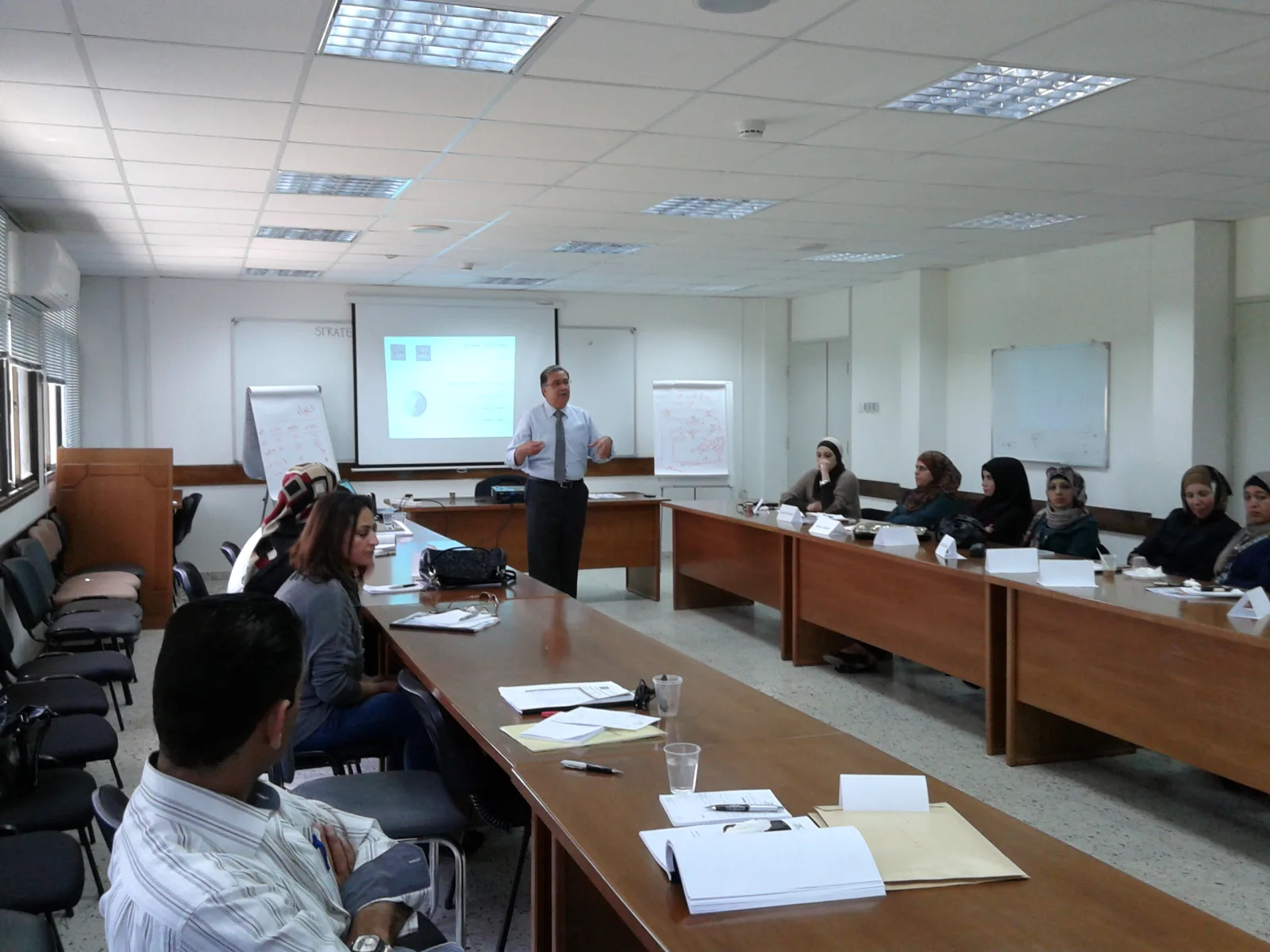
The Psychosocial and Legal Support Consultancy Services project was implemented under the Rural Development Project in Area C – Phase II (RDP II), funded by the Agence Française de Développement (AFD) and implemented by the Ministry of Local Government (MoLG). The project targeted 19 marginalized rural communities across the Jericho, Tubas, and Salfeet governorates in the West Bank.The overall objective of the assignment was to strengthen the resilience, social cohesion, and rights awareness of vulnerable communities in Area C, with a particular focus on women, youth, children, and persons with disabilities. The project addressed the compounded psychosocial, legal, and socio-economic challenges faced by these communities due to political instability, movement restrictions, and limited access to services.The assignment was implemented through three integrated phases: Inception and Planning, Implementation, and Internal Evaluation and Reporting. During implementation, the consultancy conducted a comprehensive psychosocial and legal baseline study, established and strengthened Community Development Committees (CDCs) in coordination with Local Councils, and delivered structured psychosocial support sessions, legal awareness workshops, and individual legal consultations.In addition, the project introduced community hackathons and socio-economic development initiatives, enabling youth and community members to design and propose locally driven solutions addressing priority needs in areas such as agriculture, services, social entrepreneurship, and community infrastructure.The consultancy also designed and implemented a robust MEAL framework, produced periodic progress reports, a mid-term report, an internal evaluation report, and a final report documenting results, lessons learned, and actionable recommendations. The project contributed directly to enhancing community resilience, improving access to rights-based services, strengthening citizen engagement with local authorities, and promoting sustainable, community-led development in Area C.
For the benefit of Ministry of Local Government (MoLG); Funded by French Development Agency (AFD)
West Bank
Capacity Building Trainings to Stakeholders within the Justice, Security and Social Sectors under the framework of UN WOMEN joint programme with UNDP and UNICEF - “Promoting the Rule of Law in Palestine- SAWASYAII
2022
Project

Capacity Building Trainings to Stakeholders within the Justice, Security and Social Sectors under the framework of UN WOMEN joint programme with UNDP and UNICEF - “Promoting the Rule of Law in Palestine- SAWASYAII

In line with the Palestinian Government’s commitment to achieve gender equality and to fight Violence against Women (VAW), and in full partnership with the Justice and Security Sectors, including the Public Prosecution (PP), the Palestinian Civil Police (PCP), the High Judicial Council (HJC) and the Supreme Judge Department (SJD), UN Women, within its joint programme with UNDP and UNICEF - “Promoting the Rule of Law in Palestine- SAWASYAII” is supporting the Justice and Security institutions to mainstream gender in their procedures and policies, and develop and provide gender responsive services to women victims and survivors of violence, through providing institutional capacity building support and policy level interventions, amongst others. Strengthening the capacities and increasing the knowledge of partner institutions within the justice, security and social sectors go hand in hand with SAWASYAII programme fourth outcome which focuses on enhancing women’s access to justice and security. As per the programme’ s plan of 2022, several capacity building interventions were identified and agreed upon with partners institutions, including the Attorney General Office (AGO), the HJC, the PCP, the SJD, and the Ministry of Social Development (MoSD). Against this backdrop, UN Women SAWASYAII programme plans to select a company to develop and deliver capacity building trainings to chief prosecutors, prosecutors, Judicial Inspection Department at the AGO, VAW judges, judges, family prosecutors at Sharia courts, Sharia court judges, Family and Juvenile Protection Units at the PCP , and MoSD counsellors. Objectives of the Assignment include the following: To develop capacity building trainings in the areas of women’s rights, gender justice, violence against women, and others, as described in the scope of the work.To deliver a total of 45 capacity building training days targeting the AGO/ PP, the HJC, the SJD, the MoSD, and the PCP. to this end, UN WOMEN has contracted GCT to implement this assignment in line with their requirements and expectations.

UN Women, under the framework of its joint programme with UNDP and UNICEF - “Promoting the Rule of Law in Palestine- SAWASYAII
West Bank
Consultancy Services for experts ("assessors") to assist in the evaluation of grant applications received in the framework of the YEP call for proposals
2022
Project

Consultancy Services for experts ("assessors") to assist in the evaluation of grant applications received in the framework of the YEP call for proposals

The Palestinian Youth Empowerment Programme”, funded by the EU Neighbourhood Instrument and is implemented through complementary actions led by UNFPA, Sharek Youth Forum in partnership with the Centre for Youth Economic Empowerment, and Enabel in Palestine. The Overall Objective of the Palestinian Youth Empowerment Programme is to improve Palestinian youth’s contribution to economic, social and public life. The general objective of the Action is: “Enhanced Palestinian young people's employability and economic empowerment.”The specific objective of the Action is:“Young women and men are better equipped to access inclusive and decent employment opportunities.”Contribution to specific objective will be achieved through three results focusing on enhancing youth’s capacities to access wage- and self-employment opportunities:The first result relates to the development and operation of a First Employment Facility, The second result, continuous learning opportunitieswill be supported to enhance the employability of unemployed graduates of vocational training and higher education institutions, as well as youth workers;Third result on business development aims to enhance access to self-employment;In this context , Enabel is in the process of launching two call for proposals under two lots ( Lot 1, Lot2) for the 2nd and 3rd results of YEP project to partner with local Non-Governmental Organizations (NGOs), Civil Society Organizations (CSOs), Private Sector Umbrella Organizations (PSUOs) and training providers as co-applicants to support the achievement of the targeted results.Lot 1 is composed of the assessment of the received applications from Private Sector Umbrella Organizations (PSUOs) and training providers as co-applicants under the 2nd result whereas Lot 2 is composed of the assessment of the received applications from local Non-Governmental Organizations (NGOs) and Civil Society Organizations (CSOs) under the 3rd resultAccordingly, has contracted General Consulting and Training (GCT), to support them in assessing the applications received in both Lots in the two phases: firstly, Concept Notes, and secondly, Proposals. according to their requirements and expectations.

Funded by the EU Neighborhood Instrument and is implemented through Enabel
West Bank , Gaza strip and East Jerusalem
Final Programme Evaluation of Path to Economic Recovery: Facilitating Decent Jobs in the Gaza Strip
2022
Project

Final Programme Evaluation of Path to Economic Recovery: Facilitating Decent Jobs in the Gaza Strip

( UNDP/PAPP) launched the “Path to Economic Recovery: Facilitating Decent Jobs in the Gaza Strip” Programme hereinafter referred to as ‘programme’ with funding from and in partnership with the Swiss Development Cooperation (SDC) and other’s donors. The overall goal of the programme is to address the issue of unemployment in the Gaza Strip, by empowering youth4 to exercise their career choices and the potential to lead a better life using economic empowerment tools for creating short, medium, and long-term job opportunities. The proposed approach for implementation provided opportunities for skilling and employment of youth, particularly woman, and persons with disabilities (PwDs) in the Gaza Strip by using entrepreneurship, incubators, vocational training, and onsite intensive skilling in addition to supporting MSMEs and strengthening their capacities to sustain in the market. The programme targets youth and women, and other marginalized groups in the Gaza Strip by providing them with greater access to decent productive jobs in the private and public sectors and contributing to sustainable and inclusive economic development. The target beneficiaries possess different competency levels, including workers and graduates who were provided with opportunities for short-term jobs, apprenticeship, training, and incubation of new enterprises. While on the short-term facilitating opportunities for income generation, the programme is expected to contribute towards and improve access to more sustainable job opportunities and strengthened social cohesion. During the period from July 2019 to 30 June 2021, the programme has achieved the following results under the below listed outputs:Output 1: Gazans have greater access to short-term dignified job opportunities in private and public sectors (including C4W initiatives and internship/ apprenticeship opportunities)Output 2: Youth and PwDs have improved capacities in technical and vocational education and training.Output 3: Young entrepreneurs have greater access to medium- and long-term job opportunities.Output 4: SMEs have strengthened capacities in sustaining and growing their businesses in the market.Accordingly , UNDP/ PAPP is planning to have a final program evaluation in which it aims at assessing the UNDP’s results achieved through the programme’s output 2, 3 and 4 ( since output 1 was evaluated during a separated assignment in 2020-2021 by GCT) and to what extent they are contributing to 1) skills enhancement of youth, 2) increasing the employability of youth and 3) ensure increased sustainability and growth of existing businesses. By including the findings of the last evaluation conducted for output 1, the evaluation shall further assess the applied approaches and methods and their ability to enhance both the supply and demand side of the labor market and hereby address unemployment and economic underperformance. The evaluation is a final evaluation of the interventions implemented with funding from the Swiss Development Cooperation (SDC).In this context, UNDP/ PAPP has contracted General Consulting and Training (GCT), to conduct this assignment according to their requirements and expectations.

The Government of Switzerland, represented by the Federal Department of Foreign Affairs (FDFA) Acting Through the Swiss Agency for Development and Cooperation (SDC) . Implemented by UNDP/PAPP
Gaza Strip
Competency and Capacity building for Al Rajaa’s project management team on MEAL and Project Cycle Management
2022
Project

Competency and Capacity building for Al Rajaa’s project management team on MEAL and Project Cycle Management

The GIZ’s strengthening the Civil Society Programme (CSP) is designed to improve the capacity of Civil ‘Society Organizations in the Occupied Palestinian Territories. The project is currently in its third project phase. The main objective of CSP III is: Civil society organizations are better able to contribute towards the political participation of the population in line with the 2030 Agenda demand to ‘leave no one behind’. To achieve its objective, CSP provides technical advice and support to NGOs and CBOs that focus on advocating the rights and interests of women, youth and people with disability. The main geographic intervention areas of the CSP are in East Jerusalem, Gaza Strip and marginalized areas of the West Bank.Al Rajaa’ Center for Sports and Development is a national NGO that was established in Jerusalem in 2016, is one of the selected NGOs under CSP. The center provides a series of activities and programs to children and youth in Jerusalem, including children with disabilities. Also, the center targets women and children and their parents. In this context, GIZ has contracted GCT to provide capacity building activities to Al Rajaa’ Center, these activities aimed to capitalize on and build the (1) MEAL capacity and (2) Project Cycle Management (PCM) skills of Al Rajaa’s project management team through the following steps: 1) Build MEAL capacity and enhance knowledge of Al Rajaa’s staff members (program department staff including project managers, project officers, field coordinators, advocacy and commission officers). 2) Build PCM capacity and enhance knowledge of Al Rajaa’s staff members to enhance the understanding and the skills of the staff in project cycle management by applying participatory approaches as an implementation approach to ensure the community is given enough space in the phases of the project cycle. The staff will acquire skills to manage the project through community participation and will provide Al Rajaa's senior staff with a complete set of competencies, techniques, tools and good practices for managing all project life-cycle phases: project identification, preparation, implementation and monitoring and evaluation.

Funded by The German Agency for International Cooperation (GIZ) for the benefit of Al Rajaa’ Center for Sports and Development
East Jerusalem
Social and Environmental Thematic Evaluation of the Khan Younis Waste Water Treatment Plant (KY WWTP)
2021
Project

Social and Environmental Thematic Evaluation of the Khan Younis Waste Water Treatment Plant (KY WWTP)

In response to the rapidly increased population in the city of Khan Younis, followed by the increase in their needs in life with special focus in water and hygiene; the UNDP initiated the Khan Younis Waste Water Treatment Plant (KY WWTP) as an emergency response to the vital hygienic and environmental needs of Khan Younis residents. The intervention is a strategic environmental project that aims to improve access to adequate, inclusive and equitable sanitation and hygiene for the residents of Khan Younis Governorate with special attention to the needs of women. The UNDP intervention comprises two major components/projects: first, the construction of the KY WWTP, and second, the construction of a solar energy system to guarantee providing electricity on a continuous basis for proper and sustainable operation of the treatment plant. The project is directly executed by UNDP in coordination with the project partners: the Palestinian Water Authority (PWA) as sector regulator; the Coastal Municipalities Water Utility (CMWU) as service provider and final operator of the project, Khan Younis Municipality as a direct beneficiary. The evaluation will cover both the construction of KYWWTP and energy system projects. While the main focus of the evaluation is the KY WWTP and the solar energy system projects which were constructed on site during the period 2017 - 2021, they evaluation may reflect on the conditions and challenges encountered during the design stage before the actual construction. The evaluation is planned to be conducted at the final stage of the projects’ implementation period and shall be finalized by end of December 2021. More specifically ,the main objective of this evaluation is to provide a comprehensive and sufficient analysis of the projects by conducting an independent external assessment of the level of achievement, performance of the set objectives and expected results/outputs/outcomes/activities listed in the project documents, the uniqueness, added value and significance of these projects, observing the projects impacts on the community of Khan Younis Governorate and the Gaza Strip, determining the successes and/or shortcomings, as well as factors that have hindered or facilitated the success of the projects, identifying lessons learned and best practices, in addition to provide evidence on the achievements and results of the projects, actionable recommendations related to the theory of change, performance management framework, and strategic interventions of the projects under evaluation. As well as recommendations to be shared with key stakeholders and to be used by UNDP for follow up and to enhance the quality of future projects and programming as well.To this end, UNDP has contracted General Consulting and Training (GCT), to accompany UNDP PAPP the evaluation according to their requirements and expectations.

Funded by the Government of Japan, the Kuwait Fund for Arab Economic Development through the Islamic Development Bank, and co-financing and implementation by UNDP.
Gaza Strip
partnership to support the selection, proposal development and coaching of selected entities within the Investment Programme for Resilience (IPR)
2021
Project

partnership to support the selection, proposal development and coaching of selected entities within the Investment Programme for Resilience (IPR)

The Investment Programme for Resilience (IPR (is one of several interventions implemented by UNDP PAPP, it is a comprehensive, inclusive, and integrated response to the needs of the most vulnerable/marginalized communities in Palestine. It is designed based on a sound analysis of the risks and problems posed by the COVID-19 crisis and its immediate implications. It is also based on the analysis of previously existing multispectral development challenges in the Palestinian Territory. The Programme aims to reduce development gaps by addressing short term-immediate needs and medium to longer term priorities with the aim of enhancing access to sustainable and quality services and strengthening the resilience of marginalized communities. There is also a strong focus on the most vulnerable groups and communities including women, youth, and disabled persons. Accordingly, a concept note solicitation was launched by UNDP PAPP for the selection of community infrastructure projects in both East Jerusalem and Gaza. This call for partnership falls under the community resilience component of IPR, which seeks to address community needs through investments in community infrastructure and basic services. NGOs will be selected to rehabilitate, expand or construct infrastructure projects that support socio-economic development, social cohesion and ultimately community resilience in East Jerusalem and GazaTo this end, UNDP has contracted General Consulting and Training (GCT), to accompany UNDP PAPP with the evaluation and selection of the projects and work with the NGOs to develop full-fledged proposals, as well as to provide support the selected NGO in ensuring community engagement is ensured as well as mainstreaming key characteristics of sustainable community infrastructure initiatives, such as environmentally friendly, digital and gender mainstreamed/focused. According to their requirements and expectations.

Implemented by UNDP/PAPP, in partnership with local NGOs/CBOs. Funded by KFW.
East Jerusalem and Gaza
Final evaluation of the project “Libraries as Third Places”
2021
Project

Final evaluation of the project “Libraries as Third Places”

Tamer Institute for Community Education is an educational non-governmental organization established in 1989 as a response to the urgent needs of the Palestinian community during the first intifada. Tamer works across West Bank and Gaza Strip focusing principally on the rights to education, identity, freedom of expression, and access to primarily targeting children and young adults to encourage and deepen opportunities of learning among them. Tamer institute is currently implementing the project of “Libraries as Third Places”. The project was funded by the German Federal Ministry of Economic and Development Cooperation (BMZ). The project was implemented in cooperation with 60 school libraries and 30 community libraries in the West Bank, East Jerusalem and Gaza Strip. The locations were identified during the preparatory stage of this project and are located in 10 districts. It mainly aims to contribute to the fulfilment of Palestinian children’s right to healthy cognitive and social development through the promotion of libraries as inclusive third places.Therefore, a final evaluation is needed to provide a comprehensive and sufficient analysis of the project during the entire lifecycle of the project (3 years of operation) by conducting an independent external assessment of the level of achievement, performance of the set objectives and expected results/outputs/outcomes/activities listed in the project documents, observing the programme impacts (planned, unplanned, negative or positive), determining the successes and/or shortcomings, as well as the factors that have hindered or facilitated the success of the project, identifying lessons learned and best practices, in addition to provide actionable recommendations related to the theory of change, performance management framework, and strategic interventions of the project under evaluation. As well as recommendations to be shared with key stakeholders and to be used by Tamer institute for follow up and to enhance the quality of future projects and programming as well.To this end, Tamer Institute has contracted General Consulting and Training (GCT), to implement the final evaluation for the Libraries as Third Places” project according to their requirements and expectations.

Funded by the German Federal Ministry of Economic and Development Cooperation (BMZ) for the benefit of Tamer institute.
West Bank, East Jerusalem and Gaza Strip
Thematic Programme Evaluation Path to Economic Recovery: Facilitating Decent Jobs in the Gaza Strip
2021
Project

Thematic Programme Evaluation Path to Economic Recovery: Facilitating Decent Jobs in the Gaza Strip

The program ‘Path to Economic Recovery: Facilitating Decent Jobs in the Gaza Strip’ is one of several interventions implemented by UNDP to build the resilience of the Palestinian people, and is aligned with UNDP’s overall approach of Transformative Resilience. It aims to link short-term dignified jobs to longer-term sustainable employment, and combines short, medium and long-term job creation initiatives along with support to existing enterprises and incubation of new enterprises. The Programme is implemented through different interventions designed to stimulate the Gaza economy and lead to further employment creation. It is part of UNDP’s larger work of preserving gains across the SDGs and adopting the ‘leave no one behind’ principle.UNDP/PAPP is responsible for implementation of the programme, in partnership with local NGOs/entities include; Gaza Cultural Development Group (GCDG); Palestinian Fund for Employment and Social Protection for Workers (PFESP); Cooperative Agriculture Association Beit Hanoun (CAAB); Democracy and Workers’ Rights Center Society (DWRC); The Society of Women Graduates (SWG); and Job creation program (JCP).The programme has four outputs; Output 1: Gazans have greater access to short-term dignified job opportunities in private and public sectors (including C4W initiatives and internship/ apprenticeship opportunities); Output 2: Youth have improved capacities in technical and vocational education and training; Output 3: Young entrepreneurs have greater access to medium- and long-term employment opportunities (particularly through e-works or electronic platforms to access opportunities outside of Gaza); and Output 4: SMEs have strengthened capacities in sustaining and growing their businesses in the market. For the meanwhile, ongoing interventions are mainly under output 1 and through the Cash for Work initiatives that strive to empower youth, women and marginalized groups in the GS by supporting them to have greater access to decent productive jobs and contribute to sustainable and inclusive economic development. Therefore, a thematic evaluation is needed to provide evidence and recommendations on the achievements and results of UNDP’s short-term job creation initiatives under this output against the results and resources framework, identifying factors that have hindered or facilitated the success of the programme so far, and identifying lessons learned and best practices.To this end, UNDP has contracted General Consulting and Training (GCT), to implement the thematic evaluation for the “Path to Economic Recovery: Facilitating Decent Jobs in the Gaza Strip’ program according to their requirements and expectations.

Implemented by UNDP/PAPP, in partnership with local NGOs/entities. Funded by the Government of Norway, Government of Japan and Swiss Agency for Development \& Cooperation (SDC)
Gaza Strip
On – the Job Training on Value Skills for Small Businesses and Chain and Marketing in six villages in the Jordan Valley, under the project of “Rural Development Project in Area C”
2020
Project

On – the Job Training on Value Skills for Small Businesses and Chain and Marketing in six villages in the Jordan Valley, under the project of “Rural Development Project in Area C”

Rural Development Project (RDP), is implemented through the Department of projects of the MoLG and linking with Local Governments Units (LGUs) in the targeted communities, and funded by French Development Agency (AFD), this project targeted communities in Area C of the Jordan Valley. The general objective of this project is to contribute to the reinforcement of the resilience of Palestinian communities in Area C. Resilience is defined as the ability of palestinian communities to cope with a host of socioeconomic and political shocks that threaten their assets, way of life, and their continued presence on their land.Within the framework of the project activities is to enhance capacity building for both MoLG and the LGU’s for planning and Development in order to support the Palestinian communities in Area C. MoLG/RDP contracted GCT to conduct on the Job Training on Value Skills for Small Businesses in six villages in the Jordan Valley (Ein Shibli, Froush Beit Dajjan, AlJiftlik, Marj Ghazal, Marj N’aja and Azzubaidat), as one of the capacity building activities that aimed at strengthening and supporting the targeted beneficiaries of these villages who gained grants to establish their own small projects under the first component of this project (Community empowerment) and, since the economy of the target areas has a strongly agricultural focus, most are benefiting from component 2 (support to livelihoods) in which most of them are women who gained these grants to have and manage their own projects, as the total labour force in the agricultural sector in Palestine and these villages are women. On the job training covered different topics including; Farm and agricultural projects management, Veterinary guidance & Public health, Marketing of agricultural/cooperatives products and Food Processing Training.

For the benefit of Ministry of Local Government (MoLG); Funded by French Development Agency (AFD)
West Bank
Capacity Building Trainings on Gender Concepts and Gender Mainstreaming to Strengthen Capacities of Security and Justice Sectors.
2019
Project

Capacity Building Trainings on Gender Concepts and Gender Mainstreaming to Strengthen Capacities of Security and Justice Sectors.

The SAWASYA II Joint Program (UNDP/UN Women/UNICEF) Promoting the rule of law in Palestine; was launched on 1 July 2018, with a budget of around USD 30 million, and ran until June 2023. The program is supported by the Government of the Netherlands, SIDA/Sweden, Spain, as well as corporate investment by UNDP/BPPS. The overall objective of the Joint Program is to strengthen the rule of law by developing efficient, accountable and harmonised justice and security institutions, which are gender-sensitive and rights-based while improving access to justice and security services for disadvantaged social groups, particularly women and girls. Recognising that, UN WOMEN supports the ‘justice and Security Institutions to increase their capacities to provide gender responsive services to VAW cases and mainstream gender perspectives into the polices, structure and practices. Within the framework of the SAWASYA II Joint Program, UN WOMEN planned to conduct a long-term training to build the capacity of security sectors, public Prosecution and high judicial Council actors on gender, gender concepts and gender mainstreaming tools and strategies. The overall objective to this assignment / workshops is to increase the awareness and sensitivity of the participants from security sectors, public Prosecution and high judicial Council towards gender issues, women’s rights and VAW and therefore enable them to integrate gender into key institutional documents and processes within their respective institutes, such as sectorial plans, monitoring and evaluation related processes and frameworks, in addition to recruitment and Human resources policies and practices; to this end, UN WOMEN has contracted GCT to implement this assignment in line with their requirements and expectations.

Funded by UN-WOMEN; for the benefit of Ministry of Interior, Palestinian Civil Police, High Judicial Council-
West Bank
Gender Equality in the Occupied Palestinian Territories.
2018
Project

Gender Equality in the Occupied Palestinian Territories.

The United Kingdom, including through its Conflict, Security and Stability Fund supports progress towards gender equality in the Occupied Palestinian Territories (OPTs), due to its impact on peace building, economic and security objectives, as defined in the Middle East Peace Process (MEPP) National Security Council Strategy. Globally, the evidence shows that increased levels of gender equality are linked to reduced levels of internal and external conflict. MENA GDP growth could have been doubled between 2003-2013 had the gender gap been narrowed. In security terms, violence against women and girls is an important factor in the radicalisation of women. The main focus of this program is supporting the development of inclusive and sustainable Palestinian institutions for a future Palestinian State (with particular emphasis on the security sector); building the conditions within Palestinian and Israeli society that are conducive to a peace agreement; and protecting the most vulnerable communities, helping them to remain on their land and preserving the viability of the two state solutionThe main beneficiary of this project will be the Palestinian public, women and girls, as well as men and boys will benefit from this project, thanks to the clear peace building, economic and security benefits that arise from greater gender parity. The main objective of this project is defined as ‘Supporting Palestinian women to take their rightful place as equal leaders in a future Palestinian State’. It is envisioned that the project will both enable women to take up leadership positions, particularly in the security and legal sectors given existing MEPP CSSF focus in these areas, and promote the visibility of Palestinian women in leadership positions.

The British Consulate in Jerusalem
West Bank and Gaza (Canceled)
Consulting Inquiries

Need Expert Consulting Services?

Partner with GCT for high-impact advisory and project delivery across Palestine and the region.

Live Support & Inquiries

GCT Advisory Team