Our Projects | GCT Consulting & Training

Explore GCT's portfolio of 900+ consulting projects across Palestine and the Arab region, spanning governance, M&E, agriculture, justice, social development, economic development, water, and education.

900+

Delivered Projects

27+

Years of Experience

400+

Key Clients & Donors

8

Specialized Sectors

Our Project Portfolio

Explore our portfolio of projects delivered across multiple sectors with local and international partners.

Our Project Portfolio

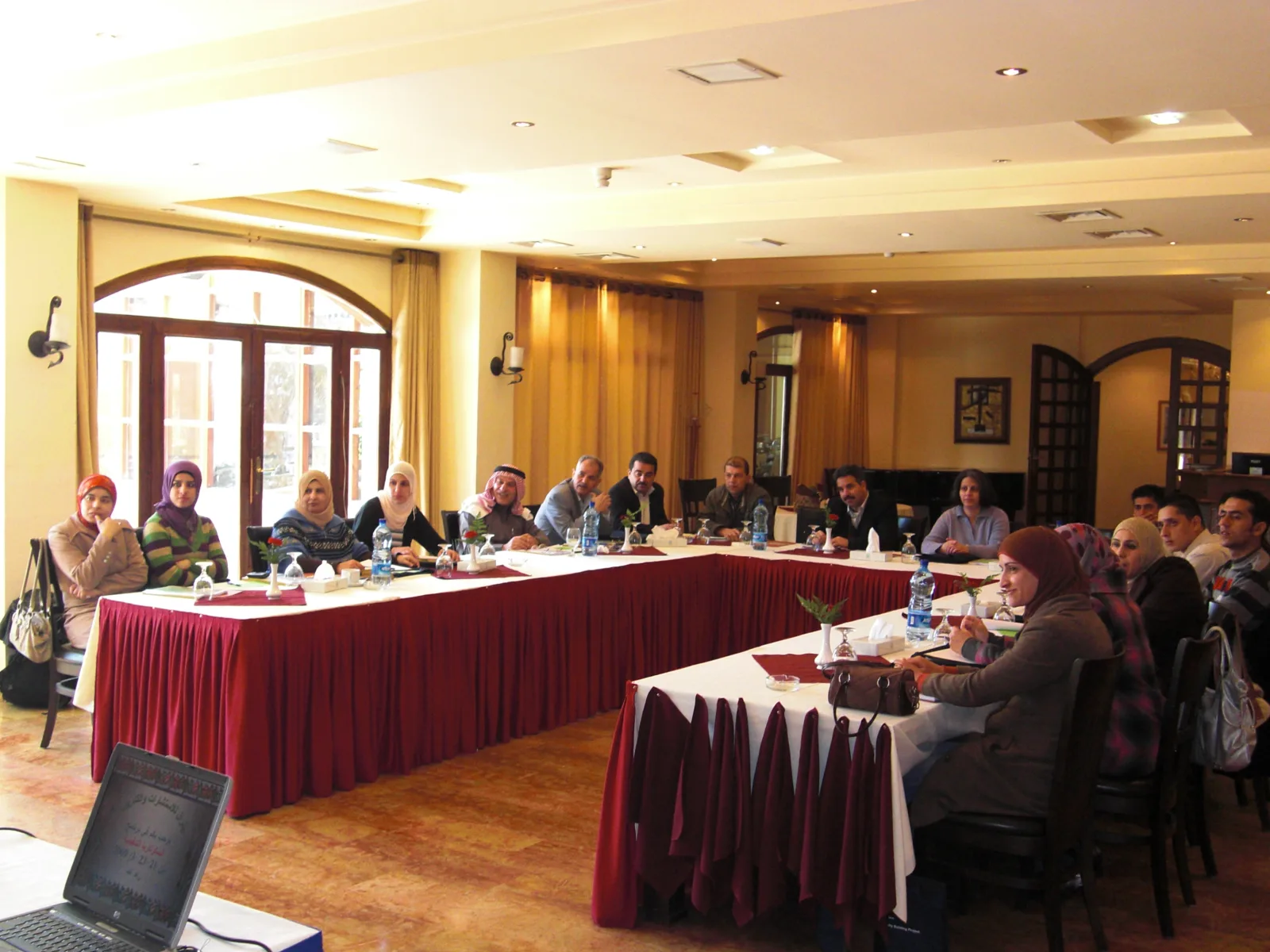
Coaching workshops on how to use and apply the Assessment Tool Kit for Promoting Integrity, Transparency and Accountability in Palestinian Municipalities
2010
Project

Coaching workshops on how to use and apply the Assessment Tool Kit for Promoting Integrity, Transparency and Accountability in Palestinian Municipalities

The project is part of the UNDP/PAPP local governance support program( LGSP 2010-2013 ) that aims to contribute to the development of a democratic , decentralized transparent , and inclusive local governance system in the oPT . In 2008, UNDP/PAPP in cooperation with MoLG, association of Palestinian; local authorities (APLA), and selected LGUs, developed a local governance integrity index, to assess municipalities performance.The objectives of this training are:The project objective is to train 20 MoLG staff as professional trainers on applying the Assessment Tool kit on 133 municipalities, therefore contributing to an enabling environment for promoting transparency and active community participation. This will also include installation training on the required SPSS software.The areas that will be analyzed are as follows:Administrative regulations and Human Recourses.Council (Chairman/mayor and members).Finance.Engineering and planning.Supplies and procurement.Community Participation.To this end, UNDP contracted GCT to implement this assignment in a professional manner to achieve the overall objectives.
Funded by UNDP; MoLG (Ministry of Local Government)
West Bank -Ramallah
Workshop for Administrative Board of Joint Service Council for the Wastewater Disposal in Tulkarm Region
2010
Project

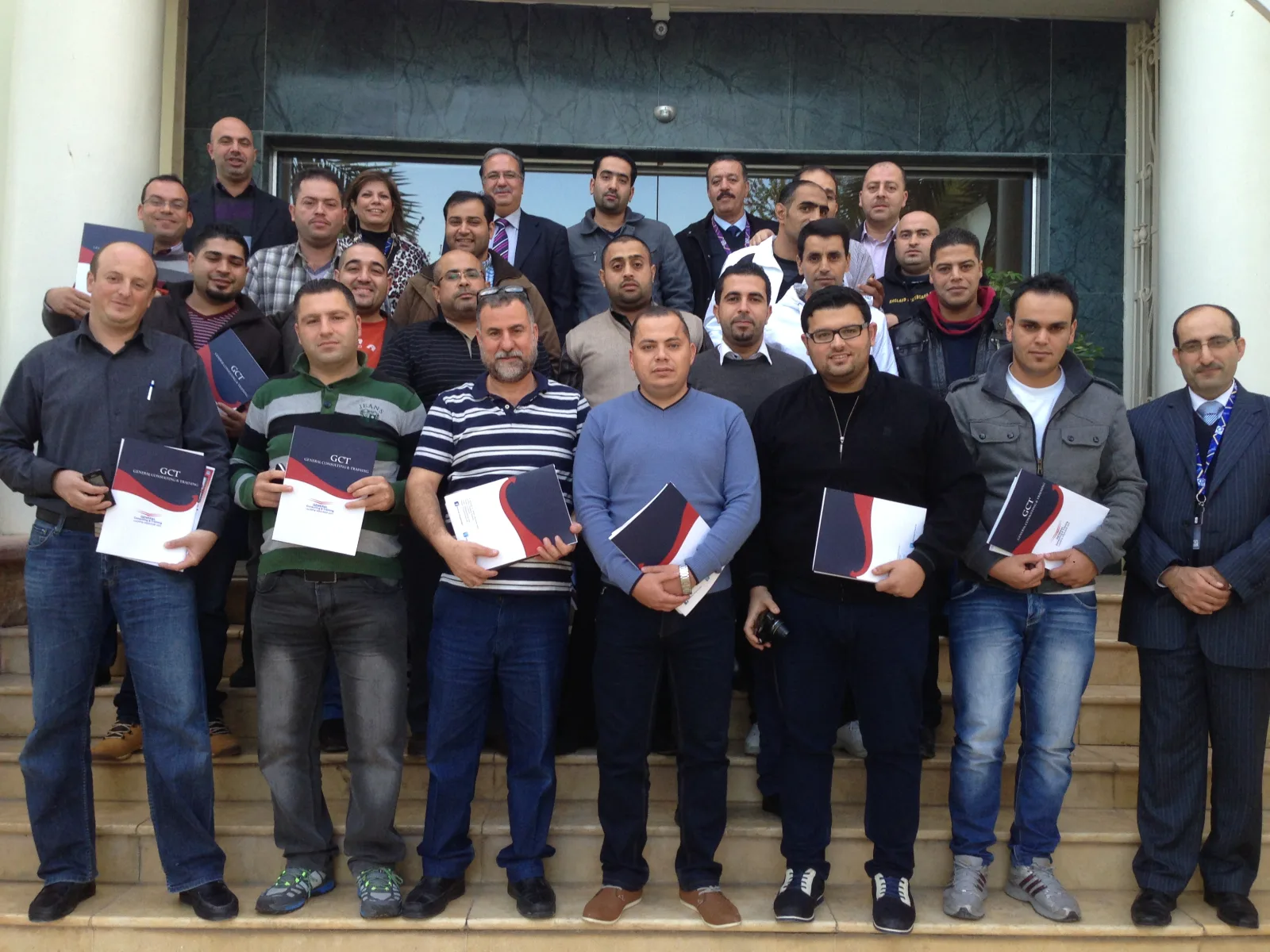
Workshop for Administrative Board of Joint Service Council for the Wastewater Disposal in Tulkarm Region

The German Development Cooperation is contrbuting to the development of the palestinian water sector sinse 1980s. The GIZ is abbreviation for German term which is (Gesellschaft für Internationale Zusammenarbeit) mean in English society for international cooperation, as a federal enterprise it supports the German Government in achieving its objectives in the field of international cooperation for sustainable development. It offer demand-driven, tailor-made and effective services for sustainable development in more than 130 countries worldwide, through applying a holistic approach based on the values and principles upheld in German society, to facilitate change and empower people to take ownership of their own sustainable development processes. It works on behalf of the German Federal Ministry for Economic Cooperation and Development, and works for the German Federal Foreign Office in the security sector and for various other German ministries in the fields of culture and social affairs.The main objectives of this assigment were:Arrage for a training workshop about management and operation of joint service councils to be conduted in egypt for the adminstrative board and the top management staff of the JSC for the wastewater disposal in the Tulkarem regionUndertake the adminstrative and logistic arrangements for the training workshop.To this end, GIZ contracted GCT to implement this assignment in a professional manner to achieve the overall objectives.
GIZ / joint service council
Egypt/ West Bank
Capacity Development Workshops and coaching in Customer Service for MOI \& MoT.
2010
Project

Capacity Development Workshops and coaching in Customer Service for MOI \& MoT.

The Palestinian Authority Capacity Enhancement project is a three-year, $20 million project funded by United States Agency for International Development (USAID). It was aimed to improve the living standards of Palestinian people by strengthening Palestinian National Authority ministries and other public sector institutions . It has two main tracks: a short-term focus on the delivery of improved services and a medium-term focus on capacity enhancement of government institutions. The short-term interventions in Year 1 were designed to produce immediate, visible improvements in the quality and efficiency of services to citizens. These immediate interventions were also laid the groundwork for medium-term capacity building activities in Years 2 and 3.In this context , Chemonics has conducted a performance gap analysis of the frontline desk officers in the MOI’s and MOT in eight district offices to assess their customer relations skills. The findings revealed that the Ministry staff who have direct citizen contact lack the necessary customer relations skills needed to interact effectively with the public. There was a need to fundamentally rethink and reform the basic concepts of citizen and customer service in the department, in addition to improve the officers’ public interactions, because the interaction of desk officers with public in an unprofessional manner, has resulted in public dissatisfaction and poor service delivery.For that purpose, Chemonics has contracted GCT to implement capacity development training program in Customer relations and public communication to desk officers in MOI and MOT , to support a more citizen-centered transformation process and compliment service reengineering interventions that are currently being implemented by the project.

Funded by USAID; Chemonics International; Palestinian Authority Capacity Enhancement project (PACE).
West Bank- Bethlehem, Hebron, Qalqilya, Tulkarm, Salfit, Jenin, Ramallah, Nablus
Capacity Building of Centers of Excellence (COE) at Five Palestinian Ministries (MOT, MOF, MOPWH, MOI and MOTIT).
2009
Project

Capacity Building of Centers of Excellence (COE) at Five Palestinian Ministries (MOT, MOF, MOPWH, MOI and MOTIT).

The Palestinian Authority Capacity Enhancement project is a three-year, $20 million project funded by United States Agency for International Development (USAID). It was aimed to improve the living standards of Palestinian people by strengthening Palestinian National Authority ministries and other public sector institutions . Its main objectives were to improve the capacity of public ministries and institutions to govern effectively, provide basic services and security for citizens and to develop and implement critical policy changes and reforms. PACE has contracted GCT to provide assistance in implementing the Centers of Excellence methodology to support its medium-term interventions. The first part of COE methodology used a workshop and facilitation model to orient internal ministries teams to the “Culture of Excellence” and prepare them to conduct a self-assessment of their ministries in order to identify areas for internally-driven reform, as well as build broad support for these reform efforts on all levels of the organization. The intended Culture of Excellence was focused and covered the following main areas: Leadership, People, Knowledge, Processes and Finance. In addition to the foundation of the teamwork, building the communications and culture of change management among team member in alignment with the value of Centers of Excellence programs.

Funded By USAID; The Palestinian Authority Capacity Enhancement project (PACE) Managed by Chemonics International.
West Bank -Ramallah
Workshops on Management of Development and Change.
2009
Project

Workshops on Management of Development and Change.

Chemonics was established in 1975, and working in more than 150 countries to help its clients, partners, and beneficiaries face difficult challenges, from political instability to limited healthcare to a lack of market infrastructure by working together to find and implement innovative projects that achieve development impact. Its mission is to help people live healthier, more productive, and more independent lives.Chemonics and USAID (the funded) were developed many projects to support the Palestinian Authority such as PA Capacity Enhancement project and Palestinian Justice Enhancement Program.The objective of the PA Capacity Enhancement project was to strengthen of the institutional capacity of the Palestinian Authority (PA) ministries and institutions including the Ministry of Finance, the Ministry of Transportation, the Ministry of Public Works and Housing, the Ministry of Interior, and theMinistry of Telecommunication and Information Technology, as a part of this projectthere was a Center Of Excellence program (COE) which included several training programs for the previous ministries. Whereas the objective of the Palestinian Justice Enhancement Program was to improve of the capacity of justice sector institutions, legal professionals, and civil society, while increasing public knowledge of and respect for law and the justice sector by building more capable and credible institutions and increases public confidence in the system. The beginning of the cooperation between GCT and Chemonics was in the year of 2009 and it continued for the following years, and hope to continue for the coming years. It was carried out in Ramallah and Jericho for five timesin2010, 2009 for the five ministries with trainers Mr. Yacoub Hamdan from Jordan and Mr.Ahmed Ragheb from Egypt. The main objectives were to identify the change and its reactions, stagesand dynamics of change, Model McKenzie for change, agenda for change, the difference betweenthe director and commander, and who manages and lead the change and development.

Funded by USAID; Chemonics International, Palestinian Justice Enhancement Program (PJEP) in cooperation with high judicial council,
West Bank -Ramallah
Coaching Workshops on Institutional Development for the Ministry of Finance –Income Tax Department ITD
2009
Project

Coaching Workshops on Institutional Development for the Ministry of Finance –Income Tax Department ITD

The Palestinian Authority Capacity Enhancement project aims to improve the standard of living for Palestinian people by enhancing the provision of services and institutional capacity of targeted Palestinian Authority (PA) ministries and institutions. This three-year project, funded by the United States Agency for International Development (USAID), has two main tracks: a short-term focus on the delivery of improved services and a medium-term focus on capacity enhancement of government institutions. Short-term interventions in Year 1 are designed to produce immediate, visible improvements in the quality and efficiency of services to citizens.These immediate interventions will also lay the groundwork for medium-term capacity building activities in Years 2 and 3. Moreover, The project is working to improve service delivery and build capacity within the Ministry of Transportation (MOT), the Ministry of Public Works and Housing (MOPWH), the Ministry of Finance (MOF), the Palestinian Land Authority (PLA), the Ministry of Interior (MOI), and the Ministry of Telecommunication and Information Technology (MTIT). Additional PA partners may be identified during project implementation.The project, managed by Chemonics International Inc, conducted a performance gap analysis of the Income Tax Department (ITD) in the MOF. The findings revealed a critical need for the department's district office mangers to develop their knowledge skills with regard to change management ,staff performance ,customer service, as well as to develop and implement a code of ethics .Overall, the ITD office managers can improve their managerial skills and the department lacks a strategic vision and operational plan.To this end, CHEMONICS International ccontracted GCT to implement this assignment in a professional manner to achieve the overall objectives

Funded by USAID Task Order Number: DFD-I-06-05-02219-00; The Palestinian Authority Capacity Enhancement project (PACE) Managed by CHEMONICS International
West Bank- Ramallah,
Evaluation and Review the Work of Palestinian Counselling Center According to the Five-year Strategic Plan 2005 – 2009.
2009
Project

Evaluation and Review the Work of Palestinian Counselling Center According to the Five-year Strategic Plan 2005 – 2009.

Palestinian counselling centre (PCC) was founded by a group of psychologists, social workers and educators in 1983, to work with all members of Palestinian society who are at risk of political, social, economic and psychological harm or violence in order to improve and develop the concept of mental health services in Palestine. The center offers comprehensive services  in the field of positive mental health to all marginalized groups in the Palestinian society of children, youth and women, individuals suffering from mental disorders, social, educational, psychiatric patients chronically, through a set of treatment - prevention and building programs, lobbying campaigns and advocacy.In order to continue the progress and development, this evaluation study was came to evaluate and review the work of Palestinian Counseling Center according to the five-year strategic plan 2005 – 2009.The overall objective of this study was to provide decision makers in PCC with information and analysis that describes to what extent they have succeeded in managing the implementation of the strategic plan efficiently and effectively, in addition to provide final findings and development recommendations to the center which can help in formulation the strategic plan for the next five years (2010-2015).The specific objectives of this study were to :Identify the suitability of objectives of the center to the needs of Palestinian community mental health services, and the suitability of the national and sectoral plans in the field of mental health;Measure the efficiency in the selection of available sources for the implementation of activities.Measure the effectiveness and the impacts on the targeted groups, as well as the extent of access to the expected results according to what were anticipated in the logical framework.Measure the impact of the plan on the targeted groups and the surrounding community of the services provided at the level of the sector or region.Measure the potential to continue to benefit from the services provided after the funding ends.Conduct an assessment of each department in the centre and provide recommendations.To this end PCC has contracted GCT to implement this evaluation study in professional and objective manner.

Palestinian Counseling Centre.
West Bank (Jerusalem, Ramallah, Nablus, Azzun).
Capacity Building Workshops for New Elected Local Governments Staff
2007
Project

Capacity Building Workshops for New Elected Local Governments Staff

UNDP /PAPP within the frame work of Capacity Building of Elected Local Governments Project has contracted GCT to conduct TOT training workshops in Cairo –Egypt for ten participants from the Ministry of local Government ,UNDP and APLA , in order to improve their knowledge on training skills and techniques to become professional trainers to train Mayors and members of the new elected local government from Gaza Strip and West Bank in four major's fields: Legal, Financial, Administration and Engineering.The training workshops was designed to achieve the following objectives and help the participants to be able to: Understand how the components of a training program can enhance the training process. Apply the principles of adult and accelerated learning in training design, material development and the facilitation of training sessions.Clarify training needs and set objectives to meet training needs.Choose training methods appropriate to the training needs and consistent with adult and accelerated learning Principles.Design and conduct training to be effective with participants’ learning styles.Refine their program planning and presentation based on customized instructor and participant feedback.The workshops included practical training at the TEAM Institute of Training in Cairo, to exchange and learn the Arabic and Egyptian training model for public sector, and the local Government Staff.

Capacity Building of Elected Local Governments Project, UNDP/ PAPP.
Cairo
Evaluation of Emergency Assistance to Sustain Health Care Services in Jenin, Tubas and Hebron Areas.
2006
Project

Evaluation of Emergency Assistance to Sustain Health Care Services in Jenin, Tubas and Hebron Areas.

The Emergency Assistance to Sustain Health Care Services project is an emergency relief project implemented by Care International West Bank &Gaza, funded by European Commission Humanitarian Aid Department (ECHO). It aimed mainly to provide an adequate level of health care coverage and good quality basic health care in remote villages in West Bank and selected communities in Gaza Strip. As a part of this project, emergency assistance health care services was implemented in Jenin, Tubas and Hebron areas by CARE WB&G in partnership with Ministry of Health (MoH), Palestine Medical Relief Society (PMRS), and Health Work Committees (HWC). The main goal of these services were to contribute to improvement of the wellbeing of Palestinians in vulnerable communities in Jenin, Tubas and Hebron districts, through providing basic health services to vulnerable communities in these districts by increasing the coverage of primary health care services and training of health staff. With approaching the end of the project, Care In was planned to conduct an evaluation to overall aspects of project interventions, for that purpose it has contracted GCT to implement this assignment.The main objective of this evaluation assignment was to evaluate the outcomes of Emergency Assistance to Sustain Health Care Services Project on the targeted communities in Jenin, Tubas, and Hebron areas as well as on project‘s staff by highlighting the following main points:The progress of project activities ( progress VS work plans), difficulties which has faced implementation, and lessons learnt.The project’s main areas of success and failure.Recommendations for further improvements in implementation effectiveness , performance and avoid problems in future projects.Project’s relevance ,effectiveness , effeciency, impact and sustainability.Description of Actual Services Provided by GCT staff:Evaluation the progress in achieving project activities according to the approved work plans; the difficulties which had faced the implementation, drawing lessons learnt and highlighting the main areas of success and failure.Measuring the project’s relevance, effectiveness, efficiency, as well as identifying its impact and sustainability;Development of final evaluation report that been enhanced with comprehensive conclusions to help in improving the implementation effectiveness and avoid problems in coming projects.

Funded by European Commission Humanitarian Aid Department; (ECHO). Care International.
West Bank (Jenin, Tubas and Hebron).
Evaluation of Integrated Water and Environmental Resources Management Program in the Rural Areas of Palestine.
2006
Project

Evaluation of Integrated Water and Environmental Resources Management Program in the Rural Areas of Palestine.

Palestinian Hydrology Group (PHG) is the largest Palestinian NGO working to improve access to water and sanitation services, and to monitor pollution and climate change in the Occupied Palestinian Territory. It started to implement the Integrated water and environmental resources management Program (A Multi-Donors Program) in April 2002 in the West Bank & Gaza strip which has ended in December 2005. The main objectives of this core program were to:Enhance social justice through enabling equal opportunities and fair competition for resource allocation for all communities; Increase Palestinian resistance against Israeli measures in water sector by reducing dependency on external sources, especially in emergencies; Eliminate environmental degradation and ensure resource sustainability by development of new water /wastewater projects, and enhancing the management efficiency of such projects;Empower the public by encouraging their participation in local water management through sharing information, capacity building, promoting conservation techniques and practices.Delineate gender aspects of water related issues through ensuring proper representation of women in different levels of water planning and management; and Improve the technical and administrative performance of PHG to ensure its work sustainability.After the program completion, PHG was planned to conduct an evaluation study to assess its impact and the results achieved. To this end PHG has contracted GCT to implement this assignment in an objective manner. The main goal was to assess the program’s impact during its life time (2002-2005), in order to help and support PHG to build on the final findings and in better defining results -based program during the implementation of next core program.

Palestinian Hydrology Group (PHG) - A Multi-Donors Program
West Bank and Gaza Strip
Capacity Building and Awareness Campaign on Water Hygiene Sanitation and Conservation.
2005
Project

Capacity Building and Awareness Campaign on Water Hygiene Sanitation and Conservation.

CARE International is an international development organization working in different geographic areas and varieties of programs and projects in marginalized communities under several developmental sectors such as: Health, Environment, Infrastructure, rehabilitation and construction, Agriculture, Water...etc.Within its different developmental projects in Palestinian Water sector, it focused on awareness activities on Water Hygiene Sanitation and Conservation which aimed at the expansion and deepening of the impact of the different activities of these projects that are implemented in Jenin and Tulkarem rural areas that are improvised by "the wall". Specifically; to contribute meaningfully to medium and long-term sustainability of Hygiene knowledge and behaviors of community officials and members.The main objectives of this training and awareness campaign were to: Raise awareness of targeted groups regarding personal and environmental hygiene including water provision, excreta disposal, drainage, solid waste disposal and vector control.Contribute to improve communities' knowledge and capacities to better utilize the new developed water and sanitation facilities.To this end, CARE International has contracted GCT to implement the required study in objective and effective manner.

Funded by the Humanitarian Aid Office, European Commission; Care International.
West Bank
Final Evaluation of Local Rural Development Program (LRDP) In Jenin Area.
2005
Project

Final Evaluation of Local Rural Development Program (LRDP) In Jenin Area.

The Local Rural Development Program (LRDP) was launched in 1994 and jointly implemented by UNDP and Palestinian Ministry of Local Government (MoLG). It was aimed mainly to: Support the local authorities and MoLG to improve the supply of sustained infrastructure and services according to the identified priorities of the local population;Promote decentralization and institutional strengthening by addressing the lack of rural infrastructure and services in rural areas;Bridge urban – rural gaps, by providing resources, opportunities and the necessary technical support;Create a joint services council in Jenin district, promote/enhance its skills and capacities through a number of capacity building activities and income-generating joint projects; Implement development and infrastructure projects.After the end of program, The Representative of Ireland in cooperation with UNDP was planned to conduct a comprehensive evaluation in objective manner.The main objectives of this evaluation were to assess the relevance and appropriateness, efficiency, effectiveness, potential sustainability and impact of the Irish funded activities on the selected Cluster (Jenin District) in palestine, as well as to judge the merits and disadvantages of LRDP model relative to alternative options for local government system development. . For that purpose, UNDP has contracted GCT to implement the required assignment.

UNDP, Ireland Development Cooperation, Representative of Ireland to Palestinian Authority.
West Bank -Jenin
Consulting Inquiries

Need Expert Consulting Services?

Partner with GCT for high-impact advisory and project delivery across Palestine and the region.

Live Support & Inquiries

GCT Advisory Team