Our Projects | GCT Consulting & Training

Explore GCT's portfolio of 900+ consulting projects across Palestine and the Arab region, spanning governance, M&E, agriculture, justice, social development, economic development, water, and education.

900+

Delivered Projects

27+

Years of Experience

400+

Key Clients & Donors

8

Specialized Sectors

Our Project Portfolio

Explore our portfolio of projects delivered across multiple sectors with local and international partners.

Our Project Portfolio

Provision of Institutional Reform – HR Assessment to GEDCO, Gaza, oPt
2022
Project

Provision of Institutional Reform – HR Assessment to GEDCO, Gaza, oPt

The United Nations Office for Project Services (UNOPS) has conducted an institutional assessment of the Electricity Sector in Gaza Strip and reviewed the status of the generation and supply of electricity during the years (2016-2018), in an effort to contribute in tackling the severe electricity crisis in Gaza which caused by a series of factors across the electricity sector supply chain. The findings of the Assessment Analysis have led UNOPS to initiate a consulting assignment to provision of institutional reform through conducting HR Assessment to the Gaza Power Generation Company (GEDCO) in collaboration with relevant stakeholders.

Funded by The United Nations Office for Projects Services (UNOPS) for the benefit of Gaza Electricity Distribution Corporation (GEDCo)
Gaza Strip
Social and Environmental Thematic Evaluation of the Khan Younis Waste Water Treatment Plant (KY WWTP)
2021
Project

Social and Environmental Thematic Evaluation of the Khan Younis Waste Water Treatment Plant (KY WWTP)

In response to the rapidly increased population in the city of Khan Younis, followed by the increase in their needs in life with special focus in water and hygiene; the UNDP initiated the Khan Younis Waste Water Treatment Plant (KY WWTP) as an emergency response to the vital hygienic and environmental needs of Khan Younis residents. The intervention is a strategic environmental project that aims to improve access to adequate, inclusive and equitable sanitation and hygiene for the residents of Khan Younis Governorate with special attention to the needs of women. The UNDP intervention comprises two major components/projects: first, the construction of the KY WWTP, and second, the construction of a solar energy system to guarantee providing electricity on a continuous basis for proper and sustainable operation of the treatment plant. The project is directly executed by UNDP in coordination with the project partners: the Palestinian Water Authority (PWA) as sector regulator; the Coastal Municipalities Water Utility (CMWU) as service provider and final operator of the project, Khan Younis Municipality as a direct beneficiary. The evaluation will cover both the construction of KYWWTP and energy system projects. While the main focus of the evaluation is the KY WWTP and the solar energy system projects which were constructed on site during the period 2017 - 2021, they evaluation may reflect on the conditions and challenges encountered during the design stage before the actual construction. The evaluation is planned to be conducted at the final stage of the projects’ implementation period and shall be finalized by end of December 2021. More specifically ,the main objective of this evaluation is to provide a comprehensive and sufficient analysis of the projects by conducting an independent external assessment of the level of achievement, performance of the set objectives and expected results/outputs/outcomes/activities listed in the project documents, the uniqueness, added value and significance of these projects, observing the projects impacts on the community of Khan Younis Governorate and the Gaza Strip, determining the successes and/or shortcomings, as well as factors that have hindered or facilitated the success of the projects, identifying lessons learned and best practices, in addition to provide evidence on the achievements and results of the projects, actionable recommendations related to the theory of change, performance management framework, and strategic interventions of the projects under evaluation. As well as recommendations to be shared with key stakeholders and to be used by UNDP for follow up and to enhance the quality of future projects and programming as well.To this end, UNDP has contracted General Consulting and Training (GCT), to accompany UNDP PAPP the evaluation according to their requirements and expectations.

Funded by the Government of Japan, the Kuwait Fund for Arab Economic Development through the Islamic Development Bank, and co-financing and implementation by UNDP.
Gaza Strip
partnership to support the selection, proposal development and coaching of selected entities within the Investment Programme for Resilience (IPR)
2021
Project

partnership to support the selection, proposal development and coaching of selected entities within the Investment Programme for Resilience (IPR)

The Investment Programme for Resilience (IPR (is one of several interventions implemented by UNDP PAPP, it is a comprehensive, inclusive, and integrated response to the needs of the most vulnerable/marginalized communities in Palestine. It is designed based on a sound analysis of the risks and problems posed by the COVID-19 crisis and its immediate implications. It is also based on the analysis of previously existing multispectral development challenges in the Palestinian Territory. The Programme aims to reduce development gaps by addressing short term-immediate needs and medium to longer term priorities with the aim of enhancing access to sustainable and quality services and strengthening the resilience of marginalized communities. There is also a strong focus on the most vulnerable groups and communities including women, youth, and disabled persons. Accordingly, a concept note solicitation was launched by UNDP PAPP for the selection of community infrastructure projects in both East Jerusalem and Gaza. This call for partnership falls under the community resilience component of IPR, which seeks to address community needs through investments in community infrastructure and basic services. NGOs will be selected to rehabilitate, expand or construct infrastructure projects that support socio-economic development, social cohesion and ultimately community resilience in East Jerusalem and GazaTo this end, UNDP has contracted General Consulting and Training (GCT), to accompany UNDP PAPP with the evaluation and selection of the projects and work with the NGOs to develop full-fledged proposals, as well as to provide support the selected NGO in ensuring community engagement is ensured as well as mainstreaming key characteristics of sustainable community infrastructure initiatives, such as environmentally friendly, digital and gender mainstreamed/focused. According to their requirements and expectations.

Implemented by UNDP/PAPP, in partnership with local NGOs/CBOs. Funded by KFW.
East Jerusalem and Gaza
Final Evaluation for the “Transboundary Wastewater Pollution Control” Project
2020
Project

Final Evaluation for the “Transboundary Wastewater Pollution Control” Project

The Project “Transboundary Wastewater Pollution Control Project” is a UNDP/PAPP initiative that aims to strengthen the wastewater infrastructure in critical locations and support the Palestinian Water Authority (PWA) in improving its transboundary wastewater management. The Project is funded by the Netherlands with a total budget of USD 6,708,488.Palestinian Water Authority (PWA), Ministry of Local Government (MOLG), and the Municipalities of Baqa Al-Sharqia, Nazlet Issa and An-Nazleh Asharqia were the key implementing partners of this Project. With approaching the end of project, a final evaluation was necessary to provide a comprehensive and sufficient analysis of the project for the years of operation by conducting an independent external assessment of the level of achievement, performance and impacts of the set objectives and expected results/outputs/outcomes/activities listed in the project documents, determine the successes and/or shortcomings, as well as the factors that have hindered or facilitated the success of the project, identify lessons learned and best practices, in addition to provide recommendations to be considered in future programming.Based on the foregoing, UNDP/PAPP is seeking an eligible firm to conduct the final evaluation for the “Transboundary Wastewater Pollution Control” Project“. To this end, UNDP has contracted General Consulting and Training (GCT), to implement this assignment according to their requirements and expectations.

Funded by United Nation Development Program (UNDP/PAPP), for the benefit of PWA and 6 targeted municipalities in Baqa Asharqia, Zeita and Nazlat
West Bank (Jenin and Tubas).
Review of ICT Legal Framework and assessment of ICT for agricultural innovation in the State of Palestine
2019
Project

Review of ICT Legal Framework and assessment of ICT for agricultural innovation in the State of Palestine

Innovation and ICT Sector Development as a Tool for Peace and Prosperity in State of Palestine project was implemented by UNDP in partnership with the Ministry of Telecom and Information Technology (MTIT) and Ministry of Agriculture (MOA), it aimed to contribute to innovation development and ICT for the economic development of Palestine.Under this project, as it is well- known that development and investment in any sector requires a solid legal and legislative ground in order to succeed and sustain, by understanding whether recent developments in these sectors exposed anomalies in the legal and regulatory environment have; to identify where the current policy objectives have and have not been achieved, and to understand policy goals may need to be set in response to the changed and foreseeable environment both locally and globally, UNDP contracted GCT to conduct review of ICT Legal Framework and assessment of ICT for agricultural innovation in the State of Palestine. The general main purpose of this assignment was to enhance the enabling environment for ICT developments and entrepreneurship through achieving the following sub-objectives:Reviewing the national ICT legal and policy framework with special focus on ICT for agricultural sector (Argo-Tech).Identifying structural anomalies in the governance model and any shortfalls identified in the legal and institutional framework that may presently inhibit the normal development of the sector.Identifying policies and seek to ensure the efficient operation and development of ICT sector and related areas of activity, such as that of the Agricultural Sector as a source of economic growth and prosperity to the state of Palestine.

Funded by UNDP / PAPP; for the benefit of Ministry of Agriculture and Ministry of Telecom and Information Technology of the State of Palestine.
West Bank
Develop and Implement a Baseline Study for the benefit of Ministry of Agriculture (MoA).
2019
Project

Develop and Implement a Baseline Study for the benefit of Ministry of Agriculture (MoA).

The Government of Palestine has received a financing from the International Fund for Agricultural Development (IFAD) and from OFID towards the cost of Resilient Land & Resource Management Project (RELAP) which will be implemented over a 6 year period, starting in the course of the second semester of 2018. The RELAP investments are organized into three major components: 1) Climate adaptive land development; 2) Market linkages for the rural poor; 3) Improved public services for up scaling climate resilient agricultural land use and production systems. IFAD intends to apply a portion of the proceeds of this load to eligible payments under this contract to conduct a Baseline Study. The main objectives of this Baseline Study are: to collect qualitative and quantitative information on the socio-economic conditions of potential project beneficiaries and to quantify the initial baseline values for the project long-frame indicators. This to be done through conducting baseline surveys. It is worth to mention that the collected information will not only be used as a reference against which project results and impact will be measured, it will also help detailed project interventions based on documented marketing constraints and opportunities.The baseline data will be used as guidance and specific tool for monitoring process among project beneficiaries to document changes in beneficiary’s socio-economic situation. By using comprehensive baseline data of the socio-economic situation of project beneficiaries prior to their participation in project activities.To this end, MOA has contracted General Consulting and Training (GCT), to implement this assignment according to their requirements and expectations.

Funded by the OPEC Fund for International Development and the International Fund for Agricultural Development; for the benefit of Ministry of Agriculture.
West Bank
Awareness Campaign Program to Topics Related to Water and Hygiene.
2019
Project

Awareness Campaign Program to Topics Related to Water and Hygiene.

Awareness Campaign Program to Topics Related to Water and Hygiene. — Funded by Secours Islamique France; for the benefit of Vulnerable Families of the targeted communities (i.e. Beit Liqya, Beit Nuba, Kharbatha Al Misbah and Beit Sira).

Funded by Secours Islamique France; for the benefit of Vulnerable Families of the targeted communities (i.e. Beit Liqya, Beit Nuba, Kharbatha Al Misbah and Beit Sira).
West Bank
Developing the Mothers Empowerment Program at the Jerusalem Princess Basma Centre
2018
Project

Developing the Mothers Empowerment Program at the Jerusalem Princess Basma Centre

The Jerusalem Princess Basma Centre (JPBC) is a charitable, non-governmental, non-profit organization that operates under the umbrella of the Anglican Episcopal Church of Jerusalem and Middle East. Established in 1965, JPBC provides comprehensive rehabilitation and inclusive education to children with disabilities from all Palestinian cities across the West Bank, Gaza and East Jerusalem. In 1993, JPBC was identified by the Palestinian Ministry of Health as one of the big four national referral centers for the rehabilitation of children with disabilities. JPBC is also a member of the East Jerusalem Hospitals Network, and it was also the first and only (so far) rehabilitation center in Palestine to receive the accreditation by the Joint Commission for International “JCI” for the quality health services provided at the Centre in December 2015. As part of the holistic and multidisciplinary approach the Jerusalem Princess Basma Centre has been implementing in its rehabilitation services for children with disabilities, a Mother’s Empowerment Program has been developed to better serve children with disabilities and their family members. This program is a tangible part of the service provision provided to the children with disabilities during their 2-3 treatment process in the Children Rehabilitation Centre at JPBC, and it entails 3 main pillars.To this end, JPBC has contracted GCT to implement this assignment according to their requirements and expectations. The purpose of the consultancy is to support the JPBC to further develop the Mothers Empowerment Program (MEP).

The Jerusalem Princess Basma Centre (JPBC)
West Bank and East Jerusalem
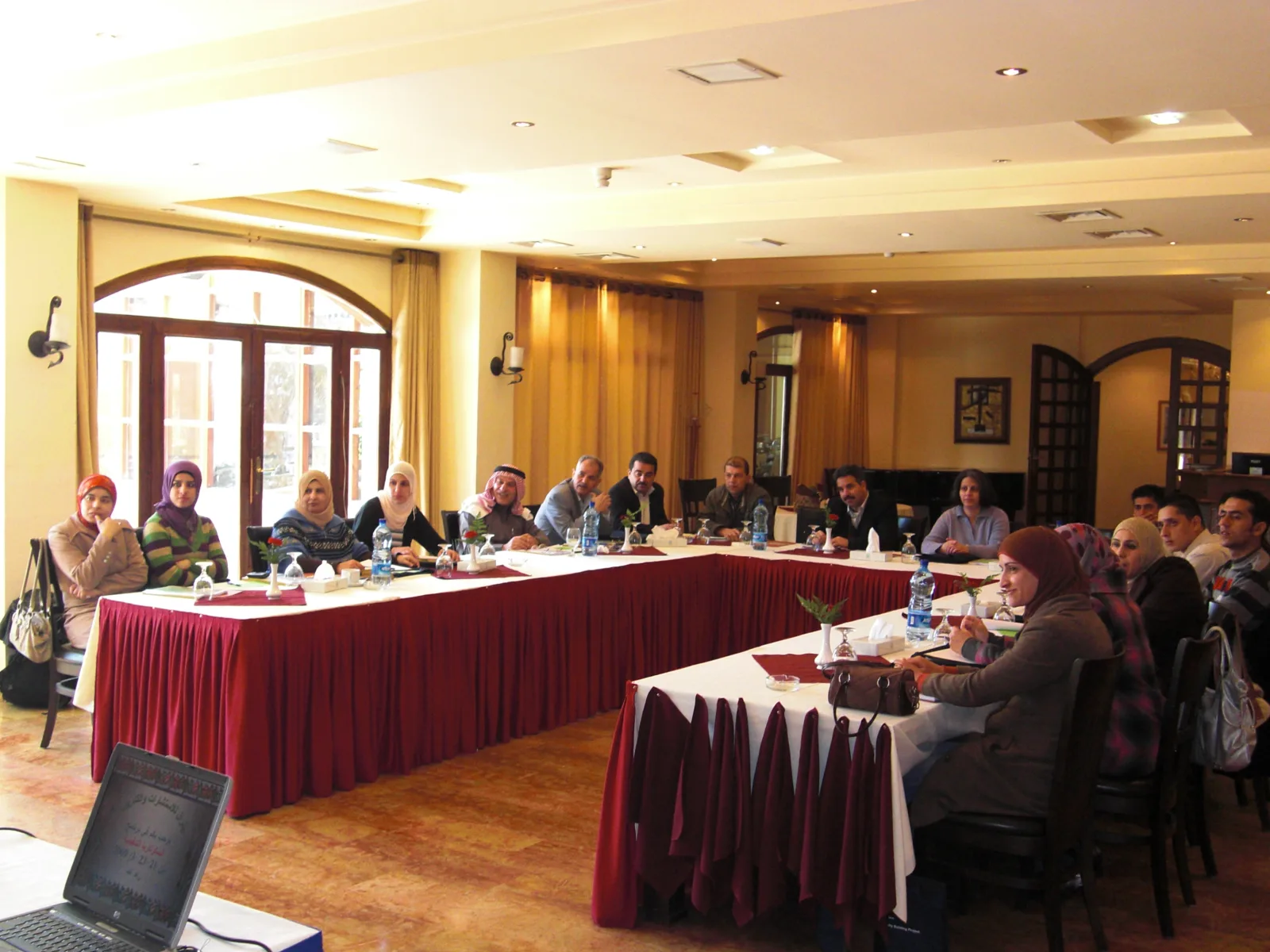
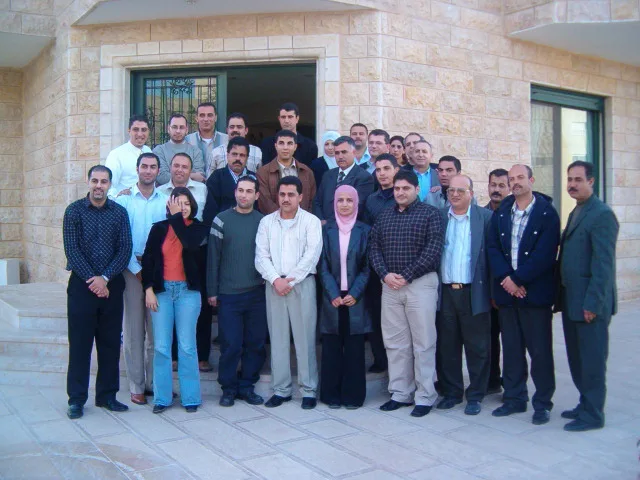
Conducting an International Field Visit to Learn about the Experience of Local Authorities in Crisis Management and Local Development (Bosnia Study Tour)
2018
Project

Conducting an International Field Visit to Learn about the Experience of Local Authorities in Crisis Management and Local Development (Bosnia Study Tour)

The Ministry of local Government has decided to fund a project targeting communities in Area C of the Jordan Valley. The general objective of this project is building the resilience of Palestinian communities in Area C. This is defined as the ability of Palestinian communities to cope with a host of socioeconomic, political, and natural shocks that threaten their assets, way of life, and their continued presence on their land.Through the project’s activities, the project aimed to enhance the Capacity Building for both the Ministry of Local government and the LGU’s for planning and Development in order to support the Palestinian communities in Area C,The RDP project aimed to organize a study tour and conduct successful experiences for sharing knowledge and project management by reviewing project management methodologies and experiences in the public sector in Bosnia.The project included visits to some municipalities (Gorazde Municipality, Opcina Municipality, Chan Municipality, Kanji Municipality, and Sirilink Municipality) To get insights into how local integrated development has Provided a more responsive framework to the overall socio-economic situation. And the role of municipalities in attracting private sector investments and building partnerships between them in what is known as local economic development and the role of municipalities in facilitating the work of industrial zones and attracting international private investment to work in the concession areas of these municipalities, and role in the economic prosperity of these municipalities and the employment of workers And increased income.To this end, MOLG has contracted GCT to implement this assignment according to their requirements and expectations. The main objectives of this assignment were as follows:Training and tour objectives:Provide required exposure to international experiences on infrastructure development projects.To learn on Local Integrated Development approaches and sample projects in the municipalities.Discuss crisis management practices used by the municipalities.Discuss their strategies on handling wastewater and rainwater To be introduced with successful example of Local Integrated Development approaches.Get insights on experience of both recipients and implementers of development projects, through site visits, meetings and in class lecture.To learn on Local Integrated Development approaches and sample projects in the cities

MOLG- Ministry of Local Government
Bosnia
Transport Service Feasibility Study for the Application of Emergency Policy UNDER the Project of “Supporting the Ministry of Education and Higher Education (MoEHE) with the implementation of the Education Development Strategic Plan (EDSP)” (the current strategic plan from 2014-2019
2017
Project

Transport Service Feasibility Study for the Application of Emergency Policy UNDER the Project of “Supporting the Ministry of Education and Higher Education (MoEHE) with the implementation of the Education Development Strategic Plan (EDSP)” (the current strategic plan from 2014-2019

In 2013, The MoEHE started the preparation of its latest EDSP (2014-2019), “A Learning Nation” and launched it in March 2014. The EDSP III is aligned to national planning processes and the National Development Plan (2014-2016) of the PA. The government is currently working on the National Policy Agenda for 2017-2022 and the MoEHE is adapting the EDSP III to align with it as well.The Joint Financing Arrangement (JFA) is a basket funding mechanism supporting the Ministry of Education in implementing and achieving the objectives of the EDSP III . The overall goal / vision of EDSP III is “A results-based and student-centered education system that provides 21st century relevant education services at all levels with high quality and full equity considering individual needs and being at the heart of the political, economic, and social development in and for Palestine”. The general purpose of this consulting service is to support the MoEHE in the timely implementation of the current EDSP III (2014 – 2019) focusing initially on 9 Priority Support Areas, devoted to the main reform tracks in EDSP III, all of them covering respective operational responsibilities of the MoEHE. Within the frame work of this consulting service there was a need identify the best practice for providing safe access to school students in fragile and marginalized areas (Jerusalem, “Area C”, and Hebron) in order to deter dropouts and lost class hours due to the volatile environment they live in. Therefore the assignment main objective was to conduct a feasibility study that shall recommend an education in emergency policy on safe access for school students in fragile/remote areas. The study shall recommend the most efficient and effective methods for mitigating the challenges of safe access within an environment of education in emergency. This includes efficient and effective transport service provision that could also serve as a solution for school buildings in remote/marginalized areasTo this end, MOEHE contracted PLANCO/ General Consulting and Training GCT/GOPA to implement this assignment in professional and objective manner that guarantee the achievement of its objectives.

Funded under the JFA between Germany, Finland, Ire-land, Norway and Belgium. In partnership with PLANCO – Lead Consultant, and GOPA; for the benifit of Ministry of Education and Higher Education (MoEHE)
West Bank
External Evaluation and Strategic Plan Formation to The Jerusalem Legal Aid \& Human Rights Center (JLAC).
2017
Project

External Evaluation and Strategic Plan Formation to The Jerusalem Legal Aid \& Human Rights Center (JLAC).

The Jerusalem Legal Aid and Human Rights Center (JLAC) is one of the key and major players in the fields of Human rights and legal aid. JLAC’s mission is to combat all forms of human rights violations regardless of perpetrating authority, through; facilitating access to justice, lobbying and advocacy, mobilizing social capital, and high professionalism. JLAC is providing its services now through 4 main offices in Jerusalem, Ramallah, Nablus and Salfeet. With the end of JLAC’s current Strategic Plan (2013-2017), it seeks to undertake an external evaluation of its operations and programming, in order to inform the development of a new strategy for JLAC’s work, address shortcomings, identified during the evaluation process, and build on existing strengths. The general objective of this assignment was to evaluate JLAC’s programming and wider institutional role of service delivery, as well as measure the relevance, effectiveness, efficiency, impact, structures, internal environment and sustainability towards the formation of new Strategic Plan (2018- 2022) which considers the identified strengths and shortcomings.More specifically, the assignment was aimed to:Measure extent to which the programming objectives align with the needs of the beneficiaries and donor strategies;Assess programmatic achievements (i.e. expected vs. obtained results);Measure manner of economic viability employed in achieving objectives Evaluate extent to which programming contributes to the attainment of overall development goals Examine to which degree the programming yields lasting positive changes continuing past the intervention;Identify gaps, challenges and obstacles, institutional/programmatic strengths and weaknesses;Examine reporting accuracy to what extend it reflects successes and weaknesses;Conclude lessons learnt and draw recommendations for institutional/programmatic improvements.To this end, JLAC has contracted GCT to undertake this assignment in line with its requirements and expectations.

The Jerusalem Legal Aid \& Human Rights Center (JLAC)
West Bank
Consulting Inquiries

Need Expert Consulting Services?

Partner with GCT for high-impact advisory and project delivery across Palestine and the region.

Live Support & Inquiries

GCT Advisory Team