Our Projects | GCT Consulting & Training

Explore GCT's portfolio of 900+ consulting projects across Palestine and the Arab region, spanning governance, M&E, agriculture, justice, social development, economic development, water, and education.

900+

Delivered Projects

27+

Years of Experience

400+

Key Clients & Donors

8

Specialized Sectors

Our Project Portfolio

Explore our portfolio of projects delivered across multiple sectors with local and international partners.

Our Project Portfolio

Development of Public Notification Policies and Communication Plans for 27 LGUs.
2014
Project

Development of Public Notification Policies and Communication Plans for 27 LGUs.

Description of Actual Services Provided by GCT:Conducting kick of meetings with Global Communities and 4 of selected LGUs (municipalities) to start up the project and update methodology ,work plan to be used in the execution;Supporting the establishment of a project task force (PTF) in each targeted LGU to assist in the preparation of the municipal public notification policies and communication plans;Conducting desk review of the available documents and data related to the project;Conducting 3 centralize workshops with targeted municipalities to assess the the current situation of notification and communication;Reviewing and evaluating the current public notification policies, scope and tools in use in the targeted LGU's;Reviewing and evaluating current communication processes using SWOT tool;Building consensus among each LGU council and staff on the agreed public notification scope and procedures;Preparing draft proposed public notification policies and procedures to gain the final approval form GC and targeted LGUs;Coaching and buidling the capacity of targeted LGUs staff (including PTF) to prepare and develop communication plans ; Conducting centralized workshops for all targeted LGUs to develop and finalize their communication plans;Finalizing and approving the communication plans for targeted LGUs.
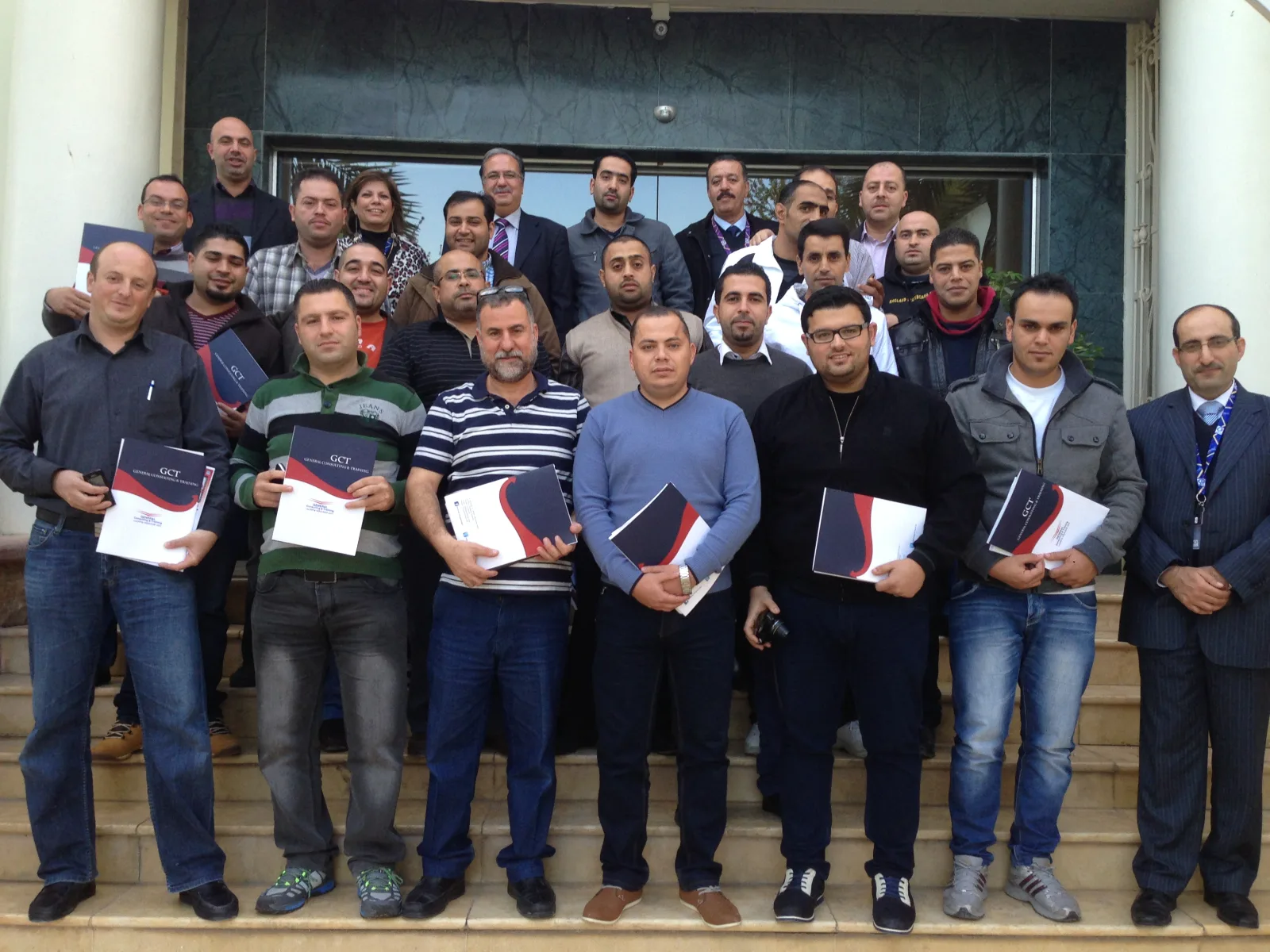
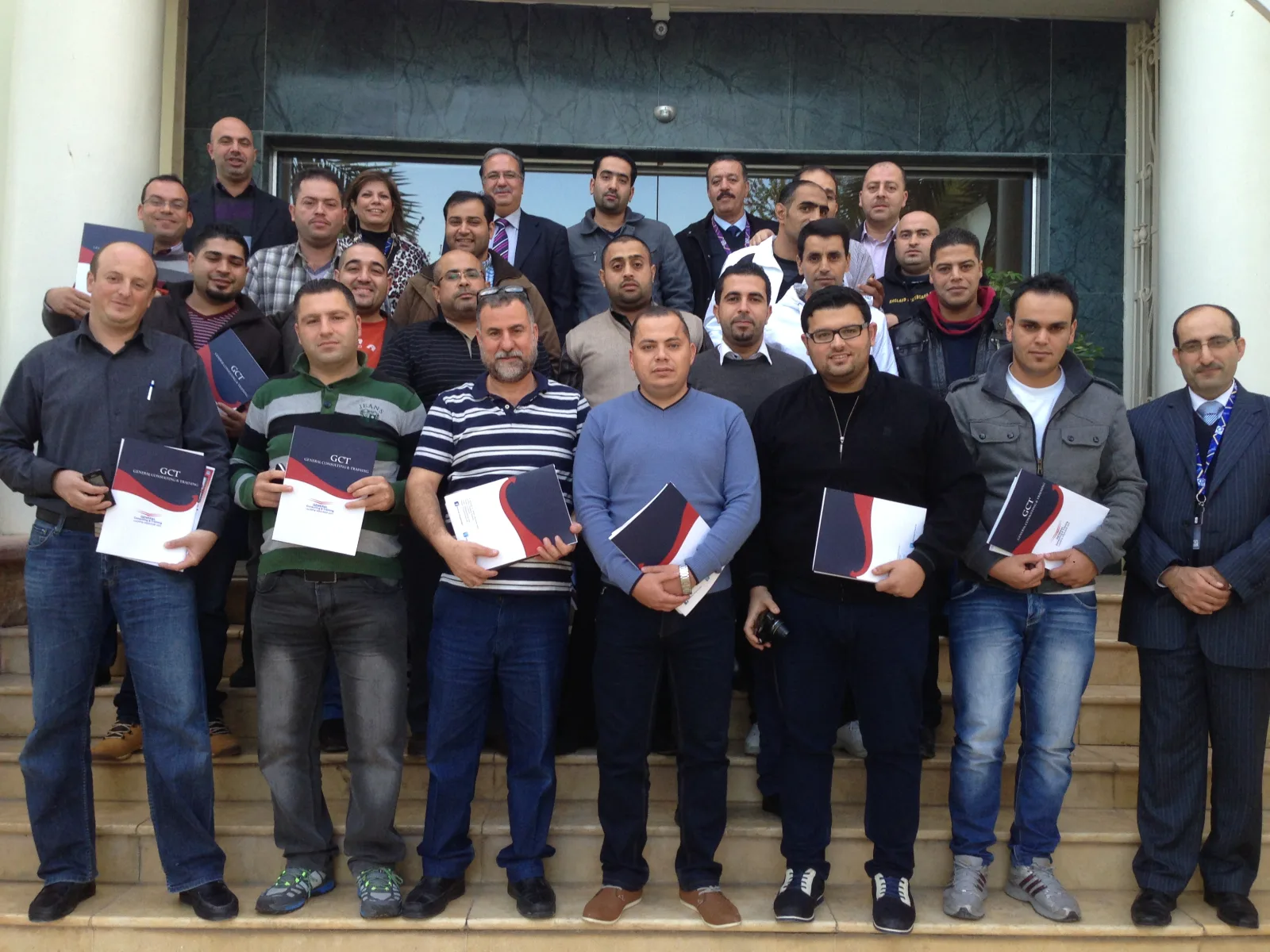
Funded by USAID; Global Communities, Local Government and Infrastructure program – LGI
Northern, Middle and Southern of West Bank.
Capacity development of Palestinian banking sector in using the sign language and dealing with people with hearing disabilities (Basic Level).
2014
Project

Capacity development of Palestinian banking sector in using the sign language and dealing with people with hearing disabilities (Basic Level).

Proceeding from the social responsibility as active institutions and players in the Palestinian business sector from one hand, and their right to access to services provided by these institutions in various sizes and forms as an integral part of Palestinian society , General Consulting and Training(GCT) in collaboration with the Charitable Society for the Deaf in Ramallah city has worked on designing and implementing a professional training program on skills of using the sign language and dealing with people with hearing disabilities (Basic Level), in favour of Palestinian banking sector.The program was designed and developed based on the results of the needs assessment survey which conducted at the first training day with an active participation from Arab Bank staff (24 trainees).The program was aimed mainly to facilitate the process of communication between bank employees and the persons with hearing disabilities by enhancing their knowledge about the used signs in social relations and related terminologies to break the barriers between the trainees and this category of customers, and thereby being able to deal with them directly and meet their needs for banking services, by acquiring the most common used signs related to different provided services in the bank environment. One of the main expected output from this training, is to adopt the necessary actions towards providing the sign language translation service in the bank’s branches across the West Bank and Gaza Strip.

Arab Bank
Ramallah -West Bank
Final Evaluation of Promotion and Development of Tourism in Jenin Area (PDTJ) Project.
2014
Project

Final Evaluation of Promotion and Development of Tourism in Jenin Area (PDTJ) Project.

Promotion and Development of Tourism in Jenin Area (PDTJ) was an initiative by the Jenin Governorate (JG) to enhance the tourism in Jenin as a new opportunity for economic and cultural development, funded by Spanish Agency for International Development Cooperation (AECID). The project proposal was submitted by JG and approved by AECID end of 2010, with a total value 500,000 Euro over the period of 18 months. The overall aim of this project was to promote and develop the tourism sector in Jenin area by improving the position of Jenin as a tourist destination, focusing on quality, diversification and sustainability, within the context of the PNA and Ministry of Tourism larger strategy.Based on the diagnosis report, PDTJ established Jenin Visitors Center (JVC) as a key pilot project located in Jenin city, Nablus Street, Mahmoud Darwish Building, 2nd floor. By approaching the end of project and according to the stated activities in the approved work plan, JG planned to conduct an external evaluation to assess the impact of PDTJ in the tourism sector in Jenin area, by contracting an eligible consulting firm. In this context, JG contracted GCT to undertake this assignment in objective manner and achieve the following sub- objectives:Clarifying the degree of fulfillment of the specific aim of the action taken and the results achieved;Assessing the results of the implemented activities of the project in relation to its short- and mid-term impact;Drawing key lessons learnt in order to develop and improve the design of future projects in the same fields;Developing recommendations to enable Jenin governorate and its partners to take decisions on the course of implementation of current project (PDTJ).

Funded by Spanish Agency for International Development Cooperation (AECID); for the benefit of Jenin Governorate
West Bank- Jenin
Evaluation of SOIR’s Day Centre in Al Bireh 2013.
2013
Project

Evaluation of SOIR’s Day Centre in Al Bireh 2013.

The Swedish Organization for Individual Relief (SOIR) is one of the key civil organization that plays a big role in the field of disability , it started its work in Jerusalem in 1966 to target the persons with intellectual disabilities. In 1981-1982 it established the Day Center which is currently located in Al Bireh for the purpose of training teenagers and young adults. It aims at enabling boys and girls/young men and women to enjoy their right to develop their personality, talents and creativity, as well as their mental and physical abilities. Now it has 15 participants whose age ranged between 14 – 34 years old from the area of Ramallah, Al Bireh, Bethounia, and Hizme. They receive training in daily life skills, physiotherapy, speech therapy, suitable educational training, and pre-vocational training. The Day has during 2012 started to introduce self-advocacy in the work to help parents became more involved and received training in self-advocacy and how to advocate the rights of their sons and daughters in the society and towards decision-makers. The historic focus of the training at the Day Centre has been on special education, but nowadays the mainly occupational therapy methods are used for work with and training of youth and adults with intellectual disabilities. This led SOIR to an important question which if a special education approach is suitable to continue or if training methods should change to be in alignment with an occupational therapy approach. To this end SOIR need to conduct an evaluation to the current used training methods in comparison with occupational therapy methods. SOIR has contracted GCT to undertake this assignment in effective and professional manner. The main objective of this evaluation study was to determine the quality of current working methods at the Day Center and to find possibilities for developing the work and training methods on one hand. The expected outcomes of this study were to serve as a guiding document for future developments which will guide the implementation of the recommendations and future work at SOIR’s Day Centre.

Swedish Organization for Individual Relief (SOIR)
West Bank –Ramallah
Provision of Capacity Assessment, Development of Capacity Development Strategy and a Diagnostic Report of the Existing Legal Framework for Governorates Offices in the oPt.
2012
Project

Provision of Capacity Assessment, Development of Capacity Development Strategy and a Diagnostic Report of the Existing Legal Framework for Governorates Offices in the oPt.

UNDP/PAPP issued the Development for Freedom (Empowered lives. Resilient Rations) consolidate plan of assistance for the years 2012- 2014, which focus on strengthening particular affected geographic areas and vulnerable populations (Gaza Strip, Jerusalem and Area C), by providing assistance in four main sectors: democratic governance and the social contract, promoting productivity and dignity through livelihoods, natural resources and environment, public and social infrastructure.In line with this program and the 13th Palestinian authority (PA) Government plan of 2011-2013 which called ending the occupation, establishing the state, UNDP/PAPP governance team in coordination with Palestinian partner institutions developed the "supporting governance for Palestinian statehood" program document (statehood program) which aims to achieve three main outputs: 1. Institutions of governance and public administration able to fulfill responsibilities and undertake administrative/ financial functions, 2. Sustainable platforms inclusive dialogue and accountable interaction between state and citizen established with an emphasis on women and youth, and 3. State and independent bodies empowered and challenges for statehood. In line with above three outputs mainly the first output, there was a key activity included in the statehood program aiming at developing a comprehensive intervention at the governorates level entitled "support APLA (Association of Palestinian Local Authority) and local governorates to improve decentralized service delivery to local constituencies". Within this context, UNDP/PAPP has planned for conducting a capacity assessment for the governorate offices, development of capacity development strategy, and a diagnostic report of the existing legal framework for Governorate Office in the oPt and provide recommendations on the way forward. In order to these activities be implemented, UNDP/PAPP was contracted GCT to undertake this assignment toward achieving the main objectives. The main objectives of this study were to:Conduct a capacity assessment of all governorate offices.Formulate capacity development strategy to address capacity gaps and capacity development action plan for governorate, based on the results of the capacity assessment.Develop a diagnostic report of the existing legal framework for governorate offices in the oPt (both in Gaza and the West Bank), provide recommendations for improvements and highlights of a suggested new legal framework that clearly defines responsibilities and authorities of governors, with special emphasis on the relation with local government units, PA line ministries at the governorate level, and regional (governorate) planning.

United Nations development program/ Program of Assistance to the Palestinian People (UNDP/PAPP).
West Bank
Post Assessment of the Capacity Building Program.
2012
Project

Post Assessment of the Capacity Building Program.

The Secretariat/NDC administers a separate “Sector Development” budget provided by the donors to facilitate and support institutional capacity development targeting the partner NGOs. And as part of its mandate as the Secretariat for HR/GG organizations, NDC has developed a three-pronged capacity building program for partner organizations. The program focuses on three major areas of intervention: financial issues, advocacy and new media. The overall goal of the program was to provide the partner Human Rights and Good Governance NGO’s operating in oPt the assistance and support for strengthening the skills, competencies, and abilities of their staff and organizations, so they can better deliver their outputs, reach their objectives, and achieve their goals in accordance with their mission. Within this context, NDC provided (48) partner NGOs with tailored technical assistance based on their identified needs and initial development plans. With approaching of the end of this capacity building program, NDC planned to conduct post assessment study which will cover the progress from August 2011 till the expected completion date of the program in December 2012, by contracting an eligible consulting firm with specific expertise in evaluation field of capacity building interventions. The main objective of the post assessment was to assess the progress towards achieving the capacity building program intended outputs and goals, as well as to examine the effectiveness of the program approach and methodology. This assessment was developed to be a reflective and forward-looking exercise that will reflect on what results have been achieved through the implementation of the program, analyzed lessons learned and documented all aspects of the program’s progress, in order to enable NDC and other stakeholders to evaluate the program and sustain a cumulative learning process for the future intervention.

NGO Development Center (NDC)
West Bank, Gaza Strip \&lands of 48
Impact Assessment Survey of JICA's Major Projects in Assisting Palestine.
2012
Project

Impact Assessment Survey of JICA's Major Projects in Assisting Palestine.

The Japanese government has provided assistance and big support to Palestine since 1994 until now by the Japan International Cooperation Agency (JICA) as the implementing organization to the Japanese government’s assistance policy toward Palestine, which reflected in the “Corridor for Peace and Prosperity”. JICA has played a significant role in Palestine from 1997 by addressing the Seven Priority Areas and expanding its cooperation to Palestine.JICA has contracted Japanese consultant team (consortium structured by Oriental Consultants Co, Ltd. and KRI International Corp) to conduct a survey titled “Data Collection Survey on Assistance Approach in Palestine”, for the purpose of achieving this study the consortium in turn has contracted GCT to conduct an Impact Assessment of JICA's Major Projects in Palestine to be a reliable reference for JICA in planning its operation and strategy toward assistance for Palestine.The main objectives of this study were to assess the individual and collective impacts with quantitative and qualitative analysis of the major projects in the seven priority areas (SME development & export facilitation, agriculture, tourism, local governance, public finance management, water & waste water management, health, and education) in which JICA has been committing, through the following sub objectives: To find good practices and success stories in each area form micro to macro levels (communities to governmental levels).To review to what extent each of projects has positively impacted on the fulfillment of sector goal set by Palestine - National Development plan.To suggest, whenever possible, the further actions, remedies needed to ensure positive impact generated, sustainability and sound development of each cooperation area or sector.To pinpoint both positive and negative factors and drawbacks associated with each of projects and/or target area, individually and collectively.

Funded by Japanese consultant consortium (Oriental Consultants Co, Ltd. and KRI International Corp), JICA study team of “Data Collection Survey on Assistance Approach in Palestine”; for the benefit of Japan International Cooperation Agency (JICA).
West Bank –Ramallah
Evaluation of Participatory Rural Development Planning Project (PRDPP).
2012
Project

Evaluation of Participatory Rural Development Planning Project (PRDPP).

Participatory Rural Development and Planning Project (PRDPP) is a three years development project and one of UNDP assistance projects to Palestinian people. It was implemented in Jenin district (87 localities) jointly by the Palestinian Ministry of Planning and Administrative Development (MOPAD), and Ministry of Local Government (MOLG) during the period between Jan 2006- Dec 2008.The project idea revolved about how it is critical to improve sustainable development planning capacity at the local level (district and village level) to alleviate poverty; and to enable citizens to participate in decision-making, strengthening accountability and transparency and making local leaders more directly accountable to communities they serve. PRDPP tackled these issues by building the capacity of a wide range of Palestinian institutions including local government units (LGUs), Joint Councils (JCs), Ministry of Planning &Administrative Development (MOPAD), local communities and civil society organizations (CSOs), private and academic sectors in order to be engaged in participatory district planning processes. In accordance with that , PRDPP aimed mainly to institute participatory local democratic governance at the regional level by strengthening the planning capacity of authorities and organizations at national, regional and local levels in carrying out the participatory strategic development planning.For the purpose of conducting final evaluation for PRDPP achievements and its interventions impacts, UNDP has contracted GCT to implement the required evaluation study in professional and objective manner. The main objectives of this evaluation was to conduct an independent assessment of the performance and achievements of the PRDPP program, by assessing the relevance, efficiency, effectiveness, impact and sustainability of its operations and activities in Jenin District, as well as to draw lessons learned, recommendations that may be incorporated in future development plans.

United Nations development program (UNDP/PAPP), Ireland Development Cooperation (Representative of Ireland to Palestinian Authority)
West Bank –Jenin
Participatory Needs Assessment of Jalazon Refugees Camp.
2012
Project

Participatory Needs Assessment of Jalazon Refugees Camp.

The government of Japan under the humanitarian assistance was supported the Palestinian refugee camps through its authorities’ representatives in Palestine, Jordan, Syria and Lebanon. It has followed specific direction for its assistance to Palestine which was to support the 13th Palestinian National Authority Program, and assist the nation building by supporting the system and building the capacity for independent Palestinian state. As a part of japans support to the 13th Palestinian National Authority Program which considered the refugee assistance as one of key national objectives, Japan International Cooperation Agency (JICA) planned to conduct a comprehensive situation analysis of refugees and refugee camps in Palestine, with focus on Jalazon camp in Ramallah by carrying out a needs assessment and agenda setting for the camp, as well as finding effective solutions in the form of future community development planning through a participatory community development.To this end, JICA contracted GCT to implement this needs assessment study of Jalazon camp.The main objective of this assignment was to study and analyze the situation of Jalazon Refugee Camp in Ramallah for better understanding the refugees and refugee camps in Palestine, in order to build a strategy to satisfy unmet needs, and develop a strategy for the future community development plans toward livelihood improvement of refugees and refugee camps in Palestine.

Japan International Cooperation Agency (JICA)
West Bank –Ramallah (Jalazon Camp).
Support to the European Commission in the assessment of the employability situation of Area C in the West Bank of the Occupied Palestinian Territory (oPt), and formulation of a program to support TVET in Area C.
2012
Project

Support to the European Commission in the assessment of the employability situation of Area C in the West Bank of the Occupied Palestinian Territory (oPt), and formulation of a program to support TVET in Area C.

The European Training Foundation (ETF) is a specialized agency of the European Union based in Italy.It provides advice and assistance to the European Commission and 30 partner countries for the reform of human capital development policies & helps transition and developing countries to harness the potential of their human capital through the education, training and labour market systems reform.In light of a direct request by the European Representative office in WB&GS and in cooperation with GIZ , ETF has formulated a TVET support program for three governorates in the West Bank (Bethlehem ,Hebron, and Nablus) which aimed to support TVET institutions in these governorates to deliver more relevant training to equips Palestinians trainees with the required qualifications/capacities by the labor market . within this context , the European Union Representative office asked ETF to carry out an assessment of employability situation in Area C which in turn contracted Transtec to implement this study. The main objective of this study was to support the European Commission in assessment the employability situation in Area C in the West Bank and formulation a program to support TVET in this area through the following set of activities: A qualitative assessment of the knowledge, skills and abilities of the labor force in targeted areas and its capacities to access the labor market.A qualitative and quantitative assessment of the job opportunities in the targeted areas.Recommendations for future interventions, including a mapping of partners operating already in area C.A digital map of labor data in the area C, based on the labor force survey data of the West Bank.To this end, Transtec in turn has contracted GCT to provide qualified local experts with required competences to work in achieving the study objectives and cooperating with other international experts for that purpose.

Funded by European Training Foundation (ETF) - TVET supporting program, implemented by Transtec.
West Bank –Area C
Ex-Post Evaluation Study of Third Country Training Programs (TCTP) in Jordan.
2011
Project

Ex-Post Evaluation Study of Third Country Training Programs (TCTP) in Jordan.

The Third Country Training Program (TCTP). Under the frame work of this program, several training programs were held in Jordan for the benefit of Palestinian public servants who belong to three major sectors in palestinian government which are: Civil Defense, Water and Justice . These training programs were designed by the Palestinian National Authority, Japan International Cooperation Agency (JICA) -Jordan office of Jordan government, and held by Jordanian implementing organizations with financial and technical support from JICA - Jordan office.The main objectives of these programs were to provide the participants from the beneficiary organizations with an opportunity to improve their knowledge, technical and technological capacity in these sectors.The training programs for civil defense sector were implemented by Jordan Civil Defense Directorate (JCDD) and continued in an intermittent basis during the period between 2005- 2009 by focusing on fire fighting and rescue techniques for Palestinians. While the water sector training programs were focused on capacity building of water resource management for palestinians and implemented by Ministry of Water and Irrigation – Water Authority of Jordan (WAJ) between 2006-2009 , where as the judicial and legal training was targeted the palestinian Ministry of Justice and implemented by Judicial Institute of Jordan during 2003 – 2007.After the completion of these training programs for the targeted sectors , there must be ongoing monitoring followed by good assessment to make sure that desired goals are achieved , identify the degree of the participants‘ realization, review the training process to reveal strengths and weaknesses in order to provide sufficient feedback for stakeholders for performance improvement in future interventions.In this context, JICA headquarters requested JICA Jordan Office to conduct an Ex-post Evaluation Study for TCTP to evaluate the results of training programs implemented by Jordanian organizations for Palestinian National Authority (PNA). To this end, JICA Jordan office has contracted Team International to implement this evaluation study which in turn contracted GCT as sub-contractor to conduct a number of filed visits & interviews with the Palestinian public servants who participated in these programs.

Funded by Japan International Cooperation Agency (JICA)- Jordan office
West Bank \& Gaza
A Comprehensive Business Plan Study for the Next 3-5 years.
2011
Project

A Comprehensive Business Plan Study for the Next 3-5 years.

The Government Plan “End Occupation – Establishing the State” stated that one of the basic public rights is to be informed and question all matters of public life through a public service broadcaster .Accordingly, the plan initiated the creation of an independent board of trustees which has become to be known as Media for Palestine. The Media for Palestine (MFP) established in 2009), consequently it formed Radio Alif in August 2010, in order to apply the principles set in the board’s charter as news website . MFP was keen to provide Radio Alif with a professional state-of-the-art business plan, for the span of the next 3 to 5 years, for that puropose it has contracted GCT to implement this assignment in professional manner based on its extensive experince in strategic planning, financial planning and market studies.The main objective of this study was to provide Radio Alif with a professional state-of-the-art business plan for the span of the next 3 to 5 years, which aimed at marketing the website, launching the aired radio station, defining different levels of audience, analyzing revenues and expenditures in line with the news coverage “hits and audience interactions” and the station’s human resources. Which all falls under the objectives of promoting free speech, contributing to social activities of advancing the culture of a democratic responsible citizens, and of no less importance, empowering various public sectors to interact freely through an independent public platform, besides development of Palestinian local news sector based on professional principal of journalism.

Funded by Palestinian Government Media Center (PGMC)- Media for Palestine/ Radio Alif.
West Bank
Consulting Inquiries

Need Expert Consulting Services?

Partner with GCT for high-impact advisory and project delivery across Palestine and the region.

Live Support & Inquiries

GCT Advisory Team