Our Projects | GCT Consulting & Training

Explore GCT's portfolio of 900+ consulting projects across Palestine and the Arab region, spanning governance, M&E, agriculture, justice, social development, economic development, water, and education.

900+

Delivered Projects

27+

Years of Experience

400+

Key Clients & Donors

8

Specialized Sectors

Our Project Portfolio

Explore our portfolio of projects delivered across multiple sectors with local and international partners.

Our Project Portfolio

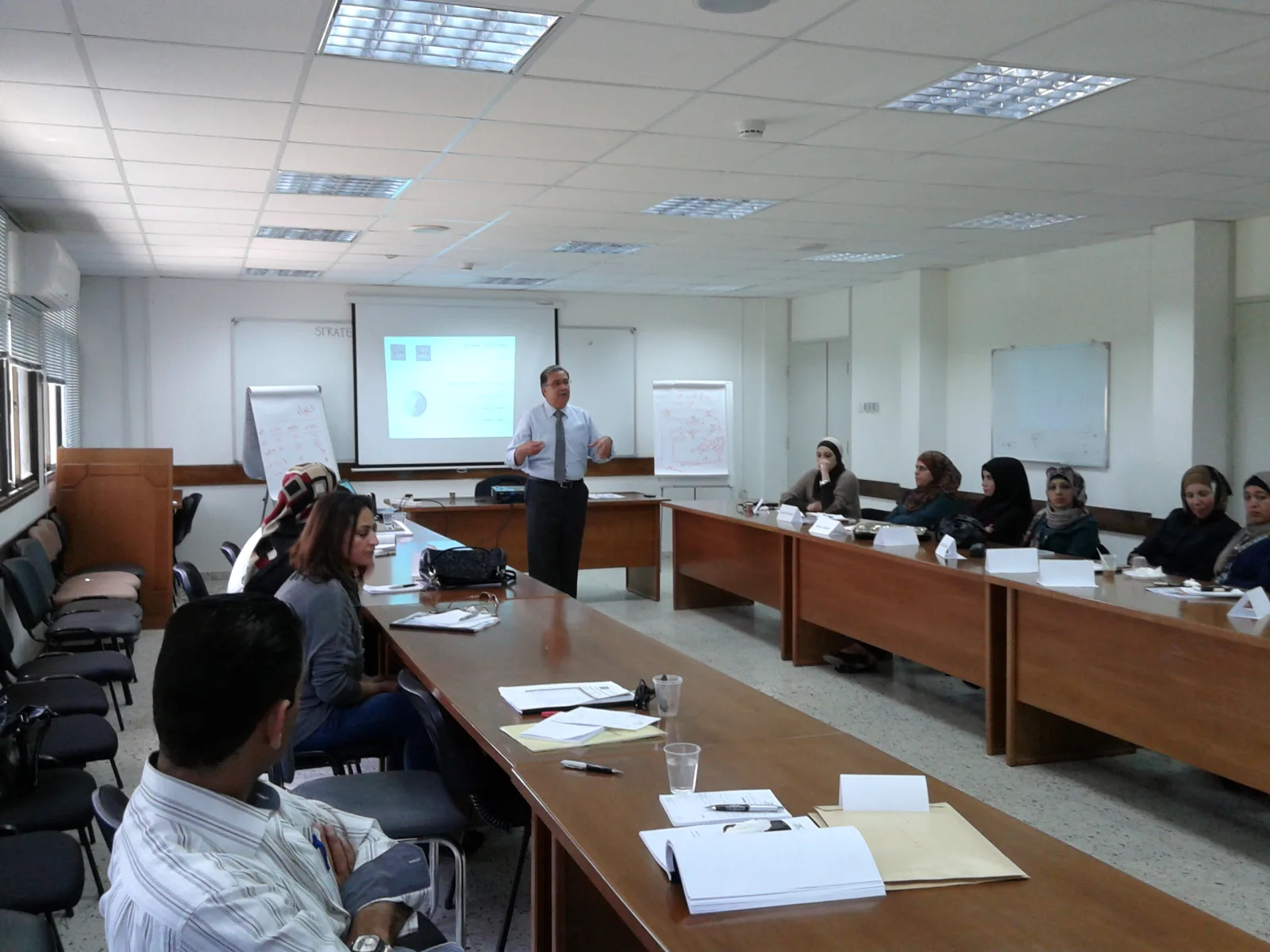
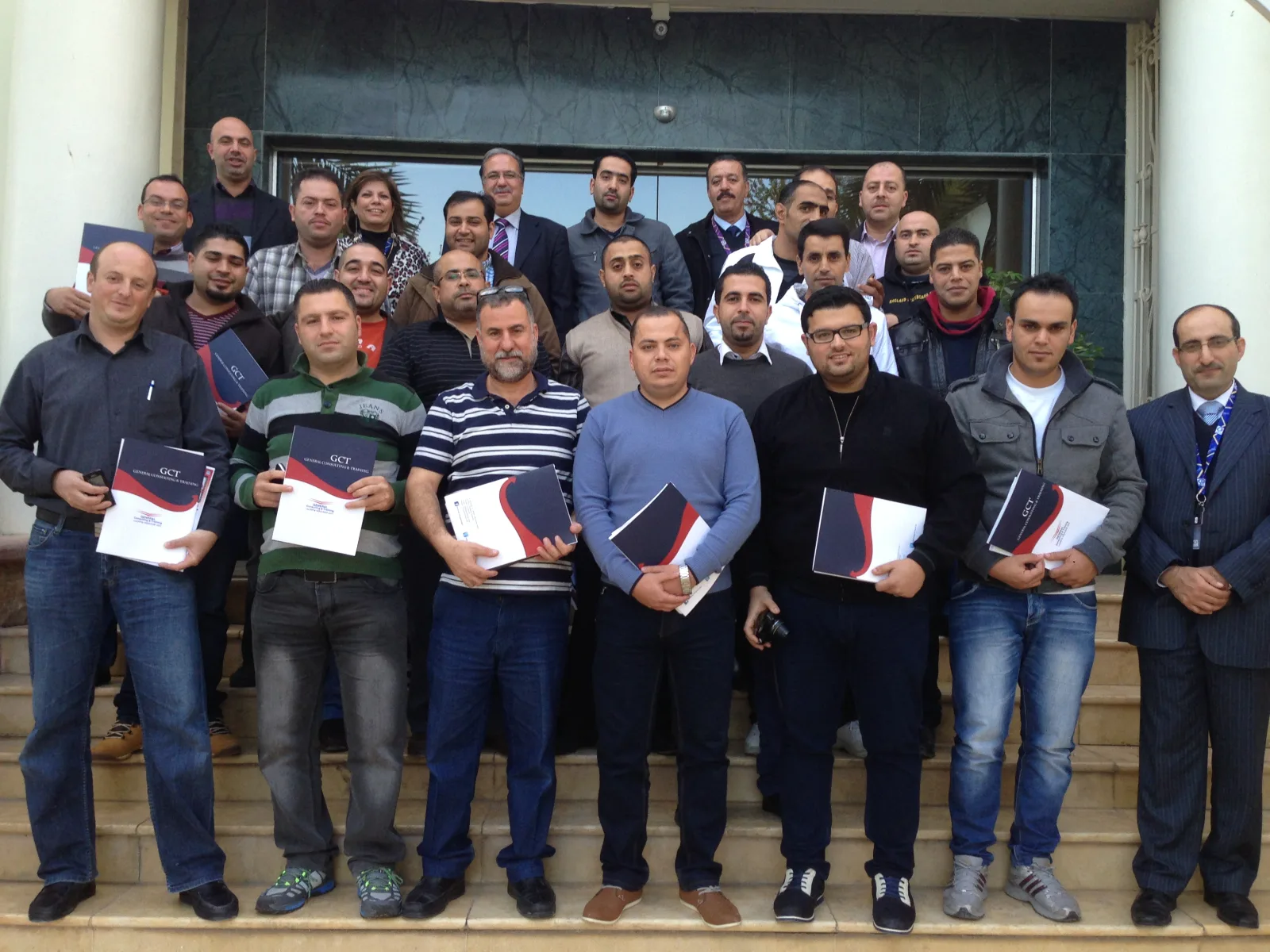
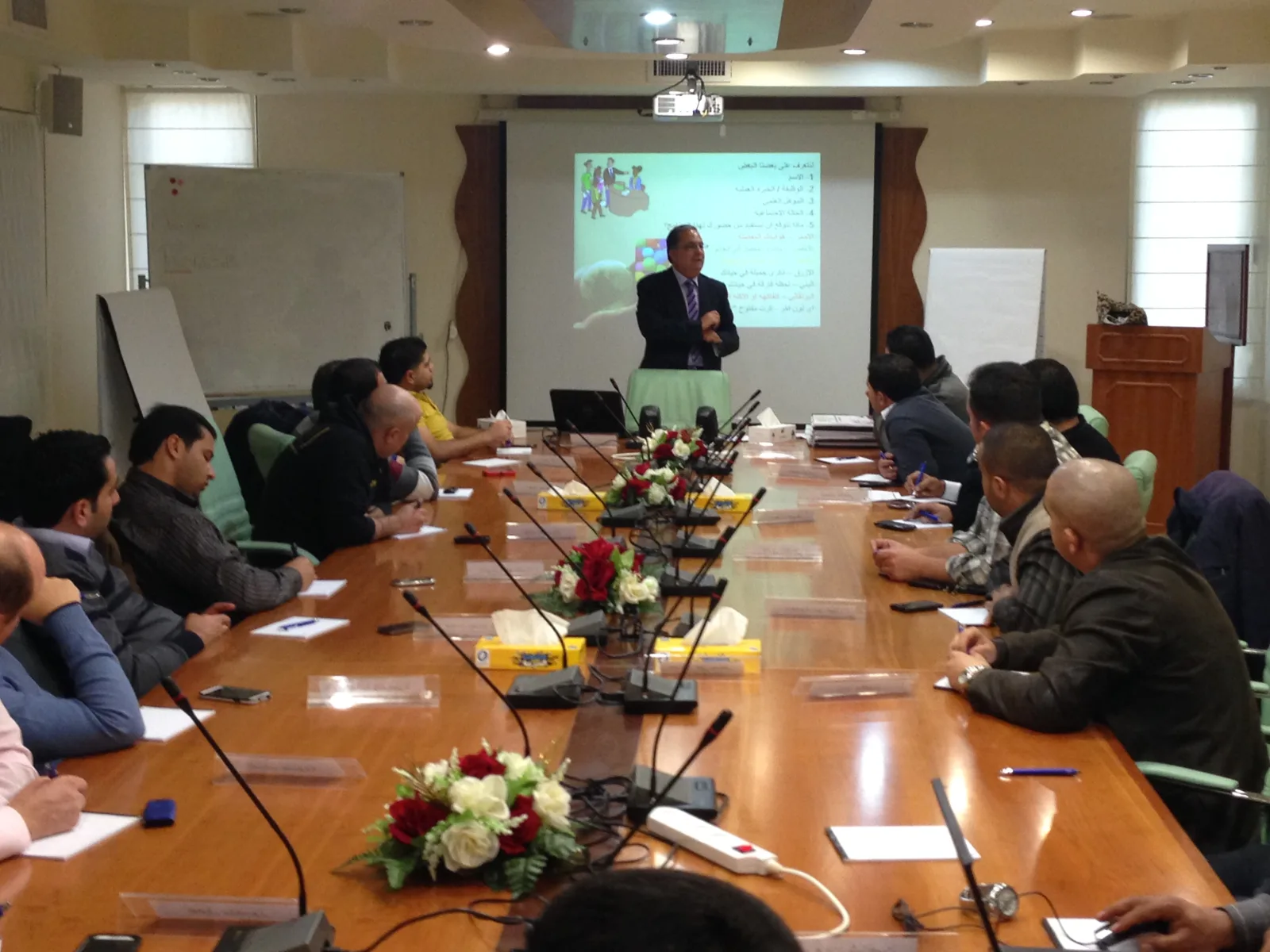
Capacity building - Training in IT/data security and risk management for key IT staff of the Ministry of Social Affairs (MoSA) UNDER the project of “Technical assistance in development and implementation of Social Protection Systems at Ministry of Social Affairs.”
2012
Project

Capacity building - Training in IT/data security and risk management for key IT staff of the Ministry of Social Affairs (MoSA) UNDER the project of “Technical assistance in development and implementation of Social Protection Systems at Ministry of Social Affairs.”

MOSA is the regulatory body and implementing agency responsible for the Social Protection System in oPt, with its branches in 17 Governorates in the West Bank and Gaza Strip. Its responsibility is twofold: 1) to develop, populate and manage a centralized database of "poor households in Palestine" and 2) to develop, manage and implement a single, poverty-based cash transfer program that caters to the "poorest of the poor".“Technical assistance in development and implementation of Social Protection Systems at Ministry of Social Affairs “, is a two years EC funded project that commenced in March 2010 and ended in September 2012. The overall objectives of this project were to:Improve the Ministry of Social Affairs’ (MOSA) capacity to carry out its mandate regarding social; and Support the Ministry of Social Affairs (MOSA) in implementing its responsibilities, particularly regarding reform of social safety nets, and development and implementation of an integrated and comprehensive strategy and policy for a more effective social protection system covering all poor and vulnerable segments of the Palestinian population.Within the scope of this project, training program for key IT staff of MoSA was implemented, as an urgent priority that has been identified in the IT assessment and IT strategy for MoSA produced by the project.
Funded by European Commission; for the benefit of Ministry of Social Affairs (MOSA).
West Bank
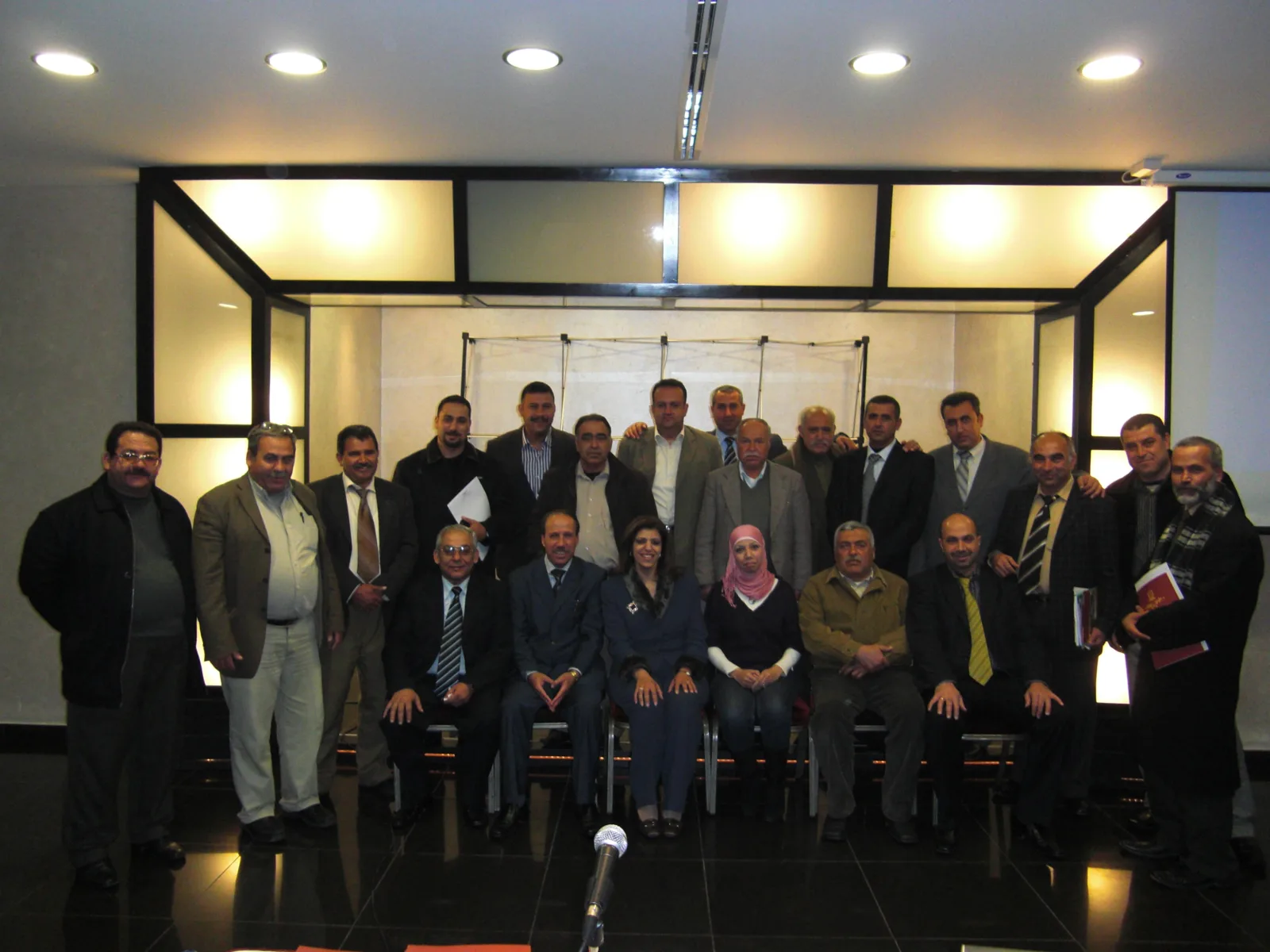
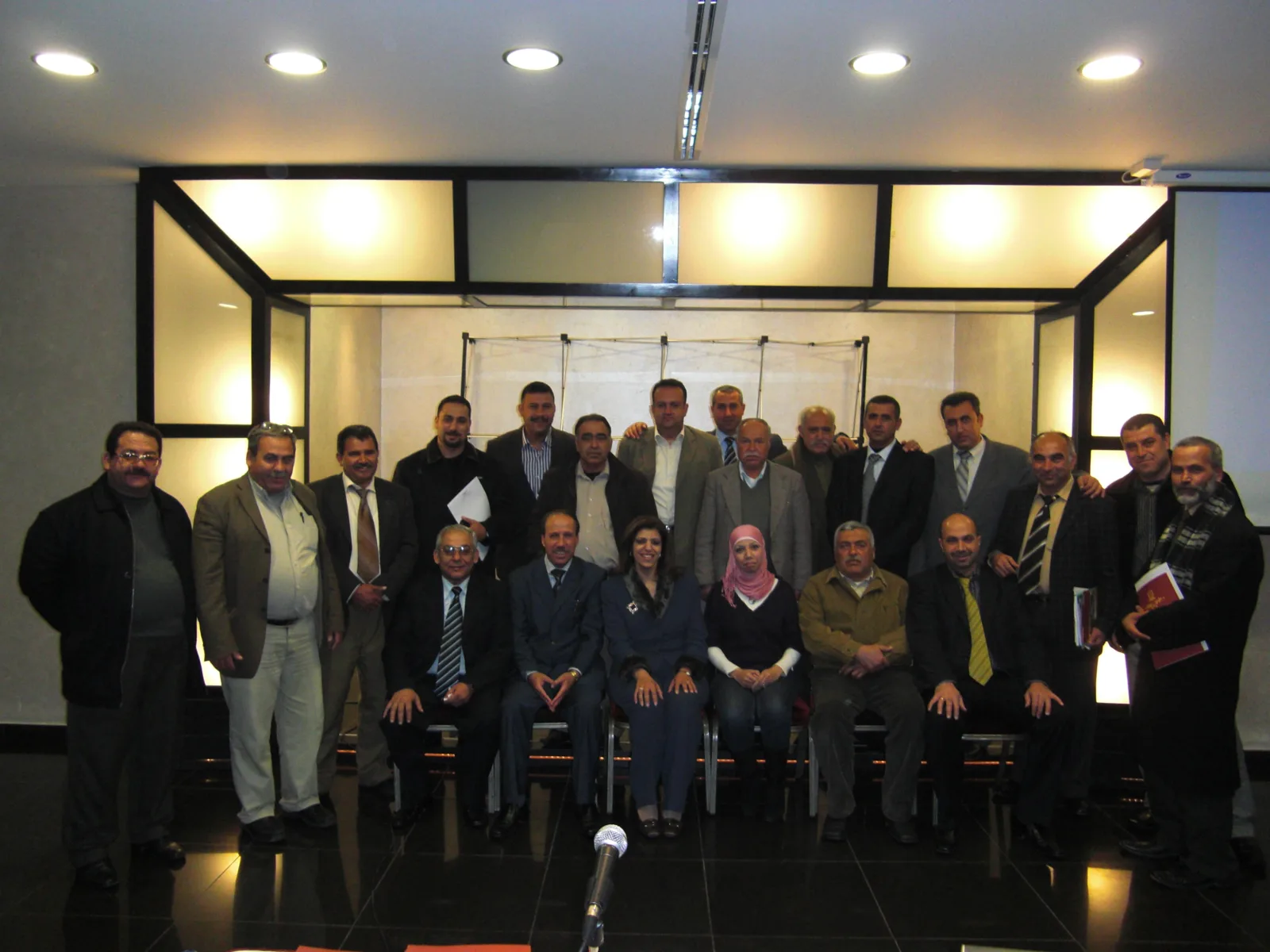
Study tour and Development workshop in Jordan on organizational reform and strategic human resource management for key staff of the Ministry of Social Affairs (MoSA) UNDER the project of “Technical assistance in development and implementation of Social Protection Systems at Ministry of Social Affairs.”
2012
Project

Study tour and Development workshop in Jordan on organizational reform and strategic human resource management for key staff of the Ministry of Social Affairs (MoSA) UNDER the project of “Technical assistance in development and implementation of Social Protection Systems at Ministry of Social Affairs.”

MOSA is the regulatory body and implementing agency responsible for the Social Protection System in oPt, with its branches in 17 Governorates in the West Bank and Gaza Strip. Its responsibility is twofold: 1) to develop, populate and manage a centralized database of "poor households in Palestine" and 2) to develop, manage and implement a single, poverty-based cash transfer program that caters to the "poorest of the poor".“Technical assistance in development and implementation of Social Protection Systems at Ministry of Social Affairs “, is a two years EC funded project that commenced in March 2010 and ended in September 2012. The overall objectives of this project were to:Improve the Ministry of Social Affairs’ (MOSA) capacity to carry out its mandate regarding social; and Support the Ministry of Social Affairs (MOSA) in implementing its responsibilities, particularly regarding reform of social safety nets, and development and implementation of an integrated and comprehensive strategy and policy for a more effective social protection system covering all poor and vulnerable segments of the Palestinian population.Within the frame work of this project, a capacity building program of study tour and development workshop in organizational reform and HR was implemented for key staff of the Ministry of Social Affairs (MoSA). This program targeted three groups; 1) Key staff of the HRD Directorate at MoSA, 2) key staff the Department of Personnel and Administration at MoSA, and 3) representatives of the General Personnel Council of Palestine.

Funded by European Commission; for the benefit of Ministry of Social Affairs (MOSA).
West Bank
Capacity building – Social work and case management training for social workers at regional directorates of the Ministry of Social Affairs (MoSA) UNDER the project of “Technical assistance in development and implementation of Social Protection Systems at Ministry of Social Affairs.”
2011
Project

Capacity building – Social work and case management training for social workers at regional directorates of the Ministry of Social Affairs (MoSA) UNDER the project of “Technical assistance in development and implementation of Social Protection Systems at Ministry of Social Affairs.”

MOSA is the regulatory body and implementing agency responsible for the Social Protection System in oPt, with its branches in 17 Governorates in the West Bank and Gaza Strip. Its responsibility is twofold: 1) to develop, populate and manage a centralized database of "poor households in Palestine" and 2) to develop, manage and implement a single, poverty-based cash transfer program that caters to the "poorest of the poor".“Technical assistance in development and implementation of Social Protection Systems at Ministry of Social Affairs “, is a two years EC funded project that commenced in March 2010 and ended in September 2012. The overall objectives of this project were to:Improve the Ministry of Social Affairs’ (MOSA) capacity to carry out its mandate regarding social; and Support the Ministry of Social Affairs (MOSA) in implementing its responsibilities, particularly regarding reform of social safety nets, and development and implementation of an integrated and comprehensive strategy and policy for a more effective social protection system covering all poor and vulnerable segments of the Palestinian population.Within the frame work of this project, a training course on social work and case management was implemented for 12 months, the training course targeted social workers with work experience from the Ministry of Social Affairs (MoSA) regional directorates in Palestine. The course was part of the project work programme to support the imlementation of the MoSA business strategy, published in May 2010 (Strategy component 1.3.1: Development of case management in MoSA regional directorates).

Funded by European Commission; for the benefit of Ministry of Social Affairs (MOSA).
West Bank
Gap Analysis study with clear recommendation about current TVET services and the current and future vocations and skills.
2010
Project

Gap Analysis study with clear recommendation about current TVET services and the current and future vocations and skills.

Save the Children and its partner Mercy Corps was implemented a 4-year USAID funded project in cooperation with Palestine League of Vocational Education and Training Association, to increase the utilization of strengthened technical and vocational education and training (TVET), leading to improved youth livelihood opportunities. This study was a part of the (West Bank TVET Project) which was developed in accordance with the Save the Children Federation, MTC International Development Holding Company and General Consulting and training company. The objective of over all the project is to improved quality and relevancy of TVET education of partner institutions, through development of strategic directions and strategic relationships, and cooperation with the private sector in the west-bank. This study mainly aimed at :Upgrade and modernize vocational education and training programs to enable improved employment and employability options in Palestinian. Evaluated capacity and needs of VET-NGO Centers, and training related to viable industry clusters and employer needs, capacity of the VET-NGO League to oversee vocational education and programming.Compared current employer perceptions of public and private TVET and the expectations employers have for an improved workforce.Analyzed the role of all partners- government, NGOs, employers and social sector partners.Based on the foregoing, Save the children is seeking an eligible firm to conduct an assignment the requested counsaltancy, therfore it has contracted General Consulting and Training (GCT) with MTC (Management and Training Corporation) ,International Development Holding Company, LLC., to implement this assignment according to their requirements and expectations.

Funded By USAID; Managed by Save the Children and Mercy Corps, for the benefit of Palestine League of Vocational Education and Training Association (VET-NGO League).
Southern of West bank (Bethlehem, Hebron). Middle of West Bank (Ramallah, Jericho).
Workshop for Administrative Board of Joint Service Council for the Wastewater Disposal in Tulkarm Region
2010
Project

Workshop for Administrative Board of Joint Service Council for the Wastewater Disposal in Tulkarm Region

The German Development Cooperation is contrbuting to the development of the palestinian water sector sinse 1980s. The GIZ is abbreviation for German term which is (Gesellschaft für Internationale Zusammenarbeit) mean in English society for international cooperation, as a federal enterprise it supports the German Government in achieving its objectives in the field of international cooperation for sustainable development. It offer demand-driven, tailor-made and effective services for sustainable development in more than 130 countries worldwide, through applying a holistic approach based on the values and principles upheld in German society, to facilitate change and empower people to take ownership of their own sustainable development processes. It works on behalf of the German Federal Ministry for Economic Cooperation and Development, and works for the German Federal Foreign Office in the security sector and for various other German ministries in the fields of culture and social affairs.The main objectives of this assigment were:Arrage for a training workshop about management and operation of joint service councils to be conduted in egypt for the adminstrative board and the top management staff of the JSC for the wastewater disposal in the Tulkarem regionUndertake the adminstrative and logistic arrangements for the training workshop.To this end, GIZ contracted GCT to implement this assignment in a professional manner to achieve the overall objectives.

GIZ / joint service council
Egypt/ West Bank
Evaluation of Social Safety Nets Program (Food Aid and Cash Assistance Program), Support to the Special Hardship Case (SHC) -Program Reform.
2009
Project

Evaluation of Social Safety Nets Program (Food Aid and Cash Assistance Program), Support to the Special Hardship Case (SHC) -Program Reform.

The relief and social services) social safety-net program (is the only program that caters to the needs of the most vulnerable Palestine refugees by delivering food aid and cash subsidies on a regular basis. The overall goal of this program was to alleviate poverty amongst Palestine refugee families in UNRWA’s fields of operation with priority focus on the poorest of the poor "object poor". The social safety-net was delivered food from 58 fixed and 126 mobile distribution points, and around 275,000 Palestine refugees from over 73,000 families benefited from this program.The main objectives of this program were to provide basic food supplies and cash subsidies to the most vulnerable Palestine refugees considered to be caught in a cycle of abject poverty, provide selective cash assistance such as one-off cash grants or basic household items in the instance of fire, flood, sudden death of a family breadwinner or other family emergency, and ensure that Palestine refugee families have adequate shelter.This evaluation study aimed to analyze the support of 2007/2008/2009 years to SHC program according to the main criteria of EC evaluation standards (relevance, effectiveness, efficiency, impact and sustainability), and in light of the recommendations made by the previous evaluation conducted in 2005. The e overall objective of this evaluation was to contribute to the improvement of future EC-funded- UNRWA programs dedicated to support SHC through providing a set of efficient recommendations.For that purpose, UNRWA has contracted GCT as a subcontractor to provide eligible local and international experts to carry out this mission in collaboration with its staff.

Funded by European Commission (EC); UNRWA,
Ramallah, Jerusalem- West Bank, and Gaza strip. Amman- Jordan
Evaluation and Review the Work of Palestinian Counselling Center According to the Five-year Strategic Plan 2005 – 2009.
2009
Project

Evaluation and Review the Work of Palestinian Counselling Center According to the Five-year Strategic Plan 2005 – 2009.

Palestinian counselling centre (PCC) was founded by a group of psychologists, social workers and educators in 1983, to work with all members of Palestinian society who are at risk of political, social, economic and psychological harm or violence in order to improve and develop the concept of mental health services in Palestine. The center offers comprehensive services  in the field of positive mental health to all marginalized groups in the Palestinian society of children, youth and women, individuals suffering from mental disorders, social, educational, psychiatric patients chronically, through a set of treatment - prevention and building programs, lobbying campaigns and advocacy.In order to continue the progress and development, this evaluation study was came to evaluate and review the work of Palestinian Counseling Center according to the five-year strategic plan 2005 – 2009.The overall objective of this study was to provide decision makers in PCC with information and analysis that describes to what extent they have succeeded in managing the implementation of the strategic plan efficiently and effectively, in addition to provide final findings and development recommendations to the center which can help in formulation the strategic plan for the next five years (2010-2015).The specific objectives of this study were to :Identify the suitability of objectives of the center to the needs of Palestinian community mental health services, and the suitability of the national and sectoral plans in the field of mental health;Measure the efficiency in the selection of available sources for the implementation of activities.Measure the effectiveness and the impacts on the targeted groups, as well as the extent of access to the expected results according to what were anticipated in the logical framework.Measure the impact of the plan on the targeted groups and the surrounding community of the services provided at the level of the sector or region.Measure the potential to continue to benefit from the services provided after the funding ends.Conduct an assessment of each department in the centre and provide recommendations.To this end PCC has contracted GCT to implement this evaluation study in professional and objective manner.

Palestinian Counseling Centre.
West Bank (Jerusalem, Ramallah, Nablus, Azzun).
Capacity Building of Al-Quds Bank for Development \& Investment.
2007
Project

Capacity Building of Al-Quds Bank for Development \& Investment.

Al-Quds Bank is a Palestinian public shareholding company that practices its' business activities through the headquarter located in Ramallah, and its various branches \ offices spread all over the country. It is working for economic and social development by providing advanced banking services, and operating on a modern and highly developed basis in an effort to fulfill all economic and developmental needs of individuals, companies, institutions, other segments of society and the various large sectors in Palestinian economy.Within this context and to maintain its' distinctive position among other banking institutions in Palestine, Al-Quds Bank has contracted GCT to provide consultancy services toward building its institutional capacity in effective and efficient manner. The main objectives of this assignment were to develop the overall organizational and functional structure\ sub-structures, job descriptions, personnel system and design suitable performance appraisal system, in order to enhance, promote the reform process and the administrative development in Al- Quds Bank.

Al-Quds Bank for Development \& Investment
West Bank – Ramallah
Evaluation of Integrated Water and Environmental Resources Management Program in the Rural Areas of Palestine.
2006
Project

Evaluation of Integrated Water and Environmental Resources Management Program in the Rural Areas of Palestine.

Palestinian Hydrology Group (PHG) is the largest Palestinian NGO working to improve access to water and sanitation services, and to monitor pollution and climate change in the Occupied Palestinian Territory. It started to implement the Integrated water and environmental resources management Program (A Multi-Donors Program) in April 2002 in the West Bank & Gaza strip which has ended in December 2005. The main objectives of this core program were to:Enhance social justice through enabling equal opportunities and fair competition for resource allocation for all communities; Increase Palestinian resistance against Israeli measures in water sector by reducing dependency on external sources, especially in emergencies; Eliminate environmental degradation and ensure resource sustainability by development of new water /wastewater projects, and enhancing the management efficiency of such projects;Empower the public by encouraging their participation in local water management through sharing information, capacity building, promoting conservation techniques and practices.Delineate gender aspects of water related issues through ensuring proper representation of women in different levels of water planning and management; and Improve the technical and administrative performance of PHG to ensure its work sustainability.After the program completion, PHG was planned to conduct an evaluation study to assess its impact and the results achieved. To this end PHG has contracted GCT to implement this assignment in an objective manner. The main goal was to assess the program’s impact during its life time (2002-2005), in order to help and support PHG to build on the final findings and in better defining results -based program during the implementation of next core program.

Palestinian Hydrology Group (PHG) - A Multi-Donors Program
West Bank and Gaza Strip
A Baseline survey in the West Bank to measure the impact of MEDA programs.
2005
Project

A Baseline survey in the West Bank to measure the impact of MEDA programs.

The Agricultural Development Association (PARC) is a leading Palestinian non-profit, non-governmental organization involved in rural development and women's empowerment. It works to provides advice, awareness support, services, and special consultancies for individuals, groups, and institutions involved in similar domains. The main objectives of MEDA program (MED2003) were to improve of the stakeholder participatory sustainable water management at farm level through MEDA cooperation with Jordan & Palestine, and fill the gap between the demand for the various uses and the supply of water, by developing irrigation technique in the area and better water management of available resources in order to respond to the growing demand on food and keep the important role of the agriculture sector in the Palestinian economy.The main objective of this baseline survey was to be as an aiding phase to ease achieving and emphasizing the purpose of MEDA program of strengthens the interactive stakeholder capacity in irrigation and water management; by understanding the concepts of implementation of efficient water demand management, supporting the achievement of general expected results of the whole project in increasing the visibility of MEDA and socio economic benefits of regional cooperation, as well as having an idea about the transition toward sustainable irrigation water management between different communities.In this context, MEDA has contracted GCT to implement this survey, which was developed to measure the impact of MEDA program to the farmer in West Bank (Jenin, Jericho, Tulkarem, and Qalqilya) , and assess the irrigation water that comes from either springs (Jordan valley) or from ground water wells (Northern of West Bank), in order to be used as a data base in designing future interventions.

Palestinian Agricultural Relief Committee (PARC), Funded by European Aid (MEDA).
Gaza Strip
A Baseline survey in Gaza Strip to measure the impact of MEDA programs.
2005
Project

A Baseline survey in Gaza Strip to measure the impact of MEDA programs.

The Agricultural Development Association (PARC) is a leading Palestinian non-profit, non-governmental organization involved in rural development and women's empowerment. It works to provides advice, awareness support, services, and special consultancies for individuals, groups, and institutions involved in similar domains. The main objectives of MEDA program (MED2003) were to improve of the stakeholder participatory sustainable water management at farm level through MEDA cooperation with Jordan & Palestine, and fill the gap between the demand for the various uses and the supply of water, by developing irrigation technique in the area and better water management of available resources in order to respond to the growing demand on food and keep the important role of the agriculture sector in the Palestinian economy.The main objective of this baseline survey was to be as an aiding phase to ease achieving and emphasizing the purpose of MEDA program of strengthens the interactive stakeholder capacity in irrigation and water management; by understanding the concepts of implementation of efficient water demand management, supporting the achievement of general expected results of the whole project in increasing the visibility of MEDA and socio economic benefits of regional cooperation, as well as having an idea about the transition toward sustainable irrigation water management between different communities.In this context, MEDA has contracted GCT to implement this survey, which was developed to measure the impact of MEDA program to the farmer in Gaza Strip (six localities from south to north of Gaza) and assess the irrigation water that comes from either springs (Jordan valley) or from ground water wells (Northern of Gaza Strip), in order to be used as a data base in designing future interventions.

Palestinian Agricultural Relief Committee (PARC), Funded by European Aid (MEDA).
West Bank
Feasibility Study for Slaughterhouse Project in South East Jerusalem Area.
2005
Project

Feasibility Study for Slaughterhouse Project in South East Jerusalem Area.

The Local Infrastructure and Capacity Building Project (LICP) is a project of Palestinian Ministry of Local Government (MOLG) , funded entirely by Belgian Government and implemented by Belgian Technical Cooperation (BTC). LICP was aimed mainly to support investment in physical infrastructure in rural areas at local level, strengthen thier financial management capacity, build the capacity of councils and its staff to plan, budget, and implement local development initiatives ,based on public participation and good local government principles.Within this context and line with these stated objectives, BTC was planned to conduct feasibility study for establishing a slaughterhouse in the south east of Jerusalem area , particularly (Abu Deis, Al –Eizarieh, Assawahra Assharkieh, Ashaikh Saeed, Arab Al Jahalin, and Azayem), in order to determine whether the proposed project is feasible from an administrative, economic, environmental, health, political, social viewpoints and other sustainability aspects, as well as to identify if it reflects the interests and priorities of communities involved. This feasability study was divided into two main phases: the first one was focused on studying the social and market feasibility of the slaughterhouse,while the second was focused on dealing with the technical and financial issues of slaughterhouse based on the first phase outcomes.To this end, BTC has contracted GCT to implement the required study in objective and effective manner.

Funded by Belgian Technical Cooperation (BTC)- Local Infrastructure and Capacity Building Project (LICP), for the benefit of Ministry of Local Government (MOLG).
West Bank- Jerusalem
Consulting Inquiries

Need Expert Consulting Services?

Partner with GCT for high-impact advisory and project delivery across Palestine and the region.

Live Support & Inquiries

GCT Advisory Team