Our Projects | GCT Consulting & Training

Explore GCT's portfolio of 900+ consulting projects across Palestine and the Arab region, spanning governance, M&E, agriculture, justice, social development, economic development, water, and education.

900+

Delivered Projects

27+

Years of Experience

400+

Key Clients & Donors

8

Specialized Sectors

Our Project Portfolio

Explore our portfolio of projects delivered across multiple sectors with local and international partners.

Our Project Portfolio

Development of New Legal Framework (Laws and Bylaws) for governorate offices in the oPt.
2014
Project

Development of New Legal Framework (Laws and Bylaws) for governorate offices in the oPt.

UNDP/PAPP issued the Development for Freedom (Empowered Lives Resilient Nation) consolidated plan of assistance for the years 2012-2014. The plan focuses on strengthening particular affected geographic areas and vulnerable populations, Gaza Strip, Jerusalem and Area C, by providing assistance in four main sectors: Democratic governance and the social contract, Promoting productivity and dignity through livelihoods, Natural resources and environment, and Public and social infrastructure.In line with this program and the 13th Palestinian Authority (PA) Government Plan of 2011-2013 which known by “Ending the Occupation, Establishing the State”, UNDP/PAPP governance team in coordination with Palestinian partner institutions developed the "Supporting Governance for Palestinian Statehood" program document (Statehood Program). This program aims at improving development management of state bodies, especially in the areas of planning, budgeting, implementation and monitoring, while facilitating civic participation throughout this cycle. it has the following three main outputs: Institutions of governance and public administration able to fulfill responsibilities and undertake administrative/ financial functions; Sustainable platforms inclusive dialogue and accountable interaction between state and citizen established with an emphasis on women and youth; and State and independent bodies empowered and challenges for statehood. UNDP/PAPP has successfully completed a capacity assessment, a capacity development strategy, and a diagnostic report of the existing legal framework for governorates in Palestine in 2012, which is considered as a first step towards achieving that program’s objectives, in cooperation with GCT.As a second step and in accordance with the diagnostic report’s recommendations which prioritized the development of a new legal framework as a top priority, UNDP/Statehood Program was intended to develop a new unified legal framework for Palestinian governorates that would be tackled the weaknesses of existing legal framework and replace or/amend the unclear mandates of governorates and its overlapping responsibilities with other government bodies.The main objective of this assignment is to develop a new legal framework (law and bylaws) that provide a clear mandate of the governors/governorates in line with existing Presidential decrees and the government's cross-sectorial strategy on local government and administrative development, through achieving the following sub-objectives: Develop a draft legal framework (law and bylaws) defining the mandate and functions of governorate administrations; Provide technical assistance to the Office of the President to support its efforts to establish a consensus on the new legal framework. To this end , UNDP/PAPP has contracted GCT to undertake the consultancy service to develop a new legal framework that would clearly regulate the mandate of the governors/governorates, subject to its endorsement by the President.

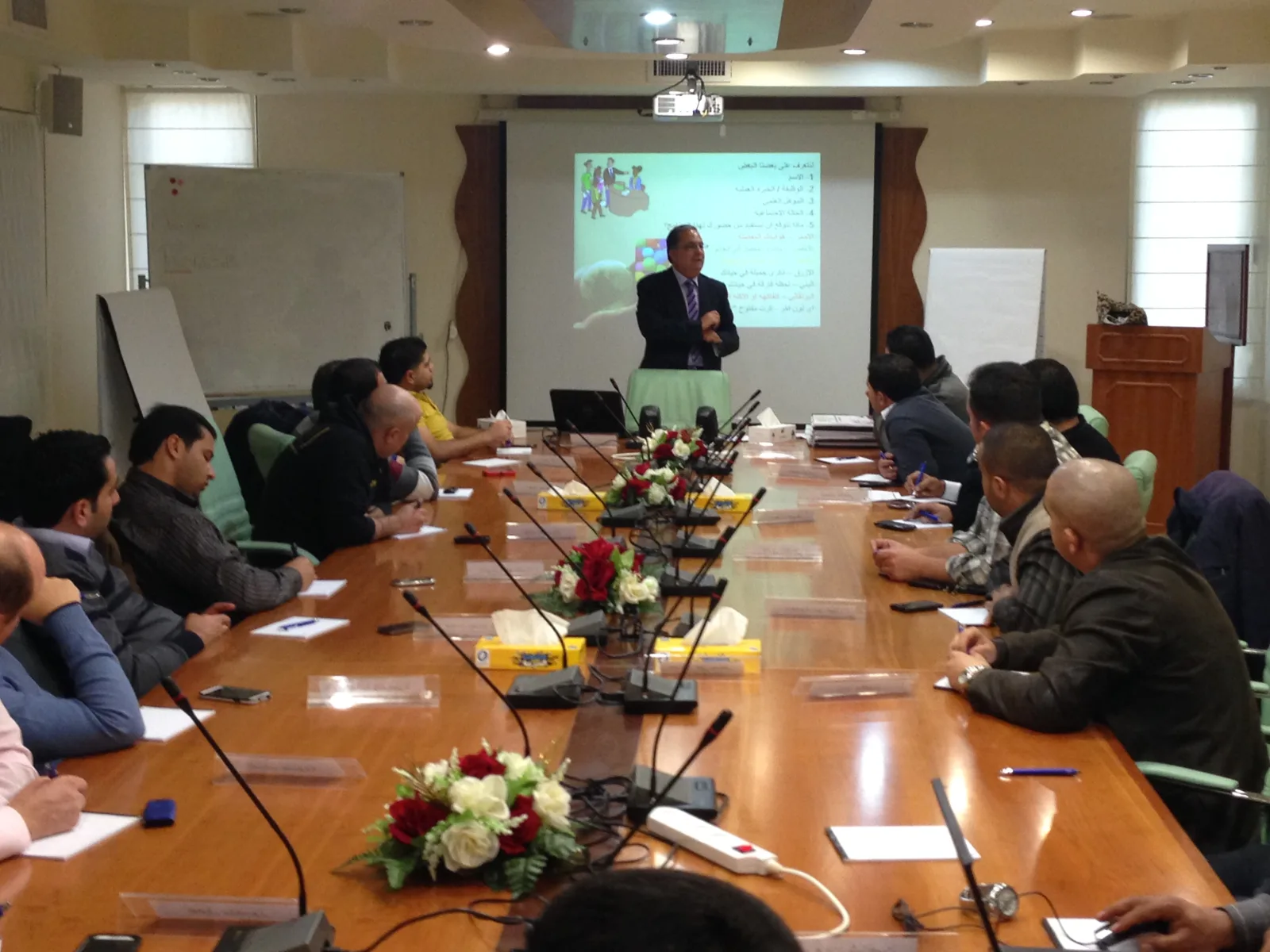
United Nations development program/ Program of Assistance to the Palestinian People (UNDP/PAPP).
West Bank
Mid-Term Review of “Moving herders from aid dependence to self-sustaining growth through livestock husbandry development and market expansion” (SULALAH).
2014
Project

Mid-Term Review of “Moving herders from aid dependence to self-sustaining growth through livestock husbandry development and market expansion” (SULALAH).

Moving herders from aid dependence to self-sustaining growth through livestock husbandry development and market expansion” (SULALAH) , is two years project funded by the European Union's Food Security Thematic Program' (FSTP) which was launched in 2007, to address food security challenges at global and regional levels, and in exceptional transition situations as well as in fragile states, through a set of actions that ensure overall coherence, complementarity and continuity of EU interventions, including in the area of transition from relief to development.The Livestock-based Livelihood Support Program – with its both field (LbL-f) and institutional (LbL-i) level components – is financed by the FSTP. The overall objective of the (LbL-f) programs is to improve the food security and sustain the livelihoods of the vulnerable population in the West Bank and Gaza Strip, with a particular focus on “Area C”, while bridging emergency and development.SULALAH project under the field level component is implemented by Union of Agricultural Work Committees (UAWC) in partnership with Gruppo di Volontariato Civile (GVC);Palestinian Hydrology Group (PHG); Qatar Charity; Laore Sardegna; Ta'amreh Cooperative for Livestock; and Jericho Cooperative for Livestock Development. Its overall objective is to improve the food security of Palestinian male and female herders by protecting, sustaining and developing livestock production, with specific aim to improve resilience of vulnerable herders living in the eastern slopes of the West Bank through improving production capacities, enhancing access to assets and expanding income opportunities from livestock. After 10 months of operation, UACW has intended to conduct Mid-Term review to advise on any correction needed to strengthen the implementation mechanisms over the remaining duration by: Reviewing the main project documents and related action plans; Addressing the gaps and highlighting challenges in achieving the desired results and outcomes,Providing recommendations and corrective actions on the action plans, budget, M&E system, management structure and mechanisms. Assessing the synergies and challenges related to the existing coordination mechanism for the field component of LbL, and providing recommendations to enhance better outcomes as a result of a coordinated approach. To this end, UAWC has contracted GCT to undertake this evaluation assignment in professional and comprehensive manner.

Funded by EU; for the benefit of Union of Agricultural Work Committees (UAWC).
West Bank (Hebron, Bethlehem, Jerusalem and Jericho)
Mid-Term Review of Strengthening Livestock Holders’ Livelihoods in Area C Project (Rawasi).
2014
Project

Mid-Term Review of Strengthening Livestock Holders’ Livelihoods in Area C Project (Rawasi).

Strengthening Livestock Holders’ Livelihoods in Area C (Rawasi), is two years project funded by the European Union's Food Security Thematic Program' (FSTP) which was launched in 2007, to address food security challenges at global and regional levels, and in exceptional transition situations as well as in fragile states, through a set of actions that ensure overall coherence, complementarity and continuity of EU interventions, including in the area of transition from relief to development.The Livestock-based Livelihood Support Program – with its both field (LbL-f) and institutional (LbL-i) level components – is financed by the FSTP. The overall objective of the (LbL-f) programs is to improve the food security and sustain the livelihoods of the vulnerable population in the West Bank and Gaza Strip, with a particular focus on “Area C”, while bridging emergency and development.Rawasi project under the field level component is partially funded by the Austrian Development Cooperation and implemented by CARE International in partnership with Palestinian Agriculture Relief Committee (PARC), and International Center for Agricultural Research in the Dry Areas (ICARDA).Its overall objective is to improve the food security and sustainable livelihoods of livestock holders, including herders, in the West Bank particularly Area C (north and central), with specific aim to strengthen the resilience and increase income of sheep and goat holders and special focus on women and Bedouins. To achieve these objectives, it targets 2000 sheep and goat holder households in 30 locations in Northern and Central areas in West Bank particularly Area C; 12,000 (individuals and members of 17 CBOs), and all livestock holders in target locations (5 central and northern West Bank districts: North East Jerusalem, East Ramallah, Jericho, East Nablus & Tubas (Center and North Jordan Valley).After 10 months of operation, CARE International has intended to conduct Mid-Term review to advise on any correction needed to strengthen the implementation mechanisms over the remaining duration by: Reviewing the main project documents and related action plans; Addressing the gaps and highlighting challenges in achieving the desired results and outcomes,Providing recommendations and corrective actions on the action plans, budget, M&E system, management structure and mechanisms. Assessing the synergies and challenges related to the existing coordination mechanism for the field component of LbL, and providing recommendations to enhance better outcomes as a result of a coordinated approach. To this end, CARE international has contracted GCT to undertake this evaluation assignment in professional and comprehensive manner.

Funded by EU, and partially by the Austrian Development Cooperation; for the benefit of CARE International West Bank \& Gaza.
West Bank (North East Jerusalem, East Ramallah, Jericho, East Nablus \& Tubas).
Provision of Capacity Assessment, Development of Capacity Development Strategy and a Diagnostic Report of the Existing Legal Framework for Governorates Offices in the oPt.
2012
Project

Provision of Capacity Assessment, Development of Capacity Development Strategy and a Diagnostic Report of the Existing Legal Framework for Governorates Offices in the oPt.

UNDP/PAPP issued the Development for Freedom (Empowered lives. Resilient Rations) consolidate plan of assistance for the years 2012- 2014, which focus on strengthening particular affected geographic areas and vulnerable populations (Gaza Strip, Jerusalem and Area C), by providing assistance in four main sectors: democratic governance and the social contract, promoting productivity and dignity through livelihoods, natural resources and environment, public and social infrastructure.In line with this program and the 13th Palestinian authority (PA) Government plan of 2011-2013 which called ending the occupation, establishing the state, UNDP/PAPP governance team in coordination with Palestinian partner institutions developed the "supporting governance for Palestinian statehood" program document (statehood program) which aims to achieve three main outputs: 1. Institutions of governance and public administration able to fulfill responsibilities and undertake administrative/ financial functions, 2. Sustainable platforms inclusive dialogue and accountable interaction between state and citizen established with an emphasis on women and youth, and 3. State and independent bodies empowered and challenges for statehood. In line with above three outputs mainly the first output, there was a key activity included in the statehood program aiming at developing a comprehensive intervention at the governorates level entitled "support APLA (Association of Palestinian Local Authority) and local governorates to improve decentralized service delivery to local constituencies". Within this context, UNDP/PAPP has planned for conducting a capacity assessment for the governorate offices, development of capacity development strategy, and a diagnostic report of the existing legal framework for Governorate Office in the oPt and provide recommendations on the way forward. In order to these activities be implemented, UNDP/PAPP was contracted GCT to undertake this assignment toward achieving the main objectives. The main objectives of this study were to:Conduct a capacity assessment of all governorate offices.Formulate capacity development strategy to address capacity gaps and capacity development action plan for governorate, based on the results of the capacity assessment.Develop a diagnostic report of the existing legal framework for governorate offices in the oPt (both in Gaza and the West Bank), provide recommendations for improvements and highlights of a suggested new legal framework that clearly defines responsibilities and authorities of governors, with special emphasis on the relation with local government units, PA line ministries at the governorate level, and regional (governorate) planning.

United Nations development program/ Program of Assistance to the Palestinian People (UNDP/PAPP).
West Bank
Capacity Development workshops in Customer Relationship for Palestinian Courts Staff.
2012
Project

Capacity Development workshops in Customer Relationship for Palestinian Courts Staff.

The Palestinian Justice Enhancement Program (PJEP) is a three years project 2011-2014 that seeks to support the Palestinian Authority in developing the capacity of the justice sector in the West Bank and Gaza; it is funded by the United States Agency for International Development (USAID) and implemented by Chemonics International. main goal is to strengthen public confidence in and respect for justice sector institutions and rule of law in the West Bank and Gaza, through targeted assistance to justice institutions, legal professionals, civil society and the public. And focusing on the four objectives: Enhance accessibility and efficiency of targeted justice sector institutions; strengthen capacity and credibility of justice sector professionals, broaden public awareness of rule of law and engagement with justice sector institutions and effectively utilize windows of opportunity mechanism to promote the above. Based on this obvious need, Chemonics through PJEP program and in cooperation with high judicial council contracted GCT in order to develop and delivered customized training programs on customer relationship to the court staff to support a more citizen-centered transformation process. The main objective of these capacity building programs was to develop the customer service skills for HJC-court staff frontline officers to be consistent with the unified court procedures by providing them with the knowledge and skills-base needed to reform their current service delivery approach and guide them to understand and accept the unified procedures within the courts.

Funded by USAID; Chemonics International, Palestinian Justice Enhancement Program (PJEP) in cooperation with high judicial council.
West Bank- Ramallah
Ex-Post Evaluation Study of Third Country Training Programs (TCTP) in Jordan.
2011
Project

Ex-Post Evaluation Study of Third Country Training Programs (TCTP) in Jordan.

The Third Country Training Program (TCTP). Under the frame work of this program, several training programs were held in Jordan for the benefit of Palestinian public servants who belong to three major sectors in palestinian government which are: Civil Defense, Water and Justice . These training programs were designed by the Palestinian National Authority, Japan International Cooperation Agency (JICA) -Jordan office of Jordan government, and held by Jordanian implementing organizations with financial and technical support from JICA - Jordan office.The main objectives of these programs were to provide the participants from the beneficiary organizations with an opportunity to improve their knowledge, technical and technological capacity in these sectors.The training programs for civil defense sector were implemented by Jordan Civil Defense Directorate (JCDD) and continued in an intermittent basis during the period between 2005- 2009 by focusing on fire fighting and rescue techniques for Palestinians. While the water sector training programs were focused on capacity building of water resource management for palestinians and implemented by Ministry of Water and Irrigation – Water Authority of Jordan (WAJ) between 2006-2009 , where as the judicial and legal training was targeted the palestinian Ministry of Justice and implemented by Judicial Institute of Jordan during 2003 – 2007.After the completion of these training programs for the targeted sectors , there must be ongoing monitoring followed by good assessment to make sure that desired goals are achieved , identify the degree of the participants‘ realization, review the training process to reveal strengths and weaknesses in order to provide sufficient feedback for stakeholders for performance improvement in future interventions.In this context, JICA headquarters requested JICA Jordan Office to conduct an Ex-post Evaluation Study for TCTP to evaluate the results of training programs implemented by Jordanian organizations for Palestinian National Authority (PNA). To this end, JICA Jordan office has contracted Team International to implement this evaluation study which in turn contracted GCT as sub-contractor to conduct a number of filed visits & interviews with the Palestinian public servants who participated in these programs.

Funded by Japan International Cooperation Agency (JICA)- Jordan office
West Bank \& Gaza
Capacity Development Training of Trainers (TOT) program for Ministry of Finance (MoF)
2011
Project

Capacity Development Training of Trainers (TOT) program for Ministry of Finance (MoF)

Accordingly UNDP has provided the department of Property Tax in MOF with field vehicles ,computers, capacity development, softwares and with qualified staff in order to conduct an assessment of property values across West Bank , comprehensive assessment of property tax operations to identify and provide the required widespread improvements by providing policy recommendations concerning the revision of property tax law as well as harmonization the approach in Gaza Strip and West Bank.This program aimed at developing the capacities of selected property tax staff at MoF. The training planned to enable them to deliver ToT to their colleagues in the property tax district offices and headquarters departments, and to develop the capacities of the property tax staff at 133 municipalities. Training will focused on property tax operation and activities during the project cycle and how to mainstream these skills and services to the rest of local governments (350) in order to pave the road for the LGUs to enable the collection of property tax in village councils and to increase the degree of decentralization, once it is allowed, in new legal frame to be revised and developed.The main objectives of this capacity development program were to develop and deliver Training of Trainers (ToT ) program to 20 MoF staff on property tax valuation, design and implementation of public awareness campaigns ,communications with public and community liaison and property tax law, procedures ,operations communication skills (internal /external) to be able to train further MoF staff and selected participants from 133 municipalities .

Funded by UNDP; for the benefit of Ministry of Finance (MoF).
West Bank -Ramallah
Develop a Strategy plan for the Information Technology Unit in the Ministry of Social Affairs in the Palestinian Authority UNDER the project of “Technical assistance in development and implementation of Social Protection Systems at Ministry of Social Affairs.”
2011
Project

Develop a Strategy plan for the Information Technology Unit in the Ministry of Social Affairs in the Palestinian Authority UNDER the project of “Technical assistance in development and implementation of Social Protection Systems at Ministry of Social Affairs.”

MOSA is the regulatory body and implementing agency responsible for the Social Protection System in oPt, with its branches in 17 Governorates in the West Bank and Gaza Strip. Its responsibility is twofold: 1) to develop, populate and manage a centralized database of "poor households in Palestine" and 2) to develop, manage and implement a single, poverty-based cash transfer program that caters to the "poorest of the poor".“Technical assistance in development and implementation of Social Protection Systems at Ministry of Social Affairs “, is a two years EC funded project that commenced in March 2010 and ended in September 2012. The overall objectives of this project were to:Improve the Ministry of Social Affairs’ (MOSA) capacity to carry out its mandate regarding social; and Support the Ministry of Social Affairs (MOSA) in implementing its responsibilities, particularly regarding reform of social safety nets, and development and implementation of an integrated and comprehensive strategy and policy for a more effective social protection system covering all poor and vulnerable segments of the Palestinian population.Within the framework of this project, a Comprehensive Information Technology Strategy and medium- term action plan was developed, for further development of IT and MIS functions at the Ministry of Social Affairs. This assignment aimed at developing the Information Technology Strategy report; that includedPortrait of the current situation of the database and the future perspectives to enhance its performance and security. Discussion on the CTP system testing, motoring and reporting to ensure that the system is working securely and generate the essential reports needed to monitor the system. Capacity building in information technology for the IT department staff and the MOSA Staff in general and what are the needed training courses to enhance the staff performance and improve their productivity and work quality. Action plan to execute the strategy and achieve its objectives.

Funded by European Commission; for the benefit of Ministry of Social Affairs (MOSA).
West Bank
Review of legislations for Ministry of Social Affairs UNDER the project of “Technical assistance in development and implementation of Social Protection Systems at Ministry of Social Affairs.”
2011
Project

Review of legislations for Ministry of Social Affairs UNDER the project of “Technical assistance in development and implementation of Social Protection Systems at Ministry of Social Affairs.”

MOSA is the regulatory body and implementing agency responsible for the Social Protection System in oPt, with its branches in 17 Governorates in the West Bank and Gaza Strip. Its responsibility is twofold: 1) to develop, populate and manage a centralized database of "poor households in Palestine" and 2) to develop, manage and implement a single, poverty-based cash transfer program that caters to the "poorest of the poor".“Technical assistance in development and implementation of Social Protection Systems at Ministry of Social Affairs “, is a two years EC funded project that commenced in March 2010 and ended in September 2012. The overall objectives of this project were to:Improve the Ministry of Social Affairs’ (MOSA) capacity to carry out its mandate regarding social; and Support the Ministry of Social Affairs (MOSA) in implementing its responsibilities, particularly regarding reform of social safety nets, and development and implementation of an integrated and comprehensive strategy and policy for a more effective social protection system covering all poor and vulnerable segments of the Palestinian population.Within the scope of the second objective, review and assessment of the current legal social legislations was conducted besides; a long-term strategy was disgned for this legislation development, in order to provide supportive and appropriate legal environment in MOSA for the social protection system reform process.The main objective of this assignment were to :Conduct a comprehensive review of the existing social legislations in Palestine.Design a development plan for social legislations.Set the priorities concerning the activities and areas of legislations referred to in the development plan, and prepare the draft legal documents in the selected areas of priority. Provide training to the experts in the legal affairs department at MOSA.

Funded by European Commission; for the benefit of Ministry of Social Affairs (MOSA).
West Bank
Capacity building - Training in IT/data security and risk management for key IT staff of the Ministry of Social Affairs (MoSA) UNDER the project of “Technical assistance in development and implementation of Social Protection Systems at Ministry of Social Affairs.”
2012
Project

Capacity building - Training in IT/data security and risk management for key IT staff of the Ministry of Social Affairs (MoSA) UNDER the project of “Technical assistance in development and implementation of Social Protection Systems at Ministry of Social Affairs.”

MOSA is the regulatory body and implementing agency responsible for the Social Protection System in oPt, with its branches in 17 Governorates in the West Bank and Gaza Strip. Its responsibility is twofold: 1) to develop, populate and manage a centralized database of "poor households in Palestine" and 2) to develop, manage and implement a single, poverty-based cash transfer program that caters to the "poorest of the poor".“Technical assistance in development and implementation of Social Protection Systems at Ministry of Social Affairs “, is a two years EC funded project that commenced in March 2010 and ended in September 2012. The overall objectives of this project were to:Improve the Ministry of Social Affairs’ (MOSA) capacity to carry out its mandate regarding social; and Support the Ministry of Social Affairs (MOSA) in implementing its responsibilities, particularly regarding reform of social safety nets, and development and implementation of an integrated and comprehensive strategy and policy for a more effective social protection system covering all poor and vulnerable segments of the Palestinian population.Within the scope of this project, training program for key IT staff of MoSA was implemented, as an urgent priority that has been identified in the IT assessment and IT strategy for MoSA produced by the project.

Funded by European Commission; for the benefit of Ministry of Social Affairs (MOSA).
West Bank
Development of the Administration \& Behavior staff skills of the Ministry of Interior Bethlehem
2010
Project

Development of the Administration \& Behavior staff skills of the Ministry of Interior Bethlehem

The Government of the Federal Republic of Germany, through the Federal Foreign office ,has commissioned GIZ to implement the project “Civil Registry Project /CRP” to support the Ministry of Interior (MOI) in enhancing its performance and civil registry service delivery for the benefit of the Palestinian citizens .The CRP objectives in broader sense are 1.to improve the living standards of the Palestinian people by strengthening the ministry of Interior to govern more effectively ;2. To develop and implement critical policy changes and reforms at the MOI mainly related to operational environment of the civil registry system ,and 3.to build the capacity of the MOI in order to provide better services and legal protection for the citizens .The project managed by GIZ has conducted a gab assessment of the regional offices (Bethlehem as pilot ).The findings revealed clearly that the staff lacks skills and professionalism to deal with required regional offices task in the field of the administration and behavior ,leadership strategies and interpersonal communications .in order to fill those gabs specific capacity –building training is needed.The objectives of this training are:The purpose of this assignment is to provide five training courses to the Ministry of interior in order to develop the administrative and behavior skills of the staff. The training will enable the MOI staff to apply effective leadership strategies ,improve interpersonal communication become more influential .help guide staff through change ,deal with conflict and practical ethical principles during the entire management process.

GIZ
West Bank -Bethlehem
Capacity Building, Technical Support, and Law Review for Property Tax Department in Ministry of Finance (MOF).
2010
Project

Capacity Building, Technical Support, and Law Review for Property Tax Department in Ministry of Finance (MOF).

The Ministry of Finance (MoF)within the framework of PACE project was working to improve its internal capacity to increase revenue collection through a set of improvement interventions in the policy, as well as in reviewing, upgrading and management of the tax system. The main objective of this assignment was to support and provide short term technical assistance to the Property Tax Department in MOF in building its capacities, identifying the improvement areas and organising a work plan activities toward achieving the overall objective. The range of issues that have been addressed included the overall tax rates and the unclear or incomplete tax codes that often require interpretation.For that purpose , PACE has contracted GCT to undertake this assignment in a professional manner and to provide the required support to PTD to help the aforementioned objectives to come true.

Funded By USAID; Property Tax Department- Ministry of Finance - Palestinian Authority Capacity Enhancement Project (PACE), Managed by Chemonics International.
Ramallah -West Bank
Consulting Inquiries

Need Expert Consulting Services?

Partner with GCT for high-impact advisory and project delivery across Palestine and the region.

Live Support & Inquiries

GCT Advisory Team