Our Projects | GCT Consulting & Training

Explore GCT's portfolio of 900+ consulting projects across Palestine and the Arab region, spanning governance, M&E, agriculture, justice, social development, economic development, water, and education.

900+

Delivered Projects

27+

Years of Experience

400+

Key Clients & Donors

8

Specialized Sectors

Our Project Portfolio

Explore our portfolio of projects delivered across multiple sectors with local and international partners.

Our Project Portfolio

Rural Development Project in the Jordan Valley Region (Study tour Turkey)
2018
Project

Rural Development Project in the Jordan Valley Region (Study tour Turkey)

The AFD has decided to fund a project targeting communities in Area C of the Jordan Valley.The general objective of this project is building the resilience of Palestinian communities in Area C. This is defined as the ability of palestinian communities to cope with a host of socioeconomic and political shocks that threaten their assets, way of life, and their continued presence on their land.Within the framework of the project activities which is included in enhancing Capacity Building for both the Ministry of Local Government and the LGU’s for planning and Development in order to support the Palestinian communities in Area C, the RDO project aimed to organize a study tour and conduct successful experiences for sharing knowledge and project management by reviewing project management methodologies and experiences in the public sector in Turkey.Training and Study Tour Objectives:Provide required exposure to international experiences on integrated rural development and poverty reduction.Provide hands on experience with rural development project management best practices, including site visits to ongoing relevant projects.Get insights on experience of both recipients and implementers of rural development projects, through site visits, meetings and in class lecture.
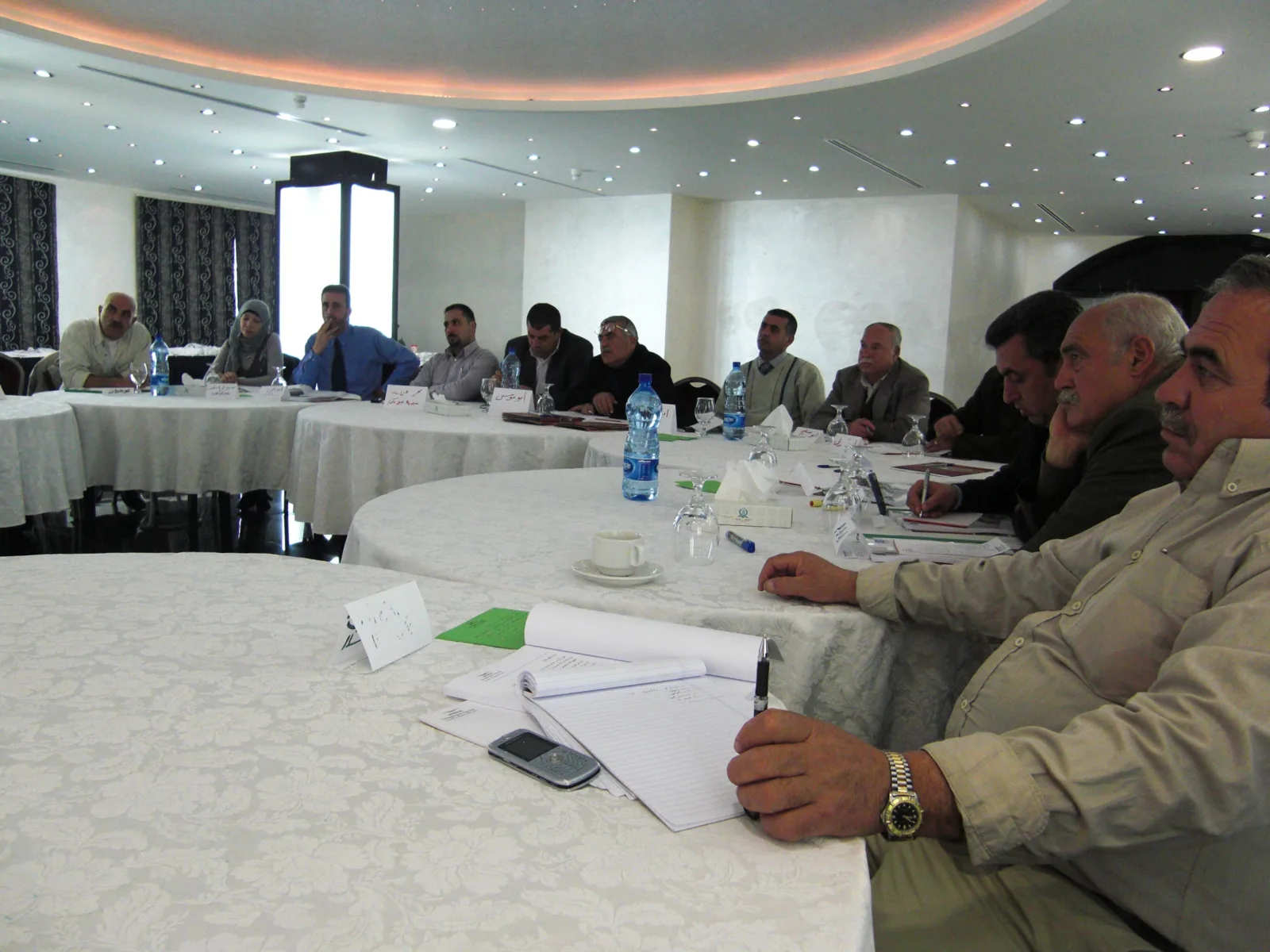
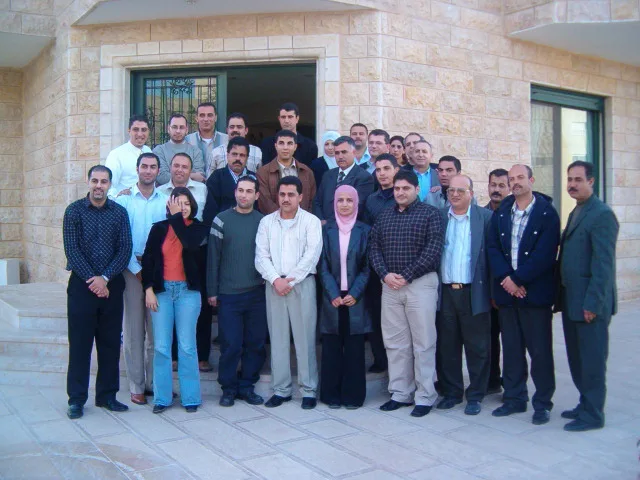
Funded by French Development Agency (AFD) for the benefit of Ministry of Local Government (MoLG)
Istanbul
Endline Survey /Study for “Improved Access to Markets for Female and Male Small Scale Farmers in the West Bank “Project.
2017
Project

Endline Survey /Study for “Improved Access to Markets for Female and Male Small Scale Farmers in the West Bank “Project.

Oxfam is an international confederation of 17 organizations working together with partners and local communities in more than 90 countries in order to find practical and innovative ways for protecting people from poverty.One of Oxfam’s development interventions in the OPT is a three-year pro-poor market development Program entitled “Improved Access to Markets for Female and Male Fresh Fruits and Vegetable (FFV) Small Scale Producers in the West Bank”. This project merges two existing projects in the West Bank which are a) Access to markets project and b) Its overall objective is to enhance productivity of women and men farmers and improve relations with the market and service providers, thus contributing to better connect the supply side with the demand side. This will be achieved by facilitating a process which should enhance the capacities and abilities of key actors to play their role along the selected Fresh Fruit and Vegetable (FFV) value chains.Specifically, the main objectives of the assignment are to: Document pre-intervention levels of the project indicators as defined in the log frame;Document pre-intervention levels of the project assumption and risks as identified in the log frame;Review and sharpen Program performance indicators through an evidence- based, participatory research and facilitation process, based on the baseline findings;Provide a broad assessment of the Program’s relevance and outline the project M&E steer on the basis of analysis of baseline data;Provide Recommendations for improvement of project log frame and MEAL system;Provide Recommendations for possible strategies / actions for greater impact.The final results of this baseline study will serve as the pre-intervention status description against which the follow-up assessments (Midterm, and End - line survey) will be compared during and after the end of project’s operation years.

Oxfam GB, Occupied Palestinian Territory
West Bank
Feasibility Study for Establishment of Food Processing/Manufacturing Factory in Village of Kufr Ra’ee.
2016
Project

Feasibility Study for Establishment of Food Processing/Manufacturing Factory in Village of Kufr Ra’ee.

The MDP is a multi-phase national program which is implemented by the Municipal Development and Lending Fund (MDLF). Its first phase was spanned over a three years period from 2010 to 2013 targeting all 134 municipalities in the West Bank and Gaza Strip, and has provided municipalities with a combination of technical assistance and annual performance-based grants for priority sub-projects to improve municipal finance and municipal planning. The second phase of MDP (Phase II) is planned to support municipalities - over the short-term- in improving their municipal management practices for better municipal transparency and service delivery. It is designed to address the core issues in municipal service delivery, including: poor management practices that compound an already severe budgetary crisis, lack of local budgets for capital investments, and low revenue generation. Accordingly, it will emphasize on mechanisms to improve service delivery, citizen engagement, revenue generation and municipal responsiveness.Within the frame work of windows 4 of MDP and as a delegated implementation agency, MDLF was intended to use part of the Grant to hire a consulting firm to perform establishment of Food Processing/Manufacturing Factory in Village of Kufr Ra’ee)”.The overall objective of this assignment was to collect and analyze information to provide insight into market demand and available opportunities on food processing/manufacturing Sector in Palestinian Territories, in addition to inform the respective municipality with a better understanding of this sector, as well as identify the viability of the Factory by studying and documenting the available opportunities, and the lessons learned from similar projects at the national and international level.

Funded by VNG International; Municipal Development and Lending Fund (MDLF), for the benefit of Kufr Ra'ee Municipality.
West Bank- Jenin
Midterm Survey /Study for “Improved Access to Markets for Female and Male Small Scale Farmers in the West Bank “Project
2016
Project

Midterm Survey /Study for “Improved Access to Markets for Female and Male Small Scale Farmers in the West Bank “Project

Oxfam is an international confederation of 17 organizations working together with partners and local communities in more than 90 countries in order to find practical and innovative ways for protecting people from poverty.One of Oxfam’s development interventions in the OPT is a three-year pro-poor market development Program entitled “Improved Access to Markets for Female and Male Fresh Fruits and Vegetable (FFV) Small Scale Producers in the West Bank”. This project merges two existing projects in the West Bank which are a) Access to markets project and b) Its overall objective is to enhance productivity of women and men farmers and improve relations with the market and service providers, thus contributing to better connect the supply side with the demand side. This will be achieved by facilitating a process which should enhance the capacities and abilities of key actors to play their role along the selected Fresh Fruit and Vegetable (FFV) value chains.Specifically, the main objectives of the assignment are to: Document pre-intervention levels of the project indicators as defined in the log frame;Document pre-intervention levels of the project assumption and risks as identified in the log frame;Review and sharpen Program performance indicators through an evidence- based, participatory research and facilitation process, based on the baseline findings;Provide a broad assessment of the Program’s relevance and outline the project M&E steer on the basis of analysis of baseline data;Provide Recommendations for improvement of project log frame and MEAL system;Provide Recommendations for possible strategies / actions for greater impact.The final results of this baseline study will serve as the pre-intervention status description against which the follow-up assessments (Midterm, and End - line survey) will be compared during and after the end of project’s operation years.

Oxfam GB, Occupied Palestinian Territory
West Bank
Institutional Capacity Assessment and Institutional Development Training for Water and Wastewater Unit within JSCPD in West Bethlehem .
2016
Project

Institutional Capacity Assessment and Institutional Development Training for Water and Wastewater Unit within JSCPD in West Bethlehem .

The World Bank considered one of the key active donors in the Palestinian water and wastewater sector. In August 2012, it has approved the provision of around ($US 3,650,000) through its State and Peace-building Fund to finance a new development project entitled “Water Supply and Sanitation Improvements for West Bethlehem Villages” is supposed to last for 36 months.The project aimed mainly to improve, through a pilot project, the delivery of water and the planning of wastewater services in targeted five rural communities (Battir, Nahhalin, Husan, Wadi Fukin, Walajeh) that are marginalized due to mobility restrictions in West Bethlehem region. That in response to problems facing these rural communities which including among others: environmental and human health issues due to the pollution of springs.To this end, PWA is intend to contract with consulting firm to undertake an assignment entitled “Institutional Capacity Assessment and Institutional Development Training- Water and Wastewater Unit within JSCPD in West Bethlehem”. The main objective of this assignment is to assess the current capabilities and needs of the JSCPD and principally its new established water and wastewater unit (WWU) in terms of (institutional & administrative, technical and financial) aspects, with respect to its ability to sustainably plan, manage, operate and maintain water and sanitation system and services. This assignment will contribute in achieving the overall objective of the project under the Capacity Building Component, which represented by the improvement and enhancement the capacity of JSCPD/ WWU to plan, manage, operate, and maintain water and wastewater system and services, as measured by the preparation of a business plan (a tariff structure that aims at full recovery of O&M costs, and a tariff collection rate of at least 80%), in order to reduce reliance on subsidies.

Funded by World Bank JSCPD, Palestinian Water Authority.
West Bank - Bethlehem
Business Plan for Baby Herbs (Micro Herbs) Production Project for Daraghmeh Company.
2015
Project

Business Plan for Baby Herbs (Micro Herbs) Production Project for Daraghmeh Company.

The Compete project is a five years project launched in mid-2012, funded by USAID and implemented by DAI. This project aims mainly to strengthen the competitiveness and export potential of key sectors in Palestinian economy by building on the work of previous private-sector USAID projects in the West Bank and Gaza, with a particular focus on accelerated growth in the Agriculture, Tourism, ICT, Stone & Marble industries. One of the key economic sectors targeted by Compete project is Agriculture sector. In Palestinian economy Agricultural remains a dominant sector representing a major component of the economy’s GDP and employing a large percentage of the population. Besides it is considered as a major earner of foreign exchange and supplies the basic needs of the majority of the local population.Under this sector, the project is focused on transforming the Palestinian agribusiness into a globally competitive industry by working closely with local partners and agribusiness team to implement a range of activities to support this sector. Additionally, the project contributes to providing technical assistance and support to Palestinian agricultural companies, including the fresh herbs and vegetables companies, to strengthen their capacities and the used techniques to increase productivity and their market share.One of these companies is Daraghmeh for Agricultural Products & Medical Herbs based in Tubas governorate. It was established in 2013 in Al- Fara – Tubas as a part of Al- Khirasan Farms for producing herbs, agricultural products and exporting them abroad. Nowadays it produces normal fresh herbs, and is planning to start producing baby herbs (Micro Herbs), as a new business line. Within this context and to support the company in moving with this new line to increase its productivity and market share, a new full business plan is needed with clear recommendations for improvements and potential strategies for effective implementation of the intended new business. .

Funded by USAID Compete Project; implemented by Development Alternatives Incorporated (DAI) ; for the benefit of Daraghmeh Company for Agricultural Products \& Medical Herbs.
West Bank- Tubas Governorate
Baseline Survey /Study for “Improved Access to Markets for Female and Male Small Scale Farmers in the West Bank “Project
2015
Project

Baseline Survey /Study for “Improved Access to Markets for Female and Male Small Scale Farmers in the West Bank “Project

Oxfam is an international confederation of 17 organizations working together with partners and local communities in more than 90 countries in order to find practical and innovative ways for protecting people from poverty.One of Oxfam’s development interventions in the OPT is a three-year pro-poor market development Program entitled “Improved Access to Markets for Female and Male Fresh Fruits and Vegetable (FFV) Small Scale Producers in the West Bank”. This project merges two existing projects in the West Bank which are a) Access to markets project and b) Its overall objective is to enhance productivity of women and men farmers and improve relations with the market and service providers, thus contributing to better connect the supply side with the demand side. This will be achieved by facilitating a process which should enhance the capacities and abilities of key actors to play their role along the selected Fresh Fruit and Vegetable (FFV) value chains.Specifically, the main objectives of the assignment are to: Document pre-intervention levels of the project indicators as defined in the log frame;Document pre-intervention levels of the project assumption and risks as identified in the log frame;Review and sharpen Program performance indicators through an evidence- based, participatory research and facilitation process, based on the baseline findings;Provide a broad assessment of the Program’s relevance and outline the project M&E steer on the basis of analysis of baseline data;Provide Recommendations for improvement of project log frame and MEAL system;Provide Recommendations for possible strategies / actions for greater impact.The final results of this baseline study will serve as the pre-intervention status description against which the follow-up assessments (Midterm, and End - line survey) will be compared during and after the end of project’s operation years.

Oxfam GB, Occupied Palestinian Territory
West Bank
Final Evaluation of Livelihoods Security and Civil Society Strengthening in the Occupied Palestinian Territory (TATWEER) project.
2014
Project

Final Evaluation of Livelihoods Security and Civil Society Strengthening in the Occupied Palestinian Territory (TATWEER) project.

Livelihood Security and Civil Society Strengthening in the occupied Palestinian territory (TATWEER), is a six – year project funded by the Australian Government, as part of the Australia - Middle East NGO Cooperation Agreement (AMENCA II). The project has been implemented by CARE International (WB&G) during the period between (May 2009- April 2015), in partnership with Applied Research Institute-Jerusalem (ARIJ); Economic and Social Development Center of Palestine (ESDC); and New Farm Company (NFC).The overall objective of this project was to reduce vulnerability among communities in Jenin and Tubas Governorates through improved and sustainable livelihood security and increased capacity of civil society organizations. Its specifics objectives were as follows:Improve food security, livelihoods, and natural resource management;Increase the participation of women and youth in the Palestinian development process; Strengthen the role of community organizations in the development process; and Contribute to efficient and effective management of the AMENCA II program.After 6 years of operation, CARE International (WB&G) has intended to conduct an independent assessment of the performance and achievement of TATWEER project, identify lesson learned and drawing recommendations to improve future programming through: Determining the extent to which the project has achieved its overall goal, specific objectives and expected outcomes;Analyzing the processes, efficacy of piloted models and approaches, as well as the effectiveness of project monitoring and learning processes;Assessing the intended and unintended impacts of the project on the target beneficiaries (farmers, women, youth, CBOs) and vulnerable communities in Jenin and Tubas;Providing recommendations to improve quality and impact to CARE and project’s partners;Identifying and highlighting lessons learned, good practices and strategies to enhance the success of a subsequent phase, related programming, future interventions and opportunities for scale-up or replication.For that purpose, CARE International (WB&G) has contracted GCT to undertake the intended evaluation assignment in a professional, subjective and comprehensive manner.

Funded by Australian Government; for the benefit of CARE International (WB\&G).
West Bank (Jenin and Tubas)
Development of New Legal Framework (Laws and Bylaws) for governorate offices in the oPt.
2014
Project

Development of New Legal Framework (Laws and Bylaws) for governorate offices in the oPt.

UNDP/PAPP issued the Development for Freedom (Empowered Lives Resilient Nation) consolidated plan of assistance for the years 2012-2014. The plan focuses on strengthening particular affected geographic areas and vulnerable populations, Gaza Strip, Jerusalem and Area C, by providing assistance in four main sectors: Democratic governance and the social contract, Promoting productivity and dignity through livelihoods, Natural resources and environment, and Public and social infrastructure.In line with this program and the 13th Palestinian Authority (PA) Government Plan of 2011-2013 which known by “Ending the Occupation, Establishing the State”, UNDP/PAPP governance team in coordination with Palestinian partner institutions developed the "Supporting Governance for Palestinian Statehood" program document (Statehood Program). This program aims at improving development management of state bodies, especially in the areas of planning, budgeting, implementation and monitoring, while facilitating civic participation throughout this cycle. it has the following three main outputs: Institutions of governance and public administration able to fulfill responsibilities and undertake administrative/ financial functions; Sustainable platforms inclusive dialogue and accountable interaction between state and citizen established with an emphasis on women and youth; and State and independent bodies empowered and challenges for statehood. UNDP/PAPP has successfully completed a capacity assessment, a capacity development strategy, and a diagnostic report of the existing legal framework for governorates in Palestine in 2012, which is considered as a first step towards achieving that program’s objectives, in cooperation with GCT.As a second step and in accordance with the diagnostic report’s recommendations which prioritized the development of a new legal framework as a top priority, UNDP/Statehood Program was intended to develop a new unified legal framework for Palestinian governorates that would be tackled the weaknesses of existing legal framework and replace or/amend the unclear mandates of governorates and its overlapping responsibilities with other government bodies.The main objective of this assignment is to develop a new legal framework (law and bylaws) that provide a clear mandate of the governors/governorates in line with existing Presidential decrees and the government's cross-sectorial strategy on local government and administrative development, through achieving the following sub-objectives: Develop a draft legal framework (law and bylaws) defining the mandate and functions of governorate administrations; Provide technical assistance to the Office of the President to support its efforts to establish a consensus on the new legal framework. To this end , UNDP/PAPP has contracted GCT to undertake the consultancy service to develop a new legal framework that would clearly regulate the mandate of the governors/governorates, subject to its endorsement by the President.

United Nations development program/ Program of Assistance to the Palestinian People (UNDP/PAPP).
West Bank
Mid-Term Review of “Moving herders from aid dependence to self-sustaining growth through livestock husbandry development and market expansion” (SULALAH).
2014
Project

Mid-Term Review of “Moving herders from aid dependence to self-sustaining growth through livestock husbandry development and market expansion” (SULALAH).

Moving herders from aid dependence to self-sustaining growth through livestock husbandry development and market expansion” (SULALAH) , is two years project funded by the European Union's Food Security Thematic Program' (FSTP) which was launched in 2007, to address food security challenges at global and regional levels, and in exceptional transition situations as well as in fragile states, through a set of actions that ensure overall coherence, complementarity and continuity of EU interventions, including in the area of transition from relief to development.The Livestock-based Livelihood Support Program – with its both field (LbL-f) and institutional (LbL-i) level components – is financed by the FSTP. The overall objective of the (LbL-f) programs is to improve the food security and sustain the livelihoods of the vulnerable population in the West Bank and Gaza Strip, with a particular focus on “Area C”, while bridging emergency and development.SULALAH project under the field level component is implemented by Union of Agricultural Work Committees (UAWC) in partnership with Gruppo di Volontariato Civile (GVC);Palestinian Hydrology Group (PHG); Qatar Charity; Laore Sardegna; Ta'amreh Cooperative for Livestock; and Jericho Cooperative for Livestock Development. Its overall objective is to improve the food security of Palestinian male and female herders by protecting, sustaining and developing livestock production, with specific aim to improve resilience of vulnerable herders living in the eastern slopes of the West Bank through improving production capacities, enhancing access to assets and expanding income opportunities from livestock. After 10 months of operation, UACW has intended to conduct Mid-Term review to advise on any correction needed to strengthen the implementation mechanisms over the remaining duration by: Reviewing the main project documents and related action plans; Addressing the gaps and highlighting challenges in achieving the desired results and outcomes,Providing recommendations and corrective actions on the action plans, budget, M&E system, management structure and mechanisms. Assessing the synergies and challenges related to the existing coordination mechanism for the field component of LbL, and providing recommendations to enhance better outcomes as a result of a coordinated approach. To this end, UAWC has contracted GCT to undertake this evaluation assignment in professional and comprehensive manner.

Funded by EU; for the benefit of Union of Agricultural Work Committees (UAWC).
West Bank (Hebron, Bethlehem, Jerusalem and Jericho)
Mid-Term Review of Strengthening Livestock Holders’ Livelihoods in Area C Project (Rawasi).
2014
Project

Mid-Term Review of Strengthening Livestock Holders’ Livelihoods in Area C Project (Rawasi).

Strengthening Livestock Holders’ Livelihoods in Area C (Rawasi), is two years project funded by the European Union's Food Security Thematic Program' (FSTP) which was launched in 2007, to address food security challenges at global and regional levels, and in exceptional transition situations as well as in fragile states, through a set of actions that ensure overall coherence, complementarity and continuity of EU interventions, including in the area of transition from relief to development.The Livestock-based Livelihood Support Program – with its both field (LbL-f) and institutional (LbL-i) level components – is financed by the FSTP. The overall objective of the (LbL-f) programs is to improve the food security and sustain the livelihoods of the vulnerable population in the West Bank and Gaza Strip, with a particular focus on “Area C”, while bridging emergency and development.Rawasi project under the field level component is partially funded by the Austrian Development Cooperation and implemented by CARE International in partnership with Palestinian Agriculture Relief Committee (PARC), and International Center for Agricultural Research in the Dry Areas (ICARDA).Its overall objective is to improve the food security and sustainable livelihoods of livestock holders, including herders, in the West Bank particularly Area C (north and central), with specific aim to strengthen the resilience and increase income of sheep and goat holders and special focus on women and Bedouins. To achieve these objectives, it targets 2000 sheep and goat holder households in 30 locations in Northern and Central areas in West Bank particularly Area C; 12,000 (individuals and members of 17 CBOs), and all livestock holders in target locations (5 central and northern West Bank districts: North East Jerusalem, East Ramallah, Jericho, East Nablus & Tubas (Center and North Jordan Valley).After 10 months of operation, CARE International has intended to conduct Mid-Term review to advise on any correction needed to strengthen the implementation mechanisms over the remaining duration by: Reviewing the main project documents and related action plans; Addressing the gaps and highlighting challenges in achieving the desired results and outcomes,Providing recommendations and corrective actions on the action plans, budget, M&E system, management structure and mechanisms. Assessing the synergies and challenges related to the existing coordination mechanism for the field component of LbL, and providing recommendations to enhance better outcomes as a result of a coordinated approach. To this end, CARE international has contracted GCT to undertake this evaluation assignment in professional and comprehensive manner.

Funded by EU, and partially by the Austrian Development Cooperation; for the benefit of CARE International West Bank \& Gaza.
West Bank (North East Jerusalem, East Ramallah, Jericho, East Nablus \& Tubas).
Impact Assessment Survey of JICA's Major Projects in Assisting Palestine.
2012
Project

Impact Assessment Survey of JICA's Major Projects in Assisting Palestine.

The Japanese government has provided assistance and big support to Palestine since 1994 until now by the Japan International Cooperation Agency (JICA) as the implementing organization to the Japanese government’s assistance policy toward Palestine, which reflected in the “Corridor for Peace and Prosperity”. JICA has played a significant role in Palestine from 1997 by addressing the Seven Priority Areas and expanding its cooperation to Palestine.JICA has contracted Japanese consultant team (consortium structured by Oriental Consultants Co, Ltd. and KRI International Corp) to conduct a survey titled “Data Collection Survey on Assistance Approach in Palestine”, for the purpose of achieving this study the consortium in turn has contracted GCT to conduct an Impact Assessment of JICA's Major Projects in Palestine to be a reliable reference for JICA in planning its operation and strategy toward assistance for Palestine.The main objectives of this study were to assess the individual and collective impacts with quantitative and qualitative analysis of the major projects in the seven priority areas (SME development & export facilitation, agriculture, tourism, local governance, public finance management, water & waste water management, health, and education) in which JICA has been committing, through the following sub objectives: To find good practices and success stories in each area form micro to macro levels (communities to governmental levels).To review to what extent each of projects has positively impacted on the fulfillment of sector goal set by Palestine - National Development plan.To suggest, whenever possible, the further actions, remedies needed to ensure positive impact generated, sustainability and sound development of each cooperation area or sector.To pinpoint both positive and negative factors and drawbacks associated with each of projects and/or target area, individually and collectively.

Funded by Japanese consultant consortium (Oriental Consultants Co, Ltd. and KRI International Corp), JICA study team of “Data Collection Survey on Assistance Approach in Palestine”; for the benefit of Japan International Cooperation Agency (JICA).
West Bank –Ramallah
Consulting Inquiries

Need Expert Consulting Services?

Partner with GCT for high-impact advisory and project delivery across Palestine and the region.

Live Support & Inquiries

GCT Advisory Team