Our Projects | GCT Consulting & Training

Explore GCT's portfolio of 900+ consulting projects across Palestine and the Arab region, spanning governance, M&E, agriculture, justice, social development, economic development, water, and education.

900+

Delivered Projects

27+

Years of Experience

400+

Key Clients & Donors

8

Specialized Sectors

Our Project Portfolio

Explore our portfolio of projects delivered across multiple sectors with local and international partners.

Our Project Portfolio

Consultancy for Services Psycho-social and Legal Support
2024
Project

Consultancy for Services Psycho-social and Legal Support

The Psychosocial and Legal Support Consultancy Services project was implemented under the Rural Development Project in Area C – Phase II (RDP II), funded by the Agence Française de Développement (AFD) and implemented by the Ministry of Local Government (MoLG). The project targeted 19 marginalized rural communities across the Jericho, Tubas, and Salfeet governorates in the West Bank.The overall objective of the assignment was to strengthen the resilience, social cohesion, and rights awareness of vulnerable communities in Area C, with a particular focus on women, youth, children, and persons with disabilities. The project addressed the compounded psychosocial, legal, and socio-economic challenges faced by these communities due to political instability, movement restrictions, and limited access to services.The assignment was implemented through three integrated phases: Inception and Planning, Implementation, and Internal Evaluation and Reporting. During implementation, the consultancy conducted a comprehensive psychosocial and legal baseline study, established and strengthened Community Development Committees (CDCs) in coordination with Local Councils, and delivered structured psychosocial support sessions, legal awareness workshops, and individual legal consultations.In addition, the project introduced community hackathons and socio-economic development initiatives, enabling youth and community members to design and propose locally driven solutions addressing priority needs in areas such as agriculture, services, social entrepreneurship, and community infrastructure.The consultancy also designed and implemented a robust MEAL framework, produced periodic progress reports, a mid-term report, an internal evaluation report, and a final report documenting results, lessons learned, and actionable recommendations. The project contributed directly to enhancing community resilience, improving access to rights-based services, strengthening citizen engagement with local authorities, and promoting sustainable, community-led development in Area C.
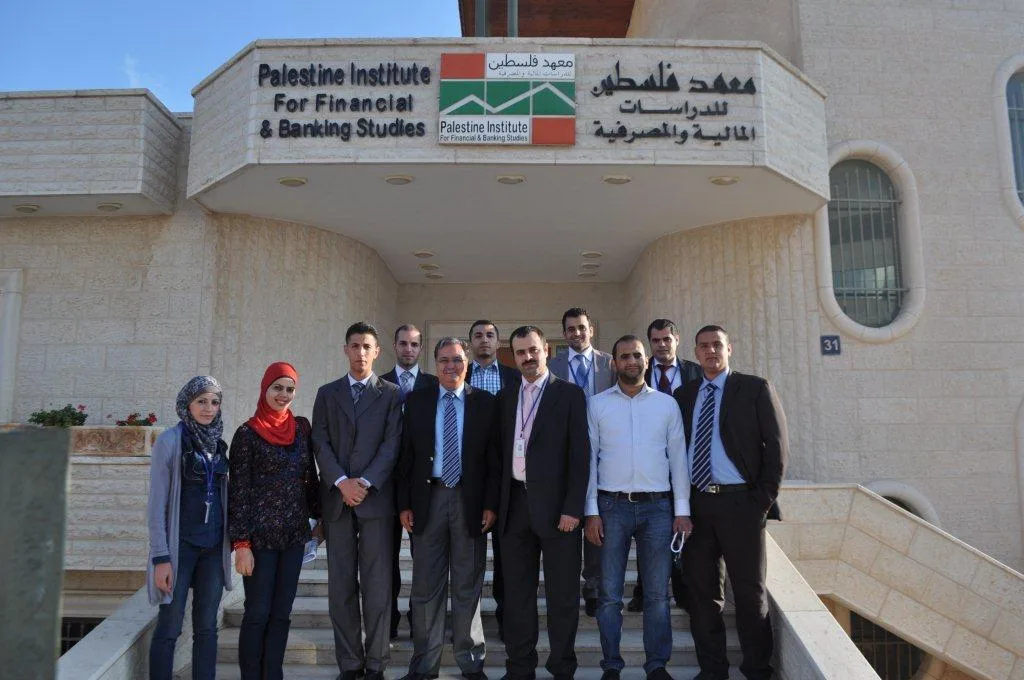
For the benefit of Ministry of Local Government (MoLG); Funded by French Development Agency (AFD)
West Bank
Optimization and Flowcharting of Police Standard Operating Procedures
2020
Project

Optimization and Flowcharting of Police Standard Operating Procedures

On behalf of the German Federal Foreign Office (AA), the Deutsche Gesellschaft für Internationale Zusammenarbeit (GIZ) GmbH is supporting the Palestinian Civil Police (PCP) with the program “Strengthening of Police Structures, Phase IV”(SPS),commissioned from October 2018 to September 2020. The main objective of the program is to enable the PCP to provide citizen-oriented services based on professional standards and to contribute actively to security and law enforcement. During Phase II until 2015, piloting a newly developed organizational model at four community police stations (CPS) set the foundation for applying a uniform structure throughout the West Bank as well as for reviewing the CPS training course at the Palestine College for Police Sciences (PCPS).In a parallel initiative launched in the district of Tulkarem in 2016/17, a mobile police station (MPS) was piloted as an innovative tool to increase patrolling in remote areas. Given the successful outcome of this pilot, the roll-out of a total of eleven newly designed vehicles to all districts in the West Bank has been concluded in 2019. Currently MPS visits are being conducted to marginalized and remote areas throughout the West Bank. Organizational models for City Police Station and District Command in Jenin (incl. mandates, organizational structures, standard operating procedures, MoU, and monitoring and evaluation documents) were developed by the police under the supervision and guidance of the Police Program team. One of the outputs developed was the standard operating procedures for sixteen (16) branches of police specialized departments. As the police lack the IT knowledge and tools, the main purpose of this assignment is to review, optimize and flowchart up to 400 procedures for the district police in Jenin. Expert is required to review the operating procedures with the police technical team to ensure, functionality and validity during the piloting phase which will start in September 2020. During the piloting phase, changes and modifications might apply.To this end GIZ has contracted General Consulting and Training Company, to implement this assignment according to their requirements and expectations.

Funded by GIZ, for the benefit of the Palestinian Civil Police (PCP)
West Bank
On – the Job Training on Value Skills for Small Businesses and Chain and Marketing in six villages in the Jordan Valley, under the project of “Rural Development Project in Area C”
2020
Project

On – the Job Training on Value Skills for Small Businesses and Chain and Marketing in six villages in the Jordan Valley, under the project of “Rural Development Project in Area C”

Rural Development Project (RDP), is implemented through the Department of projects of the MoLG and linking with Local Governments Units (LGUs) in the targeted communities, and funded by French Development Agency (AFD), this project targeted communities in Area C of the Jordan Valley. The general objective of this project is to contribute to the reinforcement of the resilience of Palestinian communities in Area C. Resilience is defined as the ability of palestinian communities to cope with a host of socioeconomic and political shocks that threaten their assets, way of life, and their continued presence on their land.Within the framework of the project activities is to enhance capacity building for both MoLG and the LGU’s for planning and Development in order to support the Palestinian communities in Area C. MoLG/RDP contracted GCT to conduct on the Job Training on Value Skills for Small Businesses in six villages in the Jordan Valley (Ein Shibli, Froush Beit Dajjan, AlJiftlik, Marj Ghazal, Marj N’aja and Azzubaidat), as one of the capacity building activities that aimed at strengthening and supporting the targeted beneficiaries of these villages who gained grants to establish their own small projects under the first component of this project (Community empowerment) and, since the economy of the target areas has a strongly agricultural focus, most are benefiting from component 2 (support to livelihoods) in which most of them are women who gained these grants to have and manage their own projects, as the total labour force in the agricultural sector in Palestine and these villages are women. On the job training covered different topics including; Farm and agricultural projects management, Veterinary guidance & Public health, Marketing of agricultural/cooperatives products and Food Processing Training.

For the benefit of Ministry of Local Government (MoLG); Funded by French Development Agency (AFD)
West Bank
Review of ICT Legal Framework and assessment of ICT for agricultural innovation in the State of Palestine
2019
Project

Review of ICT Legal Framework and assessment of ICT for agricultural innovation in the State of Palestine

Innovation and ICT Sector Development as a Tool for Peace and Prosperity in State of Palestine project was implemented by UNDP in partnership with the Ministry of Telecom and Information Technology (MTIT) and Ministry of Agriculture (MOA), it aimed to contribute to innovation development and ICT for the economic development of Palestine.Under this project, as it is well- known that development and investment in any sector requires a solid legal and legislative ground in order to succeed and sustain, by understanding whether recent developments in these sectors exposed anomalies in the legal and regulatory environment have; to identify where the current policy objectives have and have not been achieved, and to understand policy goals may need to be set in response to the changed and foreseeable environment both locally and globally, UNDP contracted GCT to conduct review of ICT Legal Framework and assessment of ICT for agricultural innovation in the State of Palestine. The general main purpose of this assignment was to enhance the enabling environment for ICT developments and entrepreneurship through achieving the following sub-objectives:Reviewing the national ICT legal and policy framework with special focus on ICT for agricultural sector (Argo-Tech).Identifying structural anomalies in the governance model and any shortfalls identified in the legal and institutional framework that may presently inhibit the normal development of the sector.Identifying policies and seek to ensure the efficient operation and development of ICT sector and related areas of activity, such as that of the Agricultural Sector as a source of economic growth and prosperity to the state of Palestine.

Funded by UNDP / PAPP; for the benefit of Ministry of Agriculture and Ministry of Telecom and Information Technology of the State of Palestine.
West Bank
Develop and Implement a Baseline Study for the benefit of Ministry of Agriculture (MoA).
2019
Project

Develop and Implement a Baseline Study for the benefit of Ministry of Agriculture (MoA).

The Government of Palestine has received a financing from the International Fund for Agricultural Development (IFAD) and from OFID towards the cost of Resilient Land & Resource Management Project (RELAP) which will be implemented over a 6 year period, starting in the course of the second semester of 2018. The RELAP investments are organized into three major components: 1) Climate adaptive land development; 2) Market linkages for the rural poor; 3) Improved public services for up scaling climate resilient agricultural land use and production systems. IFAD intends to apply a portion of the proceeds of this load to eligible payments under this contract to conduct a Baseline Study. The main objectives of this Baseline Study are: to collect qualitative and quantitative information on the socio-economic conditions of potential project beneficiaries and to quantify the initial baseline values for the project long-frame indicators. This to be done through conducting baseline surveys. It is worth to mention that the collected information will not only be used as a reference against which project results and impact will be measured, it will also help detailed project interventions based on documented marketing constraints and opportunities.The baseline data will be used as guidance and specific tool for monitoring process among project beneficiaries to document changes in beneficiary’s socio-economic situation. By using comprehensive baseline data of the socio-economic situation of project beneficiaries prior to their participation in project activities.To this end, MOA has contracted General Consulting and Training (GCT), to implement this assignment according to their requirements and expectations.

Funded by the OPEC Fund for International Development and the International Fund for Agricultural Development; for the benefit of Ministry of Agriculture.
West Bank
Further Technical Assistance Services to Ministry of Agriculture (MoA) of the Palestinian Authority (PA).
2019
Project

Further Technical Assistance Services to Ministry of Agriculture (MoA) of the Palestinian Authority (PA).

Further Technical Assistance Services to Ministry of Agriculture (MoA) of the Palestinian Authority (PA). — Funded by The European Union (EU) represented by the Commission of the European Union (EC); for the benefit of the Ministry of Agriculture (MoA).

Funded by The European Union (EU) represented by the Commission of the European Union (EC); for the benefit of the Ministry of Agriculture (MoA).
West Bank and Gaza Strip
Post-Implementation Socio-Economic Assessment Study under the project of Technical Assistance Services to Ministry of Agriculture (MoA) of the Palestinian Authority (PA
2021
Project

Post-Implementation Socio-Economic Assessment Study under the project of Technical Assistance Services to Ministry of Agriculture (MoA) of the Palestinian Authority (PA

Post-Implementation Socio-Economic Assessment Study under the project of Technical Assistance Services to Ministry of Agriculture (MoA) of the Palestinian Authority (PA — Funded by The European Union (EU) represented by the Commission of the European Union (EC); for the benefit of the Ministry of Agriculture (MoA).

Funded by The European Union (EU) represented by the Commission of the European Union (EC); for the benefit of the Ministry of Agriculture (MoA).
West Bank and Gaza Strip
Development of an Administrative Framework and Process Re-engineering for the next phase of EU Assistance to the Agriculture program of “Further Technical Assistance Services to Ministry of Agriculture (MoA) of the Palestinian Authority (PA)”
2019
Project

Development of an Administrative Framework and Process Re-engineering for the next phase of EU Assistance to the Agriculture program of “Further Technical Assistance Services to Ministry of Agriculture (MoA) of the Palestinian Authority (PA)”

Development of an Administrative Framework and Process Re-engineering for the next phase of EU Assistance to the Agriculture program of “Further Technical Assistance Services to Ministry of Agriculture (MoA) of the Palestinian Authority (PA)” — Funded by The European Union (EU) represented by the Commission of the European Union (EC); for the benefit of the Ministry of Agriculture (MoA).

Funded by The European Union (EU) represented by the Commission of the European Union (EC); for the benefit of the Ministry of Agriculture (MoA).
West Bank
Feasibility Study for Construction of Cattle farm.
2018
Project

Feasibility Study for Construction of Cattle farm.

Livestock projects are an important extension of the national economy, contribute to meeting the nutritional needs of the citizens and constitute a factor for the stabilization of the investor and worker in his country. The project under study is a project for the breeding of dairy cows, which still has a shortage of production compensated through the products of the occupation state. But since many dairy factories have been opened in recent years, investment in milk production projects has become necessary to meet the needs of these factories and to help them meet the needs of the local market.The overall objective of this assignment is to conduct a feasibility study for Construction of cattle farm in Beit Led area in Tulkarem Governorate, through studying the following aspects:Market studyTechnical study related to the establishment of the project and determining the volume of production;Study site alternatives and suggest optimal location;Environmental feasibility;The financial study includes structural costs, operating cost, income, net income and other economic and accounting costs;Economic feasibility of the project;Feasibility indicators for the project, including the internal rate of return, the return on investment and the period of capital recovery;Legal aspect of the project.

Individual investor - Eng. Nihad Abdullah Yousef.
West Bank
Social norms Diagnostic Assessment in WB and Gaza
2018
Project

Social norms Diagnostic Assessment in WB and Gaza

The Female Youth Empowerment Project is implemented by Save the Children (SC), The Palestinian Agricultural Relief Committee (PARC), and Maan Development Center (MAAN). The Project aims to address the root causes of gender-based discrimination and barriers for female youth’s economic advancement, through positively transforming discriminatory social norms, behaviors and systems to promote diversified higher-value entrepreneurship and enable female youth to succeed. The project’s ultimate goal is to enhance the economic empowerment and increase the prosperity for low-income female youth in the WB and across the whole of the GS.Within the framework of this project, Save the Children has contracted GCT to implement social norms exploration exercise for the project in order to identify, where appropriate, which social norms that drive targeted behaviors that hinder/support female youth economic empowerment in Jericho and Tubas, Nablus, and Jenin districts in the West Bank and across different directorates in Gaza. During the module planning phase, the findings of this exercise provided detailed recommendations for the design of interventions that will contribute to transforming harmful norms and promote positive norms, and developing measures and instruments that accurately evaluate change in social norms. As part of this planning phase, this social norms exploration exercise was conducted to achieve the following specific objectives: Identify the social norms and other factors that influence project-targeted behaviors in the different programme areas, and the relative weight of each on behaviors; Determine the most influential reference groups/gatekeepers of the identified norms; andInterpret and reflect on qualitative research results to provide recommendations on the design of the project’s normative interventions.To this end, Save the Children has contracted GCT to implement the Social Norms Exploration Exercise in the four project areas. Description of Actual Services Provided by GCT staff:Meetings with the project’s team to deepen and broaden the understanding of the project’s objectives and approach and the consultancy’s objectives.Review of project documents. Initial review of the Institute of Reproductive Health’s Social Norms Exploration Guide and Toolkit, with a focus on the two participatory exercises which will be used within this social norms’ exploration exercise. Induction on the Institute of Reproductive Health’s Social Norms Exploration Guide and Toolkit. Develop a work plan and inception report which details how the pre-selected social norms exploration exercises will be adapted and applied to the project’s context. This will include detailed information on how the pre-selected exercises will be used and adapted. Adaptation, development and piloting of the two participatory exercises (on the basis of the tools provided in the Social Norms Exploration Guide and Toolkit.) The social group comprised 65 young females representing agricultural, urban and rural areas in the project target areas;Conduct 13 focus group sessions in the four project areas in West bank and Gaza. The focus groups with males and females were separately organized in the same identified areas.Analyse the reasons that underlie the behaviour’s persistence/absence by using the Problem Tree tool to explore the root causes that are linked to influences that are/not social in nature; which ones are the most important barriers to behaviour changes and which ones can the project address.Conduct regular calls with SC technical team for discussion input and review. Develop the draft social norm exploration report. Review of feedback from SC and subsequent editions to finalize report. Document good practices and lessons learned related to the use of the Social Norms Exploration Guide and Toolkit.

Save the Children International
West Bank (Jordan Valley, Jenin, Tubas, Nablus, Tulkarm) and Gaza Strip
Evaluation of the project “Contributing to Bedouin Communities Access to Essential Health Services in the Jordan Valley Project WBK012.
2018
Project

Evaluation of the project “Contributing to Bedouin Communities Access to Essential Health Services in the Jordan Valley Project WBK012.

Medical Aid Palestinians (MAP UK) is a British registered charity that has been reaching out to Palestinian communities, striving to deliver health and medical care to the worst affected by conflict, occupation and displacement. This project was a collaboration between MAP and Islah Charitable society (ICS) to support the mobile clinic that targets 27 Bedouin communities in Jordan valley. The main objective of this project is as follows:This project aims to improve the health status of the vulnerable Bedouin communities in the Jordan valley by providing access to mobile health clinics, which provide PHC and MHC services and aiming for the following objectives:Improve access to and quality of essential primary health care servicesPromote fully comprehensive, integrated family health care services (including reproductive/sexual health services for men and woman) within the primary health care Improve population level mental, infant and child mortality and morbidity rates Improve population level mental, infant and child malnutrition rates

Medical Aid for Palestinians (MAP UK), in collaboration with Islah Charitable society (ICS)
West Bank - Jordan valley area
Consulting Inquiries

Need Expert Consulting Services?

Partner with GCT for high-impact advisory and project delivery across Palestine and the region.

Live Support & Inquiries

GCT Advisory Team